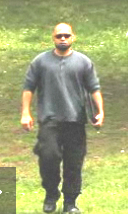
A Superior Court judge has meted out the lightest sentence to date among the adults convicted in the Toronto 18 terrorism plot.
Asad Ansari, 25, became a free man yesterday after receiving six years and five months — the equivalent of time served — for his participation in the group, which plotted devastating attacks in Toronto and Ottawa. The offence carries a maximum jail term of 10 years.
“While Mr. Ansari’s involvement in the offence was serious, it is not at the most serious end of the scale,” Justice Fletcher Dawson asserted in his 12-page ruling.
Ansari has been out on strict house-arrest bail for more than a year awaiting trial and sentencing. Taken on a two-for-one basis, his sentence is equivalent to the almost three years and three months he spent in pretrial custody. Judge Dawson, who also handed Ansari three years of probation, said it would be an “unjust hardship” to return him to prison at this juncture.
Ansari’s sentence is the lightest among the adults convicted in the Toronto 18 plot, though one youth received less time, having been released on time served more than a year ago.
After a lengthy joint trial with another co-accused, Ansari was convicted in June of participating in the Toronto 18, which planned to storm Parliament and detonate truck bombs in downtown Toronto. Authorities dismantled the homegrown cell in June 2006.
In his ruling, Judge Dawson pointed out Ansari was not charged in the bomb plot, and said his involvement in a terrorist training camp in the winter of 2005 was “more limited” than that of other group members.
During that camp, the court has heard, participants wore camouflage clothing and engaged in paramilitary drills.
“I am satisfied that once [Ansari] was there, the nature of the camp would have been apparent to him,” Judge Dawson said, rejecting testimony from Ansari, who said he was unaware of any terrorist implications.
“The jury obviously found that Mr. Ansari’s testimony was not credible,” Judge Dawson said. “I must say I reached the same conclusion.”
The Crown has painted Ansari as the group’s technical expert, one who helped edit video footage of the training camp and cleared malicious software from ringleader Fahim Ahmad’s computer. Judge Dawson said it was clear Ansari “pledged his computer skills for the benefit of the group.”
Ansari, who strolled out of court yesterday with his mother, declined to comment on the ruling. His lawyer, Breese Davies, lauded the judge’s “fit sentence” but said her client would be appealing his conviction within 30 days.
“He gave an innocent explanation [for his involvement in the group] and he maintains that position,” Ms. Davies said. Still, she added, “we are glad that this part is over. He can focus on moving on with his life.”
Upon hearing of the ruling, Public Safety Minster Vic Toews issued a statement highlighting the government’s recent decision to end the practice of granting convicts two-for-one credit for pretrial custody.
“Part of keeping our communities safe is keeping dangerous criminals behind bars, not releasing them into our streets early… Canadians believe this is unacceptable, and our government will continue to put the rights of victims ahead of the rights of criminals,” Mr. Toews said.
Ansari is one of the final Toronto 18 members to be sentenced. Ringleader Ahmad is to be sentenced this month, with Steven Chand and Shareef Abdelhaleem following in November. Seven of the group members were released without charges, and seven others have been convicted and sentenced.
*** Minister Toews and the CONservative party has no credibility in trying to use this as a proof of any sort about their worth in the national security file. The solution is not to jail everyone forever and ever while ignoring and neglecting the CAUSES that give rise to radicalization leading to terrorism. If you want to keep applying band-aids - you'll only end up looking like my 5 year old kid who does the same thinking that by applying all those bandaids, he is healed.
This CON government has done NOTHING to convince me of their sincerity in dealing with the scourge of homegrown radicalization we are facing. They are being opportunist (as usual) and here is their latest example. MS ***
Showing posts with label homegrown radicalization canada. Show all posts
Showing posts with label homegrown radicalization canada. Show all posts
Monday, October 4, 2010
Saturday, August 28, 2010
REJECT EXTREMIST VIOLENCE - OTTAWA IMAM SAYS
*** The media will be sure to relegate this to another headline and a few days later, the public AND the media will ask: are Muslims condemning extremist violence. It's a vicious cycle that perpetuates alienation and mistrust. MS ***
OTTAWA — The imam of Ottawa’s largest mosque has appealed to Muslim youth to reject terrorism and not import Middle East conflicts to Canada.
In an interview following Friday prayers, Imam Khaled Abdul-Hamid Syed said Muslim Canadians “live in the best country” in the West, one that gives its citizens the freedom to express differing views.
“We don’t need to go in the direction of violence.
“I appeal to the Muslim youth not to get involved in any acts of violence or terrorism or other criminal behaviour,” Khaled said. “Keep away from this.”
He said that he did not perceive a widespread problem with Muslim youth in Ottawa.
“I think we have good youth. They are active and co-operative in this community.”
The imam’s comments follow the arrest of a fourth terrorism suspect in Ottawa on Friday. He has not yet been identified or charged.
Two other Ottawa men, Misbahuddin Ahmed and Hiva Alizadeh, and a London, Ont., doctor, Khurram Syed Sher, were arrested Wednesday and face terrorism charges related to alleged plot to bomb Canadian targets. Sher appeared in Ottawa court Friday.
In general, Khaled said, “we denounce any criminal behaviour or act of terrorism.”
But at this point, he said, he wasn’t in a position to “denounce or defend” the men who’ve been arrested.
“We trust in the Canadian justice system. So we should wait until the justice system concludes its work. If they are guilty, we will denounce them.”
Young Muslims should not get dragged into the conflicts of the Middle East, the imam said.
“We live in a safe and secure country. Our religion commands us to protect the land where we live.”
Terrorism or radicalism come from “strong emotion and a lack of knowledge,” Khaled said. The solution is for youth to seek education from imams and other scholars so they can “understand the reality of Islam.”
Naeem Malik, the president of the Ottawa Muslim Association, which operates the mosque on Northwestern Avenue, said Ottawa Muslims “are a bit worried” that the arrests could provoke a backlash similar to the one that occurred after the 9/11 attacks on the United States.
At that time, he said, Muslim women were harassed, told to remove their headscarves or go back to where they came from.
“People are saying, is it safe to come to the mosque to pray? Are we now going to be attacked?’”
Nobody has been harassed yet, Malik said. “So far everything is under control, and I hope things will stay that way.”
Friday’s sermon at the packed-to-overflowing mosque dealt with the fallout from this week’s arrests, though they were never mentioned directly.
Ehab El-Komy, a member of the board of the Muslim Association of Canada, delivered the sermon because Khaled, whose wife just had a baby, was too exhausted.
Using stories from the Koran to convey his message, El-Komy said upholding peace and security is a “fundamental principle” of Islam. So too, he said, are the presumption of innocence, the rule of law, and due process.
“It’s our responsibility as Muslims and as Canadians to uphold all those principles.”
When things such as this week’s arrests happen, El-Komy said, Muslims have a duty to speak up.
“It is very important for us to understand that we have a responsibility to speak up, not as victims, not as suspects, but as Muslims. And as Muslim Canadians, we have a responsibility to speak up. We have to act when such incidents happen.”
“Every single one of us is at a checkpoint,” El-Komy told worshippers, who filled the mosque and spilled out on to the surrounding property. “And that checkpoint has to be guarded.”
He said some Canadians harbour fears and suspicions in the wake of the arrests, and some are well-founded.
“It’s our responsibility, not theirs, to understand those fears and deal with them in an appropriate manner.”
OTTAWA — The imam of Ottawa’s largest mosque has appealed to Muslim youth to reject terrorism and not import Middle East conflicts to Canada.
In an interview following Friday prayers, Imam Khaled Abdul-Hamid Syed said Muslim Canadians “live in the best country” in the West, one that gives its citizens the freedom to express differing views.
“We don’t need to go in the direction of violence.
“I appeal to the Muslim youth not to get involved in any acts of violence or terrorism or other criminal behaviour,” Khaled said. “Keep away from this.”
He said that he did not perceive a widespread problem with Muslim youth in Ottawa.
“I think we have good youth. They are active and co-operative in this community.”
The imam’s comments follow the arrest of a fourth terrorism suspect in Ottawa on Friday. He has not yet been identified or charged.
Two other Ottawa men, Misbahuddin Ahmed and Hiva Alizadeh, and a London, Ont., doctor, Khurram Syed Sher, were arrested Wednesday and face terrorism charges related to alleged plot to bomb Canadian targets. Sher appeared in Ottawa court Friday.
In general, Khaled said, “we denounce any criminal behaviour or act of terrorism.”
But at this point, he said, he wasn’t in a position to “denounce or defend” the men who’ve been arrested.
“We trust in the Canadian justice system. So we should wait until the justice system concludes its work. If they are guilty, we will denounce them.”
Young Muslims should not get dragged into the conflicts of the Middle East, the imam said.
“We live in a safe and secure country. Our religion commands us to protect the land where we live.”
Terrorism or radicalism come from “strong emotion and a lack of knowledge,” Khaled said. The solution is for youth to seek education from imams and other scholars so they can “understand the reality of Islam.”
Naeem Malik, the president of the Ottawa Muslim Association, which operates the mosque on Northwestern Avenue, said Ottawa Muslims “are a bit worried” that the arrests could provoke a backlash similar to the one that occurred after the 9/11 attacks on the United States.
At that time, he said, Muslim women were harassed, told to remove their headscarves or go back to where they came from.
“People are saying, is it safe to come to the mosque to pray? Are we now going to be attacked?’”
Nobody has been harassed yet, Malik said. “So far everything is under control, and I hope things will stay that way.”
Friday’s sermon at the packed-to-overflowing mosque dealt with the fallout from this week’s arrests, though they were never mentioned directly.
Ehab El-Komy, a member of the board of the Muslim Association of Canada, delivered the sermon because Khaled, whose wife just had a baby, was too exhausted.
Using stories from the Koran to convey his message, El-Komy said upholding peace and security is a “fundamental principle” of Islam. So too, he said, are the presumption of innocence, the rule of law, and due process.
“It’s our responsibility as Muslims and as Canadians to uphold all those principles.”
When things such as this week’s arrests happen, El-Komy said, Muslims have a duty to speak up.
“It is very important for us to understand that we have a responsibility to speak up, not as victims, not as suspects, but as Muslims. And as Muslim Canadians, we have a responsibility to speak up. We have to act when such incidents happen.”
“Every single one of us is at a checkpoint,” El-Komy told worshippers, who filled the mosque and spilled out on to the surrounding property. “And that checkpoint has to be guarded.”
He said some Canadians harbour fears and suspicions in the wake of the arrests, and some are well-founded.
“It’s our responsibility, not theirs, to understand those fears and deal with them in an appropriate manner.”


HE'S JUST A COMEDIAN....SAYS LAWYER
*** Let the spin begin! MS ***
OTTAWA — After an early Friday arrest potentially raised the number of people in an alleged Ottawa terror cell to seven, the Citizen has learned there is a possible eighth conspirator in the suspected bomb plot against Parliament Hill and coalition troops in Afghanistan.
Friday’s arrest occured at about 7:30 a.m. when several police vehicles and a heavily armed tactical team converged on a dark coloured Honda in the Hunt Club area of the city.
Police handcuffed the driver and searched the car. RCMP said the man has not been charged yet and as a result his identity is being withheld. Nor would they indicate whether he would be charged.
Three other Canadian men were arrested in Ottawa and London, Ont. Wednesday and Thursday. Three others, believed to be non-citizens and out of the country, are named as unindicted co-conspirators in what police believe was a local terror ring linked to the global Islamist terrorism movement.
Michel Juneau-Katsuya, a former senior CSIS counter-terrorism agent and one-time RCMP security service officer, said a source close to the investigation has told him at least one suspect, the alleged ringleader Hiva Alizadeh, 30, used Ottawa Public Library computers to communicate with other members of the Ottawa-based cell.
“He was trying to avoid detection and surveillance,” Juneau-Katsuya said. “They wanted to hit Parliament Hill and there was discussion of going against public transportation in Montreal because one of the guys had studied there and new the system.” He added, “they were not excluding the possibility to some major (OC Transpo) hubs,” in Ottawa.
Isabelle Tremblay, spokeswoman for the Société de transport de Montréal, denied the Metro was a target. “We checked with police and the authorities and ... it’s not true,” she said.
Juneau-Katsuya said Internet messages between the men tripped computer “sniffers” at Ottawa’s Communication’s Security Establishment (CSE), the government’s electronic spy agency that intercepts the phone calls and e-mails of Canada’s adversaries.
“One of the (CSE) filters picked up their chat,” said Juneau-Katsuya. “The way the system is established, we’ve got red flags everywhere and you can trip one of those flags anytime. If you’re travelling to Pakistan, that’s a red flag. If you’re going on certain web sites, that’s another red flag and if you use certain key words in e-mail. When you’ve got enough red flags, then you become a person of interest. My understanding is they were caught from the Internet.”
CSE alerted the Canadian Security Intelligence Service (CSIS), he said. At some point, CSIS alerted the RCMP, which launched the major national security investigation.
Juneau-Katsuya said a critical element in the year-long probe involved secretly monitoring the suspects’ e-mail and other communications via the public library computers. Police, he said, obtained the IP addresses from the City of Ottawa.
“This group posed a real and serious threat to the citizens of National Capital Region and Canada’s national security,” RCMP Chief Supt. Serge Therriault, head of criminal operations for the capital region, told an Ottawa news conference Thursday.
Therriault said Project Samossa, which employed about 100 joint-forces officers for the past year, was forced to move on the suspects this week when police learned financial support was about to be transferred from Canada for weapons to attack western coalition forces in Afghanistan.
A veteran Ottawa intelligence expert, speaking on the condition of anonymity, said faced with that possibility, police had little choice but to make arrests.
“These arrests would be required as it is entirely probable that the money would have been used for the purchase of IED’s (improvised explosive devices) or other weapons which would have been targeted against Canadian soldiers or allies in the NATO led force.
“The commanders of such investigations are under multiple pressures, some of which are outside of their control. Investigators working at the front line of the investigation will want to open up more lines of investigation, putting pressure on scarce resources. Intelligence partners will want to continue the investigation to gather more intelligence, often without reference to the risks. Prosecutors want more direct evidence collected.
“But beyond those pressures, the investigation commander has to deal with the brutal facts that the failure to arrest may result in further deaths and injuries. It is a cruel pressure.”
The alleged plot was in its early planning stages and “months” away from being operationally viable, Therriault said. "There remained, throughout, a varied degree of imminence to the threat, whether they were going to conduct an attack or not and how it was going to be done.”
Two of the accused, Alizadeh, and Misbahuddin Ahmed, 26, both of Ottawa, were arrested Wednesday. The third, 28-year-old Khurram Syed Sher, was arrested in London, Ont. Thursday.
They face a variety of terrorism charges under the Criminal Code, including conspiring with at least three others — James Lara, Rizgar Alizadeh and Zakaria Mamosta — and other "persons unknown," who have been at one time or another located in Canada, Iran, Afghanistan, Dubai and Pakistan, to facilitate “terrorist activity” between February 2008 and Aug. 24.
Lara, Rizgar Alizadeh — police won't say whether he is related to Hiva Mohammad Alizadeh — and Mamosta, all non-Canadians, are not in Canada and have not been charged. Therriault suggested international efforts may be made to arrest them.
Hiva Alizadeh, who lives in a Woodridge Crescent apartment in Bayshore, faces a separate charge of making or having an explosive substance — which can include IED components — in his possession with the intent to endanger life or cause serious damage.
Alizadeh is a member of a group with links to the conflict in Afghanistan, said Therriault, and received overseas training in building and detonating IEDs.
Juneau-Katsuya speculated the money to be sent to Afghanistan may have been payment for Alizadeh’s alleged explosives training.
Raids on Alizadeh’s and Ahmed’s west Ottawa homes Wednesday uncovered more than 50 circuit boards police believe were intended to remotely trigger detonators for improvised explosive devices (IEDs). Also seized were what was described as a “vast quantity” of schematics, videos, drawings, instructions and electronic components for IEDs.
Improvised bombs have been used for decades by terrorists and insurgents, but the war in Iraq accelerated their technological development, making roadside bombs a chief weapon against coalition troops in Afghanistan.
At the same time, with core al-Qaeda on the run in Pakistan and seemingly unable to mount another 9/11-scale attack, local Islamist extremists are turning to smaller attacks with IEDs.
Friday’s arrest involved officers from the Project Samossa investigation. It was witnessed by Hani Halabi who says he was leaving for work after 7:30 a.m. when at least 10 police officers, some carrying rifles, surrounded a dark-coloured car on Esson Street just before Hunt Club Road. The car was badly damaged on the driver’s side and the window was smashed.
“I think they pushed him to stop, that he didn’t stop by himself,” Halabi said, noting the damage.
Undercover cars, a tactical unit black SUV, RCMP and Ottawa police cruisers were parked nearby.
The man in the car looked to be in his late 20s. He was wearing a white T-shirt and jeans, Halabi said. An officer approached the door, opened it for the man, and very slowly, the man got out.
He had a beard, “not long but not short,” and looked Indian or Middle Eastern, Halabi said.
The man did not resist arrest and was taken to a nearby cruiser to be handcuffed and searched.
Shortly after police apprehended the suspect they reopened the entrance to Hunt Club Road.
One woman on Esson who lives directly across from the scene said she heard police yelling. She opened her window and saw an officer standing on her lawn with a large automatic weapon.
He looked up at her, she closed her blinds and didn’t look again until everyone had left, she said.
Ottawa police spokeswoman Const. Katherine Larouche confirmed that RCMP conducted a traffic stop on Esson Friday morning and that Ottawa police were at the scene.
RCMP spokesman Sgt. Marc Ménard wouldn’t confirm the stop, and said only that a search warrant associated with Project Samossa had been executed and that someone was taken into custody.
Later in the day, as reports emerged of a related domestic dispute, Ottawa police media relations manager Carole Lavigne said police were investigating a “fallout situation” of domestic dispute.
She would not provide any other details.
In Ottawa’s courtroom No. 6 Friday morning. Khurram Sher, a former Canadian Idol contestant, appeared nervous. He stood in the glass-enclosed prisoner's box with his hands in his pockets before taking them out and crossing them in front of him.
Tall with a scraggly black beard, Sher wore a striped dress shirt and dress pants. He said nothing except to speak to his lawyer in hushed voice.
He was remanded into custody pending an appearance by video next Wednesday with his two Ottawa co-accused who appeared in court Thursday and were remanded into custody.
Sher, who recently moved to London from Montreal, is charged with a single count of conspiracy to facilitate a terrorist offence with Alizadeh and Ahmed.
His lawyer, Anser Farooq, said his client was flown in from London to Ottawa on Thursday after he was arrested. Farooq said his first priority is to work to get Sher released from jail.
“That's my first and foremost focus, to get him out on bail,” he said. "Once we have him out on bail then we will deal with the balance of the Crown's concerns if there are any."
He said Sher seems to be doing OK despite the circumstances.
Farooq said he saw his client's Canadian Idol audition and joked that he needs more practice. He said his client is a funny guy who spoke with a fake accent as a joke during the audition.
“He’s more of a comedian than anything else.”
With files from Meghan Hurley
OTTAWA — After an early Friday arrest potentially raised the number of people in an alleged Ottawa terror cell to seven, the Citizen has learned there is a possible eighth conspirator in the suspected bomb plot against Parliament Hill and coalition troops in Afghanistan.
Friday’s arrest occured at about 7:30 a.m. when several police vehicles and a heavily armed tactical team converged on a dark coloured Honda in the Hunt Club area of the city.
Police handcuffed the driver and searched the car. RCMP said the man has not been charged yet and as a result his identity is being withheld. Nor would they indicate whether he would be charged.
Three other Canadian men were arrested in Ottawa and London, Ont. Wednesday and Thursday. Three others, believed to be non-citizens and out of the country, are named as unindicted co-conspirators in what police believe was a local terror ring linked to the global Islamist terrorism movement.
Michel Juneau-Katsuya, a former senior CSIS counter-terrorism agent and one-time RCMP security service officer, said a source close to the investigation has told him at least one suspect, the alleged ringleader Hiva Alizadeh, 30, used Ottawa Public Library computers to communicate with other members of the Ottawa-based cell.
“He was trying to avoid detection and surveillance,” Juneau-Katsuya said. “They wanted to hit Parliament Hill and there was discussion of going against public transportation in Montreal because one of the guys had studied there and new the system.” He added, “they were not excluding the possibility to some major (OC Transpo) hubs,” in Ottawa.
Isabelle Tremblay, spokeswoman for the Société de transport de Montréal, denied the Metro was a target. “We checked with police and the authorities and ... it’s not true,” she said.
Juneau-Katsuya said Internet messages between the men tripped computer “sniffers” at Ottawa’s Communication’s Security Establishment (CSE), the government’s electronic spy agency that intercepts the phone calls and e-mails of Canada’s adversaries.
“One of the (CSE) filters picked up their chat,” said Juneau-Katsuya. “The way the system is established, we’ve got red flags everywhere and you can trip one of those flags anytime. If you’re travelling to Pakistan, that’s a red flag. If you’re going on certain web sites, that’s another red flag and if you use certain key words in e-mail. When you’ve got enough red flags, then you become a person of interest. My understanding is they were caught from the Internet.”
CSE alerted the Canadian Security Intelligence Service (CSIS), he said. At some point, CSIS alerted the RCMP, which launched the major national security investigation.
Juneau-Katsuya said a critical element in the year-long probe involved secretly monitoring the suspects’ e-mail and other communications via the public library computers. Police, he said, obtained the IP addresses from the City of Ottawa.
“This group posed a real and serious threat to the citizens of National Capital Region and Canada’s national security,” RCMP Chief Supt. Serge Therriault, head of criminal operations for the capital region, told an Ottawa news conference Thursday.
Therriault said Project Samossa, which employed about 100 joint-forces officers for the past year, was forced to move on the suspects this week when police learned financial support was about to be transferred from Canada for weapons to attack western coalition forces in Afghanistan.
A veteran Ottawa intelligence expert, speaking on the condition of anonymity, said faced with that possibility, police had little choice but to make arrests.
“These arrests would be required as it is entirely probable that the money would have been used for the purchase of IED’s (improvised explosive devices) or other weapons which would have been targeted against Canadian soldiers or allies in the NATO led force.
“The commanders of such investigations are under multiple pressures, some of which are outside of their control. Investigators working at the front line of the investigation will want to open up more lines of investigation, putting pressure on scarce resources. Intelligence partners will want to continue the investigation to gather more intelligence, often without reference to the risks. Prosecutors want more direct evidence collected.
“But beyond those pressures, the investigation commander has to deal with the brutal facts that the failure to arrest may result in further deaths and injuries. It is a cruel pressure.”
The alleged plot was in its early planning stages and “months” away from being operationally viable, Therriault said. "There remained, throughout, a varied degree of imminence to the threat, whether they were going to conduct an attack or not and how it was going to be done.”
Two of the accused, Alizadeh, and Misbahuddin Ahmed, 26, both of Ottawa, were arrested Wednesday. The third, 28-year-old Khurram Syed Sher, was arrested in London, Ont. Thursday.
They face a variety of terrorism charges under the Criminal Code, including conspiring with at least three others — James Lara, Rizgar Alizadeh and Zakaria Mamosta — and other "persons unknown," who have been at one time or another located in Canada, Iran, Afghanistan, Dubai and Pakistan, to facilitate “terrorist activity” between February 2008 and Aug. 24.
Lara, Rizgar Alizadeh — police won't say whether he is related to Hiva Mohammad Alizadeh — and Mamosta, all non-Canadians, are not in Canada and have not been charged. Therriault suggested international efforts may be made to arrest them.
Hiva Alizadeh, who lives in a Woodridge Crescent apartment in Bayshore, faces a separate charge of making or having an explosive substance — which can include IED components — in his possession with the intent to endanger life or cause serious damage.
Alizadeh is a member of a group with links to the conflict in Afghanistan, said Therriault, and received overseas training in building and detonating IEDs.
Juneau-Katsuya speculated the money to be sent to Afghanistan may have been payment for Alizadeh’s alleged explosives training.
Raids on Alizadeh’s and Ahmed’s west Ottawa homes Wednesday uncovered more than 50 circuit boards police believe were intended to remotely trigger detonators for improvised explosive devices (IEDs). Also seized were what was described as a “vast quantity” of schematics, videos, drawings, instructions and electronic components for IEDs.
Improvised bombs have been used for decades by terrorists and insurgents, but the war in Iraq accelerated their technological development, making roadside bombs a chief weapon against coalition troops in Afghanistan.
At the same time, with core al-Qaeda on the run in Pakistan and seemingly unable to mount another 9/11-scale attack, local Islamist extremists are turning to smaller attacks with IEDs.
Friday’s arrest involved officers from the Project Samossa investigation. It was witnessed by Hani Halabi who says he was leaving for work after 7:30 a.m. when at least 10 police officers, some carrying rifles, surrounded a dark-coloured car on Esson Street just before Hunt Club Road. The car was badly damaged on the driver’s side and the window was smashed.
“I think they pushed him to stop, that he didn’t stop by himself,” Halabi said, noting the damage.
Undercover cars, a tactical unit black SUV, RCMP and Ottawa police cruisers were parked nearby.
The man in the car looked to be in his late 20s. He was wearing a white T-shirt and jeans, Halabi said. An officer approached the door, opened it for the man, and very slowly, the man got out.
He had a beard, “not long but not short,” and looked Indian or Middle Eastern, Halabi said.
The man did not resist arrest and was taken to a nearby cruiser to be handcuffed and searched.
Shortly after police apprehended the suspect they reopened the entrance to Hunt Club Road.
One woman on Esson who lives directly across from the scene said she heard police yelling. She opened her window and saw an officer standing on her lawn with a large automatic weapon.
He looked up at her, she closed her blinds and didn’t look again until everyone had left, she said.
Ottawa police spokeswoman Const. Katherine Larouche confirmed that RCMP conducted a traffic stop on Esson Friday morning and that Ottawa police were at the scene.
RCMP spokesman Sgt. Marc Ménard wouldn’t confirm the stop, and said only that a search warrant associated with Project Samossa had been executed and that someone was taken into custody.
Later in the day, as reports emerged of a related domestic dispute, Ottawa police media relations manager Carole Lavigne said police were investigating a “fallout situation” of domestic dispute.
She would not provide any other details.
In Ottawa’s courtroom No. 6 Friday morning. Khurram Sher, a former Canadian Idol contestant, appeared nervous. He stood in the glass-enclosed prisoner's box with his hands in his pockets before taking them out and crossing them in front of him.
Tall with a scraggly black beard, Sher wore a striped dress shirt and dress pants. He said nothing except to speak to his lawyer in hushed voice.
He was remanded into custody pending an appearance by video next Wednesday with his two Ottawa co-accused who appeared in court Thursday and were remanded into custody.
Sher, who recently moved to London from Montreal, is charged with a single count of conspiracy to facilitate a terrorist offence with Alizadeh and Ahmed.
His lawyer, Anser Farooq, said his client was flown in from London to Ottawa on Thursday after he was arrested. Farooq said his first priority is to work to get Sher released from jail.
“That's my first and foremost focus, to get him out on bail,” he said. "Once we have him out on bail then we will deal with the balance of the Crown's concerns if there are any."
He said Sher seems to be doing OK despite the circumstances.
Farooq said he saw his client's Canadian Idol audition and joked that he needs more practice. He said his client is a funny guy who spoke with a fake accent as a joke during the audition.
“He’s more of a comedian than anything else.”
With files from Meghan Hurley
Friday, August 27, 2010
CSIS / RCMP MAKE GAIN IN STATURE WITH ARRESTS
If any comfort can come out of the raid in Ottawa, which took down an alleged domestic terrorism cell, it's that the Canadian Security Intelligence Service (CSIS) may have finally found its stride.
It's closing in on elite status.
Finally, it can put behind the dysfunction of its Air India investigation of 25 years ago when CSIS, in its infancy, didn't share information (/informants - MS) with the RCMP, and the RCMP reciprocated with equal contempt.
Now it is gaining some stature.
Some international credibility.
With its success in the detection of the Toronto 18, and its role in the takedown in Ottawa of yet another alleged homegrown terrorist operation by integrated police forces led by the RCMP, it can be almost be spoken in the same breath as Britain's MI6. (MI-6 is international, MI-5 domestic, like CSIS)
This is no small feat.
CSIS and the RCMP are now on the same page, which bodes well for our security and the global war on terrorism. After all, there are snakes in every rock pile.
Back in May, CSIS director Dick Fadden told a Commons committee his spies were monitoring 200 such rock piles in Canada, one of them obviously being Operation Samosa, which now has three men linked to al-Qaida under arrest, including a 2008 Canadian Idol reject who savagely butchered an Avril Lavigne tune.
It's Complicated -- the song, as well as this scenario.
But do not immediately dismiss this Idol clown as some fumbling incompetent. If you do, do so at your peril.
As Fadden put it, "Accused terrorists are routinely portrayed as being too unsophisticated, ill-prepared or youthful to actually commit heinous acts.
"This theme permeated coverage of those charged in the Toronto plot," he added. "Some terrorists are, like those many spy novels, enormously resourceful and talented. Others are simply determined, but fairly average foot soldiers."
Fadden then cited Oklahoma City bomber Timothy McVeigh. While he was not a particularly gifted individual, said Fadden, his 1995 actions nonetheless killed 168 people, injured almost 700, and damaged more than 300 buildings within a 16-block radius.
In other words, just because someone can't sing, doesn't mean he cannot set off an IED detonator.
The song may have been Complicated.
But bombs aren't.
It's closing in on elite status.
Finally, it can put behind the dysfunction of its Air India investigation of 25 years ago when CSIS, in its infancy, didn't share information (/informants - MS) with the RCMP, and the RCMP reciprocated with equal contempt.
Now it is gaining some stature.
Some international credibility.
With its success in the detection of the Toronto 18, and its role in the takedown in Ottawa of yet another alleged homegrown terrorist operation by integrated police forces led by the RCMP, it can be almost be spoken in the same breath as Britain's MI6. (MI-6 is international, MI-5 domestic, like CSIS)
This is no small feat.
CSIS and the RCMP are now on the same page, which bodes well for our security and the global war on terrorism. After all, there are snakes in every rock pile.
Back in May, CSIS director Dick Fadden told a Commons committee his spies were monitoring 200 such rock piles in Canada, one of them obviously being Operation Samosa, which now has three men linked to al-Qaida under arrest, including a 2008 Canadian Idol reject who savagely butchered an Avril Lavigne tune.
It's Complicated -- the song, as well as this scenario.
But do not immediately dismiss this Idol clown as some fumbling incompetent. If you do, do so at your peril.
As Fadden put it, "Accused terrorists are routinely portrayed as being too unsophisticated, ill-prepared or youthful to actually commit heinous acts.
"This theme permeated coverage of those charged in the Toronto plot," he added. "Some terrorists are, like those many spy novels, enormously resourceful and talented. Others are simply determined, but fairly average foot soldiers."
Fadden then cited Oklahoma City bomber Timothy McVeigh. While he was not a particularly gifted individual, said Fadden, his 1995 actions nonetheless killed 168 people, injured almost 700, and damaged more than 300 buildings within a 16-block radius.
In other words, just because someone can't sing, doesn't mean he cannot set off an IED detonator.
The song may have been Complicated.
But bombs aren't.
Thursday, August 26, 2010
BREAKING TERROR PLOTS
*** 7 of the Toronto 18 had their charges STAYED not dropped, not acquited, not found innocent. Fact is, they did a bit of time in jail, learned their lesson (we hope) and were let go. And YES, Muslims have roundly condemned terrorism - again and again - not to mention it was 2 Muslim agents that busted the T18 group up. MS ***
The “Toronto 18” conspiracy may have been Canada’s first major homegrown terror threat after 9/11, but if police are to be believed it is far from being the last.
While some worry about being targeted by “foreign” terrorists linked to Al Qaeda or other extremist groups, we can hardly afford to be complacent about perils close at hand. Three more Canadians now stand accused of plotting bombings in Ottawa. And the fact that one of them appears, bizarrely, to have been involved in a goofy song-and-dance act on Canadian Idol hardly detracts from the gravity of the charges.
The RCMP reported yesterday that police had been watching the trio’s network for a year and swooped down on them Wednesday. That prevented them from sending money to conspirators abroad for weapons to use against Canadian troops and allies in Afghanistan. It also prevented them from leaving the country, and from building bombs and staging attacks on the nation’s capital. Rightly, police put public safety first by acting when they did.
Charged with conspiracy to facilitate terrorism and other offences are Hiva Mohammad Alizadeh, 30, Misbahuddin Ahmed, 26, and Khurram Syed Sher, 28. All are Canadian citizens. Police say they conspired with other Canadians who are currently abroad in a plot that spanned Canada, Iran, Pakistan, Afghanistan and Dubai. Police found 50 electronic circuit boards designed to detonate Afghan-style improvised explosive device (IED) bombs, plus schematics, videos, books and other material on building bombs. Alizadeh, they said, is a member of a terror group with links to the Afghan conflict.
However these charges play out in court (and let’s bear in mind that of the Toronto 18, only 11 were convicted), the Canadian Security Intelligence Service, the RCMP and other forces deserve credit for working together effectively. Lessons seem to have been learned from past botched investigations, including the Air India probe.
This case has left prominent community figures such as Salma Siddiqui of the Muslim Canadian Congress voicing concern that the perverse “doctrine of jihad” still appeals to some. But it’s a fact, too, that spiritual leaders of the country’s 650,000 Muslims have denounced jihadist violence as incompatible with Islamic values.
Muslim clerics in Calgary, Toronto, Montreal, Vancouver and other centres rang in the New Year with a forceful fatwa, or religious ruling, denouncing attacks on Canada and the United States as an assault on the freedom of the millions of Muslims who have made their homes here. The fatwa reminded the faithful that they are morally obliged to condemn and expose those who plot violence against this tolerance.
Raised Muslim voices are a vital element in thwarting jihadist terror, along with good policing and vigilant courts.
The “Toronto 18” conspiracy may have been Canada’s first major homegrown terror threat after 9/11, but if police are to be believed it is far from being the last.
While some worry about being targeted by “foreign” terrorists linked to Al Qaeda or other extremist groups, we can hardly afford to be complacent about perils close at hand. Three more Canadians now stand accused of plotting bombings in Ottawa. And the fact that one of them appears, bizarrely, to have been involved in a goofy song-and-dance act on Canadian Idol hardly detracts from the gravity of the charges.
The RCMP reported yesterday that police had been watching the trio’s network for a year and swooped down on them Wednesday. That prevented them from sending money to conspirators abroad for weapons to use against Canadian troops and allies in Afghanistan. It also prevented them from leaving the country, and from building bombs and staging attacks on the nation’s capital. Rightly, police put public safety first by acting when they did.
Charged with conspiracy to facilitate terrorism and other offences are Hiva Mohammad Alizadeh, 30, Misbahuddin Ahmed, 26, and Khurram Syed Sher, 28. All are Canadian citizens. Police say they conspired with other Canadians who are currently abroad in a plot that spanned Canada, Iran, Pakistan, Afghanistan and Dubai. Police found 50 electronic circuit boards designed to detonate Afghan-style improvised explosive device (IED) bombs, plus schematics, videos, books and other material on building bombs. Alizadeh, they said, is a member of a terror group with links to the Afghan conflict.
However these charges play out in court (and let’s bear in mind that of the Toronto 18, only 11 were convicted), the Canadian Security Intelligence Service, the RCMP and other forces deserve credit for working together effectively. Lessons seem to have been learned from past botched investigations, including the Air India probe.
This case has left prominent community figures such as Salma Siddiqui of the Muslim Canadian Congress voicing concern that the perverse “doctrine of jihad” still appeals to some. But it’s a fact, too, that spiritual leaders of the country’s 650,000 Muslims have denounced jihadist violence as incompatible with Islamic values.
Muslim clerics in Calgary, Toronto, Montreal, Vancouver and other centres rang in the New Year with a forceful fatwa, or religious ruling, denouncing attacks on Canada and the United States as an assault on the freedom of the millions of Muslims who have made their homes here. The fatwa reminded the faithful that they are morally obliged to condemn and expose those who plot violence against this tolerance.
Raised Muslim voices are a vital element in thwarting jihadist terror, along with good policing and vigilant courts.
HOMEGROWN THREAT ON THE RISE
*** They have not spoken to a single Muslim leader or even a Muslim expert on terrorism and radicalization - in fact, I think they are plagiarizing from some information that was given to them a couple of years ago (waiting for confirmation) in which I was involved.
On top of that the RCMP is doing its own thing and CSIS is doing its own thing. And how many millions of dollars is this costing? I could devise a program for HALF the cost in HALF the time - and they know it but hey, what would I know? MS ***
Public Safety Minister Vic Toews on Thursday applauded the co-ordinated efforts of police and intelligence forces who say they foiled an Ottawa-based terror plot, but said the incident underscores the burgeoning threat of homegrown terrorism.
"There is a growing concern about radicalization inside Canada — so that is, homegrown terrorism," said Toews. "That is a phenomena that we have seen in many Western democracies, and it's a relatively new phenomena that we must be very vigilant about."
Toews called on Canadians to stand up against terrorist threats, suggesting leaders from various communities in Canada should approach the government if they have information that threatens public safety. (MS: Sure, just as long as you give the community credit for helping you instead of taking the information and then leaving the community to suffer accusations of "you're not doing enough")
The co-ordination between the RCMP, CSIS and various police groups during the yearlong Project Samossa investigation, which resulted in the arrests this week of two Ottawa men and another from St. Thomas, Ont., was quickly praised by experts, who said the arrests were a success and proved the lessons learned in the intelligence community from Air India.
However, former CSIS senior manager Michel Juneau-Katsuya said Canada has a lot of work to do when it comes to building diplomacy around the world.
"Is it on the grand scale, the big picture, a great success? It's a temporary success," he said.
"If we don't go to the root cause of terrorism, we're still going to have more guys who are going to be pissed at us, and will succeed one day," said Juneau-Katsuya, a criminal-intelligence expert for 30 years.
Canada also lacks a national counter-radicalization strategy, although a senior RCMP officer says discussions are underway.
"It's not in place yet," Assistant Commissioner Gilles Michaud, head of National Security Criminal Investigations, said recently, before this weeks arrests in Ottawa.
"Right now it's very piecemeal. Ourselves, we're doing something, the Canadian Security Intelligence Service is doing something. But it's broader than that." (MS: Yes, they have ignored everything I have conveyed to them on this subject. They think they know best - typical RCMP attitude)
Interviews with officials and de-classified documents indicate that counter-terrorism agencies have been fighting a behind-the-scenes battle to identify Canadians who are radicalizing and, in some cases, taking steps to intervene.
When investigators suspect a Canadian is preparing to travel overseas for training or to join a terrorist group such as Al-Shabab in Somalia, for example, they have been conducting interventions. That may involve visiting the person or, if they are young, breaking the news to their parents.
The government has also been funding academic research on radicalization and studying what other countries are doing.
But Mubin Shaikh, who worked as an undercover CSIS and RCMP agent during the Toronto 18 terror investigation, said if a national strategy is in the works, the Muslim community had not been informed.
"Exactly who are they developing this in conjunction with? There is not a single Muslim leader that they have spoken with (that I know of)," he said. "If the program does not have legitimacy with the masses, it will be worthless and useless."
Meanwhile, a declassified CSIS report released under the Access to Information Act concludes there is no single "best strategy" for fighting radicalization and that regardless of efforts to stop them, some will still become terrorists.
The three men arrested are accused of conspiring with others in Iran, Afghanistan, Dubai and Pakistan to build improvised explosive devices for attacks in Canada and to raise money to fund IED attacks on Canadian troops in Afghanistan.
While officials were mum on potential targets, Juneau-Katsuya said al-Qaida "likes to hit icons," such as the Parliament buildings.
An RCMP spokesman said the accused had IED parts, including more than 50 circuit boards that could be used to remotely detonate bombs, but wouldn't say if the group had explosives.
The investigation was intended to prevent the use of the IEDs against coalition forces and Canadian troops, said RCMP Chief Supt. Serge Therriault.
Hiva Mohammad Alizadeh, 30, and Misbahuddin Ahmed, 26, from Ottawa, are charged, along with Khurram Syed Sher, 28, of London, Ont.
The charges allege they conspired with three other people — identified as James Lara, Rizgar Alizadeh and Zakaria Mamosta — and other "persons unknown" to facilitate "terrorist activity" between February 2008 and Aug. 24 of this year.
Alizadeh also faces charges in relation to making an explosive device and funding a terrorist group.
With files from Ottawa Citizen
© Copyright (c) Postmedia News
Read more: http://www.ottawacitizen.com/news/Homegrown+terror+threat+rise+Toews/3446864/story.html#ixzz0xmF2v1HB
On top of that the RCMP is doing its own thing and CSIS is doing its own thing. And how many millions of dollars is this costing? I could devise a program for HALF the cost in HALF the time - and they know it but hey, what would I know? MS ***
Public Safety Minister Vic Toews on Thursday applauded the co-ordinated efforts of police and intelligence forces who say they foiled an Ottawa-based terror plot, but said the incident underscores the burgeoning threat of homegrown terrorism.
"There is a growing concern about radicalization inside Canada — so that is, homegrown terrorism," said Toews. "That is a phenomena that we have seen in many Western democracies, and it's a relatively new phenomena that we must be very vigilant about."
Toews called on Canadians to stand up against terrorist threats, suggesting leaders from various communities in Canada should approach the government if they have information that threatens public safety. (MS: Sure, just as long as you give the community credit for helping you instead of taking the information and then leaving the community to suffer accusations of "you're not doing enough")
The co-ordination between the RCMP, CSIS and various police groups during the yearlong Project Samossa investigation, which resulted in the arrests this week of two Ottawa men and another from St. Thomas, Ont., was quickly praised by experts, who said the arrests were a success and proved the lessons learned in the intelligence community from Air India.
However, former CSIS senior manager Michel Juneau-Katsuya said Canada has a lot of work to do when it comes to building diplomacy around the world.
"Is it on the grand scale, the big picture, a great success? It's a temporary success," he said.
"If we don't go to the root cause of terrorism, we're still going to have more guys who are going to be pissed at us, and will succeed one day," said Juneau-Katsuya, a criminal-intelligence expert for 30 years.
Canada also lacks a national counter-radicalization strategy, although a senior RCMP officer says discussions are underway.
"It's not in place yet," Assistant Commissioner Gilles Michaud, head of National Security Criminal Investigations, said recently, before this weeks arrests in Ottawa.
"Right now it's very piecemeal. Ourselves, we're doing something, the Canadian Security Intelligence Service is doing something. But it's broader than that." (MS: Yes, they have ignored everything I have conveyed to them on this subject. They think they know best - typical RCMP attitude)
Interviews with officials and de-classified documents indicate that counter-terrorism agencies have been fighting a behind-the-scenes battle to identify Canadians who are radicalizing and, in some cases, taking steps to intervene.
When investigators suspect a Canadian is preparing to travel overseas for training or to join a terrorist group such as Al-Shabab in Somalia, for example, they have been conducting interventions. That may involve visiting the person or, if they are young, breaking the news to their parents.
The government has also been funding academic research on radicalization and studying what other countries are doing.
But Mubin Shaikh, who worked as an undercover CSIS and RCMP agent during the Toronto 18 terror investigation, said if a national strategy is in the works, the Muslim community had not been informed.
"Exactly who are they developing this in conjunction with? There is not a single Muslim leader that they have spoken with (that I know of)," he said. "If the program does not have legitimacy with the masses, it will be worthless and useless."
Meanwhile, a declassified CSIS report released under the Access to Information Act concludes there is no single "best strategy" for fighting radicalization and that regardless of efforts to stop them, some will still become terrorists.
The three men arrested are accused of conspiring with others in Iran, Afghanistan, Dubai and Pakistan to build improvised explosive devices for attacks in Canada and to raise money to fund IED attacks on Canadian troops in Afghanistan.
While officials were mum on potential targets, Juneau-Katsuya said al-Qaida "likes to hit icons," such as the Parliament buildings.
An RCMP spokesman said the accused had IED parts, including more than 50 circuit boards that could be used to remotely detonate bombs, but wouldn't say if the group had explosives.
The investigation was intended to prevent the use of the IEDs against coalition forces and Canadian troops, said RCMP Chief Supt. Serge Therriault.
Hiva Mohammad Alizadeh, 30, and Misbahuddin Ahmed, 26, from Ottawa, are charged, along with Khurram Syed Sher, 28, of London, Ont.
The charges allege they conspired with three other people — identified as James Lara, Rizgar Alizadeh and Zakaria Mamosta — and other "persons unknown" to facilitate "terrorist activity" between February 2008 and Aug. 24 of this year.
Alizadeh also faces charges in relation to making an explosive device and funding a terrorist group.
With files from Ottawa Citizen
© Copyright (c) Postmedia News
Read more: http://www.ottawacitizen.com/news/Homegrown+terror+threat+rise+Toews/3446864/story.html#ixzz0xmF2v1HB
Wednesday, August 25, 2010
HOMEGROWN CANADIAN TERRORISTS - HOW THEY ARE LURED
*** Yet, the RCMP thinks it can deal with this without the Muslim community. Interesting. MS ***
OTTAWA -- He lived in a quiet townhouse in Ottawa, with a Mazda parked in the driveway. Neighbors could think of nothing unusual about about him.
The terror suspects arrested in Ottawa this morning are being described as ordinary Canadians who were allegedly attracted to al-Qaeda’s message of violence.
The case suggests that four years after the RCMP and CSIS broke up the Toronto 18, Canada is still confronting similar groups of extremists who support al-Qaeda.
This “homegrown Islamist extremism,” as CSIS refers to it, is Canada’s number one terrorist threat, according to senior intelligence and law enforcement officials.
“Right now we’re seeing a trend around what you would call the homegrown type of terrorism,” RCMP Assistant Commissioner Gilles Michaud said in a recent interview.
“Young Canadians are being radicalized to an extremist ideology and want to support that ideology with violence,” said A. Comm. Michaud, the head of National Security Criminal Investigations.
Early on Wednesday, the RCMP and Ottawa Police Service broke up an alleged Ottawa terrorist group with suspected affiliations to al-Qaeda. The ringleader had alleged trained in the Pakistan-Afghanistan region.
More details were expected at a news conference on Thursday. The suspects appear to have similar backgrounds to the Toronto 18, young Canadians who plotted attacks in southern Ontario, suggesting homegrown radicalization remains a problem for Canada.
“It’s not diminishing,” said Michael King, a McGill University PhD student who has been researching radicalization. “It seems like it’s either keeping constant or increasing, so I would agree that its’ definitely a big problem.”
Public Safety Minister Vic Toews said in an Aug. 9 speech that radicalization and the movement of Canadians to overseas training camps were increasing concerns. “These individuals reject the values on which our country is based, and they must be stopped,” he said.
But it is not a simple task.
Al-Qaeda and its affiliates are ardent propagandists. They use the Internet to promote their dark ideology, which revolves around the belief that there is a Western conspiracy against Islam and that terrorism is justified both to defend the religion and impose it on non-Muslims.
“We don’t have an issue with anybody that has extremist views,” A. Comm. Michaud said. “But it does become criminal when somebody wants to use violence to support those views, so that is one of the threats that we’re seeing more and more.”
Experts and officials said homegrown extremists are now becoming radicalized mostly on the Internet. They may then make their own way to overseas training camps.
At those camps, al-Qaeda and its affiliates are apparently encouraging Western recruits to return to their home countries to carry out attacks. They are not given specific missions or targets but are told to strike when opportunity arises.
“It’s self-radicalization basically and the Internet plays a big part in that process,” A. Comm. Michaud said. “Self-radicalization and then taking the steps that they need in order to join whatever group that they feel they should affiliate with.”
Police and intelligence officers are monitoring Canadians they suspect are training in Pakistan, Afghanistan, Yemen and Somalia. The main concern is that they will return to Canada to conduct terrorist operations.
“That they would go and receive training in terrorist tactics is our first concern,” the assistant commissioner said. “But then the second one is, what do they do once they receive this training?
“To use it overseas against allied countries is one thing. But also if ever they were to come back to Canada, then we find individuals that have that capacity to use those skills on our soil. So that is definitely a major concern.”
Some extremists are candid about their views. Salman Hossain, a self-professed extremist Muslim from Mississauga, Ont., repeatedly posted messages on his website calling for terrorist attacks in Canada. But most are more secretive, using code words to chat about getting “married,” a term for martyred.
Homegrown radicalization became a concern for Canada when Mohamed Jabarah of St. Catharines was arrested in 2002 after he joined al-Qaeda and attempted to bomb the U.S. embassy in Singapore. In 2004, Ottawa-born Momin Khawaja was arrested over his role in a British terror group that plotted attacks around London.
A classified 2007 CSIS study said the causes of radicalization varied but included the influence of family and charismatic spiritual leaders, overseas travel, conversion and anger at the perceived oppression of Muslims.
“Once the radicalization process has begun, individuals start to find diverse ways to develop their extremist beliefs in Canada,” the study says. “They do so through a variety of networks, both real and virtual.
“These individuals appear to be part of Western society,” it adds. “In fact, they appear so Canadian that they are difficult to detect. Such individuals then move on to a series of radical activities, ranging from propaganda and recruiting, to terrorist training and participation in extremist operations.”
A recent report by the Demos research group, co-authored by Mr. King and funded partly by Canada, found that the terrorists had experienced social exclusion, felt disconnected from their community, had undergone some kind of identity crisis and had a relatively shallow understanding of the Islamic religion.
An increasing part of al-Qaeda’s appeal in the West is its “dangerous, romantic and counter-cultural characteristics,” the paper said, adding it was crucial to de-glamorize al-Qaeda by highlighting its obvious flaws and even satirizing it.
“There’s a sensation-seeking component to it,” said Mr. King, a psychologist. “I mean how cool is it to go with some other guys and have secret messages, try and acquire some illegal materials for a cause that is portrayed as ultimate justice,” he said.
He said terrorist groups are doing a good job of marketing their cause to large numbers on the Internet. Through luck and timing, some are responding to that messaging, although the overall numbers remain relatively small.
“It’s a real combination of factors. They’re meeting the wrong people at the wrong time, there’s nothing else in their life probably that they feel is more important that would keep them back from doing this. And they’re guys that really enjoy doing stuff that’s high intensity.”
National Post
sbell@nationalpost.com
Read more: http://www.nationalpost.com/news/Homegrown+Canadian+terrorists+they+lured/3442201/story.html#ixzz0xevYtaAE
OTTAWA -- He lived in a quiet townhouse in Ottawa, with a Mazda parked in the driveway. Neighbors could think of nothing unusual about about him.
The terror suspects arrested in Ottawa this morning are being described as ordinary Canadians who were allegedly attracted to al-Qaeda’s message of violence.
The case suggests that four years after the RCMP and CSIS broke up the Toronto 18, Canada is still confronting similar groups of extremists who support al-Qaeda.
This “homegrown Islamist extremism,” as CSIS refers to it, is Canada’s number one terrorist threat, according to senior intelligence and law enforcement officials.
“Right now we’re seeing a trend around what you would call the homegrown type of terrorism,” RCMP Assistant Commissioner Gilles Michaud said in a recent interview.
“Young Canadians are being radicalized to an extremist ideology and want to support that ideology with violence,” said A. Comm. Michaud, the head of National Security Criminal Investigations.
Early on Wednesday, the RCMP and Ottawa Police Service broke up an alleged Ottawa terrorist group with suspected affiliations to al-Qaeda. The ringleader had alleged trained in the Pakistan-Afghanistan region.
More details were expected at a news conference on Thursday. The suspects appear to have similar backgrounds to the Toronto 18, young Canadians who plotted attacks in southern Ontario, suggesting homegrown radicalization remains a problem for Canada.
“It’s not diminishing,” said Michael King, a McGill University PhD student who has been researching radicalization. “It seems like it’s either keeping constant or increasing, so I would agree that its’ definitely a big problem.”
Public Safety Minister Vic Toews said in an Aug. 9 speech that radicalization and the movement of Canadians to overseas training camps were increasing concerns. “These individuals reject the values on which our country is based, and they must be stopped,” he said.
But it is not a simple task.
Al-Qaeda and its affiliates are ardent propagandists. They use the Internet to promote their dark ideology, which revolves around the belief that there is a Western conspiracy against Islam and that terrorism is justified both to defend the religion and impose it on non-Muslims.
“We don’t have an issue with anybody that has extremist views,” A. Comm. Michaud said. “But it does become criminal when somebody wants to use violence to support those views, so that is one of the threats that we’re seeing more and more.”
Experts and officials said homegrown extremists are now becoming radicalized mostly on the Internet. They may then make their own way to overseas training camps.
At those camps, al-Qaeda and its affiliates are apparently encouraging Western recruits to return to their home countries to carry out attacks. They are not given specific missions or targets but are told to strike when opportunity arises.
“It’s self-radicalization basically and the Internet plays a big part in that process,” A. Comm. Michaud said. “Self-radicalization and then taking the steps that they need in order to join whatever group that they feel they should affiliate with.”
Police and intelligence officers are monitoring Canadians they suspect are training in Pakistan, Afghanistan, Yemen and Somalia. The main concern is that they will return to Canada to conduct terrorist operations.
“That they would go and receive training in terrorist tactics is our first concern,” the assistant commissioner said. “But then the second one is, what do they do once they receive this training?
“To use it overseas against allied countries is one thing. But also if ever they were to come back to Canada, then we find individuals that have that capacity to use those skills on our soil. So that is definitely a major concern.”
Some extremists are candid about their views. Salman Hossain, a self-professed extremist Muslim from Mississauga, Ont., repeatedly posted messages on his website calling for terrorist attacks in Canada. But most are more secretive, using code words to chat about getting “married,” a term for martyred.
Homegrown radicalization became a concern for Canada when Mohamed Jabarah of St. Catharines was arrested in 2002 after he joined al-Qaeda and attempted to bomb the U.S. embassy in Singapore. In 2004, Ottawa-born Momin Khawaja was arrested over his role in a British terror group that plotted attacks around London.
A classified 2007 CSIS study said the causes of radicalization varied but included the influence of family and charismatic spiritual leaders, overseas travel, conversion and anger at the perceived oppression of Muslims.
“Once the radicalization process has begun, individuals start to find diverse ways to develop their extremist beliefs in Canada,” the study says. “They do so through a variety of networks, both real and virtual.
“These individuals appear to be part of Western society,” it adds. “In fact, they appear so Canadian that they are difficult to detect. Such individuals then move on to a series of radical activities, ranging from propaganda and recruiting, to terrorist training and participation in extremist operations.”
A recent report by the Demos research group, co-authored by Mr. King and funded partly by Canada, found that the terrorists had experienced social exclusion, felt disconnected from their community, had undergone some kind of identity crisis and had a relatively shallow understanding of the Islamic religion.
An increasing part of al-Qaeda’s appeal in the West is its “dangerous, romantic and counter-cultural characteristics,” the paper said, adding it was crucial to de-glamorize al-Qaeda by highlighting its obvious flaws and even satirizing it.
“There’s a sensation-seeking component to it,” said Mr. King, a psychologist. “I mean how cool is it to go with some other guys and have secret messages, try and acquire some illegal materials for a cause that is portrayed as ultimate justice,” he said.
He said terrorist groups are doing a good job of marketing their cause to large numbers on the Internet. Through luck and timing, some are responding to that messaging, although the overall numbers remain relatively small.
“It’s a real combination of factors. They’re meeting the wrong people at the wrong time, there’s nothing else in their life probably that they feel is more important that would keep them back from doing this. And they’re guys that really enjoy doing stuff that’s high intensity.”
National Post
sbell@nationalpost.com
Read more: http://www.nationalpost.com/news/Homegrown+Canadian+terrorists+they+lured/3442201/story.html#ixzz0xevYtaAE
TWO ARRESTED AS PART OF TERROR CELL - OTTAWA
*** Standard kudos to all involved. Yet another proof that radicalization is increasing - question is: is there a plan? I have yet to see one. MS ***
OTTAWA — The RCMP dismantled an alleged Ottawa terrorist cell with suspected links to al-Qaeda on Wednesday morning, making two arrests in the nation’s capital without incident.
The men are suspected of preparing a terrorist attack targeting Canada. The ringleader allegedly attended training camps in the Pakistan and Afghanistan region.
But the bomb plot was described as not well defined and the arrests were apparently made on Wednesday because one of the suspects was preparing to travel abroad.
A news conference has been scheduled for Thursday afternoon. The RCMP, Ottawa Police Service and Canadian Security Intelligence Service were involved in the operation.
“At approximately 8:00 this morning, “A” Division’s Integrated National Security Enforcement Team (A-INSET) investigators arrested two Ottawa residents in relation to terrorist offences,” the RCMP said in a news release on Wednesday afternoon.
“Search warrants are being executed in order to secure additional evidence. More arrests are anticipated.”
The suspects have not been named publicly.
The case is considered the most significant counter-terrorism operation in Canada since Project Osage, the 2006 arrests of the Toronto 18, young al-Qaeda-inspired extremists who plotted attacks in southern Ontario.
Although police have released little information on Wednesday, the case appears to fit the pattern of so-called homegrown terrorists, the term for Canadians who have become radicalized and adopted the al-Qaeda ideology.
Public Safety Minister Vic Toews could not be reached for comment but a Public Safety spokesman said on Wednesday morning “the government of Canada recognizes that violent extremism and radicalization pose a serious threat to Canada’s national security.
“The government continues to participate in activities to better understand extremism throughout the world and the motivations of individuals who engage in terrorism,” David Charbonneau said. (MS: Just not involving the Muslim community of course.)
Coming on the heels of the failed Times Square bombing and the Fort Hood shooting, the alleged plot could be the latest attempt by remnants and affiliates of al-Qaeda to use Western recruits to strike inside North America.
“There is substantial evidence from cases in the U.K. and the E.U. that various so-called homegrown groups do demonstrate a connection to an al-Qaeda centre in areas of doctrine, strategy, tactics and target selection,” said Prof. Martin Rudner, a Carleton University terrorism expert.
In a speech in Toronto on Aug. 9, when he would have already been briefed on the suspected Ottawa group, Minister Toews said he was increasingly concerned about the radicalization taking place in Canada.
“There are homegrown Islamists and other extremists here in Canada,” he said. “In this country, it is the right of all Canadians to hold and discuss a wide range of beliefs.
“But what we are seeing here is not about disagreement and debate. Our concern is with extremist ideologies that lead individuals to espouse or engage in violence. These individuals reject the values on which our country is based, and they must be stopped.” (MS: And how do you propose to do that without engaging the Muslim community sir?)
He said indoctrination and radicalization were occurring partly on the Internet and the speed at which they were radicalizing was proving a challenge for police and intelligence agencies. (MS: Some of these nutjobs are just not deterred by police activity - like the Toronto 18 - you need to be PROactive not REactive. Believe me, they will adapt.)
“While only a small fraction of a percentage of our population is engaged in activities that pose a security threat, we need to thwart such threats before they can be carried out,” he said.
National Post
sbell@nationalpost.com
Read more: http://www.nationalpost.com/news/RCMP+dismantle+alleged+Ottawa+terrorist+cell/3441688/story.html#ixzz0xdtiQPyT
OTTAWA — The RCMP dismantled an alleged Ottawa terrorist cell with suspected links to al-Qaeda on Wednesday morning, making two arrests in the nation’s capital without incident.
The men are suspected of preparing a terrorist attack targeting Canada. The ringleader allegedly attended training camps in the Pakistan and Afghanistan region.
But the bomb plot was described as not well defined and the arrests were apparently made on Wednesday because one of the suspects was preparing to travel abroad.
A news conference has been scheduled for Thursday afternoon. The RCMP, Ottawa Police Service and Canadian Security Intelligence Service were involved in the operation.
“At approximately 8:00 this morning, “A” Division’s Integrated National Security Enforcement Team (A-INSET) investigators arrested two Ottawa residents in relation to terrorist offences,” the RCMP said in a news release on Wednesday afternoon.
“Search warrants are being executed in order to secure additional evidence. More arrests are anticipated.”
The suspects have not been named publicly.
The case is considered the most significant counter-terrorism operation in Canada since Project Osage, the 2006 arrests of the Toronto 18, young al-Qaeda-inspired extremists who plotted attacks in southern Ontario.
Although police have released little information on Wednesday, the case appears to fit the pattern of so-called homegrown terrorists, the term for Canadians who have become radicalized and adopted the al-Qaeda ideology.
Public Safety Minister Vic Toews could not be reached for comment but a Public Safety spokesman said on Wednesday morning “the government of Canada recognizes that violent extremism and radicalization pose a serious threat to Canada’s national security.
“The government continues to participate in activities to better understand extremism throughout the world and the motivations of individuals who engage in terrorism,” David Charbonneau said. (MS: Just not involving the Muslim community of course.)
Coming on the heels of the failed Times Square bombing and the Fort Hood shooting, the alleged plot could be the latest attempt by remnants and affiliates of al-Qaeda to use Western recruits to strike inside North America.
“There is substantial evidence from cases in the U.K. and the E.U. that various so-called homegrown groups do demonstrate a connection to an al-Qaeda centre in areas of doctrine, strategy, tactics and target selection,” said Prof. Martin Rudner, a Carleton University terrorism expert.
In a speech in Toronto on Aug. 9, when he would have already been briefed on the suspected Ottawa group, Minister Toews said he was increasingly concerned about the radicalization taking place in Canada.
“There are homegrown Islamists and other extremists here in Canada,” he said. “In this country, it is the right of all Canadians to hold and discuss a wide range of beliefs.
“But what we are seeing here is not about disagreement and debate. Our concern is with extremist ideologies that lead individuals to espouse or engage in violence. These individuals reject the values on which our country is based, and they must be stopped.” (MS: And how do you propose to do that without engaging the Muslim community sir?)
He said indoctrination and radicalization were occurring partly on the Internet and the speed at which they were radicalizing was proving a challenge for police and intelligence agencies. (MS: Some of these nutjobs are just not deterred by police activity - like the Toronto 18 - you need to be PROactive not REactive. Believe me, they will adapt.)
“While only a small fraction of a percentage of our population is engaged in activities that pose a security threat, we need to thwart such threats before they can be carried out,” he said.
National Post
sbell@nationalpost.com
Read more: http://www.nationalpost.com/news/RCMP+dismantle+alleged+Ottawa+terrorist+cell/3441688/story.html#ixzz0xdtiQPyT
Saturday, July 17, 2010
MORE CANADIANS TURN TO VIOLENT JIHAD
*** An article stating the obvious. How about the PLAN - what PLAN is in place to deal with this situation? You cannot arrest the problem away, you MUST deal with underlying causes. MS ***
http://www.ctv.ca/CTVNews/TopStories/20100716/jihad-threats-mountie-100716/
The Mountie in charge of investigating terrorist threats says he's alarmed at the growing number of Canadians adopting violent jihad.
Assistant Commissioner Gilles Michaud said RCMP are aware of a number of Canadians who are currently training at Islamic terror camps.
"We have some in Pakistan, we see some in Somalia, we see them in Afghanistan," he said.
RCMP believe that two-dozen Canadians have trained at camps in Somalia, Afghanistan and Pakistan (the same country where the Times Square bomber is believed to have sought instruction in terrorist tactics). They suspect that several Canadians hold leadership roles in al Qaeda-linked groups.
The Mounties are investigating at least six young Somali-Canadian men from the Toronto area who are believed to have left the country to join al Shabaab, the Somalia-based group responsible for last week's suicide bombings in Uganda that killed 76 people.
But Michaud is also concerned about the threat of Islamic extremists unleashing terror on Canadian soil, particularly if those trained at terrorist camps overseas return to Canada.
There are those in Canada who are fundraising for terrorist groups "through charities, drug dealing and credit card fraud," he said.
What's more, threats from "neo-jihadist groups" are no longer limited to major Canadian cities, he said -- they now affect smaller communities across the country.
Many of the suspected terrorists being investigated by RCMP are second or third generation Canadians who have been integrated into Canadian society before becoming radicalised, Michaud said.
RCMP have even set up a national security tip line, at 1-800-420-5805, where concerned citizens can report suspicious behaviour 24 hours a day, seven days a week.
But some Islamic groups say the Mounties are exaggerating the threat.
"I don't get the sense it is a huge problem within the Muslim community," said Khalid Elgazzar with the Council of American-Islamic Relations Canada. "I would say these are isolated incidents."
With a report from CTV's Ottawa Bureau Chief Robert Fife
http://www.ctv.ca/CTVNews/TopStories/20100716/jihad-threats-mountie-100716/
The Mountie in charge of investigating terrorist threats says he's alarmed at the growing number of Canadians adopting violent jihad.
Assistant Commissioner Gilles Michaud said RCMP are aware of a number of Canadians who are currently training at Islamic terror camps.
"We have some in Pakistan, we see some in Somalia, we see them in Afghanistan," he said.
RCMP believe that two-dozen Canadians have trained at camps in Somalia, Afghanistan and Pakistan (the same country where the Times Square bomber is believed to have sought instruction in terrorist tactics). They suspect that several Canadians hold leadership roles in al Qaeda-linked groups.
The Mounties are investigating at least six young Somali-Canadian men from the Toronto area who are believed to have left the country to join al Shabaab, the Somalia-based group responsible for last week's suicide bombings in Uganda that killed 76 people.
But Michaud is also concerned about the threat of Islamic extremists unleashing terror on Canadian soil, particularly if those trained at terrorist camps overseas return to Canada.
There are those in Canada who are fundraising for terrorist groups "through charities, drug dealing and credit card fraud," he said.
What's more, threats from "neo-jihadist groups" are no longer limited to major Canadian cities, he said -- they now affect smaller communities across the country.
Many of the suspected terrorists being investigated by RCMP are second or third generation Canadians who have been integrated into Canadian society before becoming radicalised, Michaud said.
RCMP have even set up a national security tip line, at 1-800-420-5805, where concerned citizens can report suspicious behaviour 24 hours a day, seven days a week.
But some Islamic groups say the Mounties are exaggerating the threat.
"I don't get the sense it is a huge problem within the Muslim community," said Khalid Elgazzar with the Council of American-Islamic Relations Canada. "I would say these are isolated incidents."
With a report from CTV's Ottawa Bureau Chief Robert Fife
Friday, July 2, 2010
HOW AL SHABAB RECRUITS JIHADI'S IN THE WEST
*** Once again, kudos to Stewart Bell for an eye-opening article. I just hope we have a plan in place to deal with this but I see little interest in developing a counter narrative. The Canadian public is being put at risk because of this foot-dragging.
Too bad for the racist, hateful language by those posting after the story - but its open season on Islam these days so its to be expected.
MS ***
FROM: http://www.nationalpost.com/news/From+teens+terrorists+Shabab+recruits+Western+martyrs/3224716/story.html
Stewart Bell, National Post · Thursday, Jul. 1, 2010
In a video posted on the Internet, 10 militants-in-training jog on a sandy trail on the Somali plains. Their faces are masked but the one in the red-checkered scarf and white runners is alleged to be a young Canadian.
His name is Abdul Karim.
“We have a global mission,” one of the Al-Shabab trainees says into the camera, speaking in English and holding a worn assault rifle. “Come join us and defend the religion of Allah.”
A police investigation now underway in Ontario by the Integrated National Security Enforcement Team (INSET) is trying to trace how Canadian youths are ending up in Somalia at the paramilitary training camps of Al-Shabab, the al-Qaeda-linked militant group.
A top-secret government report obtained by the National Post says Al-Shabab, which emerged from the heavily armed chaos of Somalia in 2006, is using a variety of methods to entice Canadian youths to its camps. “Islamist extremists are radicalizing and recruiting Somali-Canadian youths within Canada to travel to Somalia for jihad training,” says the Integrated Threat Assessment Centre report, titled “Al-Shabab’s Recruitment of Youths from Canada.”
The Canadian Security Intelligence Service said five Somali-Canadians who left Toronto between September and November 2009 “could receive weapons and related training” in Somalia and “potentially engage in Al-Shabab-related violent activities,” spokeswoman Isabelle Scott said.
A sixth such Somali-Canadian is presumed dead.
Police in the United States and Europe are conducting similar investigations. A Danish-Somali killed 24 people in a suicide bombing in Mogadishu last December. On June 5, two New Jersey men were arrested at JFK airport as they were allegedly on their way to Africa to join Al-Shabab.
“The situation remains chaotic and continues to provide and facilitate [recruiting] pipelines, training and attack planning by extremist groups targeting Western interests in Somalia and the region,” Ms. Scott said.
Videos like the one in which Abdul Karim, an 18-year-old Somali-Canadian from Toronto, allegedly makes a one-minute cameo are central to Al-Shabab’s recruiting campaign. (The videos cited here were obtained from the SITE Intelligence Group, which found them on extremist websites and produced transcripts.)
“To all you youth out in the States, out in the U.K., Sweden, France, and so on,” a singer raps in one of them.
“You are now at the biggest crossroads of your life.
“You must make a choice: Are you going to live like an honourable man and die like an honourable man?
“Or are you going to live like a humiliated coward and die like one?”
In Toronto, young Somalis watch Al-Shabab videos “all the time,” said Mohamed Abdullahi Mohamed, a Somali-Canadian who is trying to start a group called Generation Islam to combat radicalization in his community.
“Watching these Shabab propaganda videos is very widespread among our youth,” he said, adding he was disappointed by the government response to what he described as “young boys being brainwashed and sent into a path of destruction.”
The de-classified government report, circulated internally on March 29 and released under the Access to Information Act, says Al-Shabab recruiting efforts are targeting idealistic Western youths.
“Whereas Somali parents retreat into their own culture in the face of Western values, Somali teenagers struggling to assimilate often reject adult tradition and authority in the home,” reads the Intelligence Assessment.
“Such cultural dissonance, according to another study, is rampant in diaspora Somali communities in Toronto and elsewhere, and opens the door to dangerously powerful influence from peers.”
The Internet propaganda of Al-Shabab mixes militant Islamist ideology with Somali nationalism to appeal to a young on-line audience. “And that’s a very powerful cocktail,” said Ahmed Hussen, president of the Canadian Somali Congress.
One recent video shows footage of Mohamed Elmi Ibrahim, a 22-year-old University of Toronto student who, according to a pro-Al-Shabab website, was killed in combat in Somalia. It portrays him as a martyr.
“Jihad against the armies,” goes the slow dirge.
“No rest for the oppressors, a life of fear.
“Establishing Allah’s law on land and sea.
“My number one goal die a shahid [martyr].”
The singer is Omar Hammami, a U.S. citizen who moved to Toronto, married a Somali-Canadian and is now a top Al-Shabab commander. He appears frequently in recruiting videos, rapping lyrics about jihad.
“Gonna knock America down to her knees,” he sings.
“You want to promote your religion: democracy.
“Along with your cross, temples and your priests.
“Our response is martyrdom or victory.”
It may be too late for those who have already left Canada. Few foreign recruits have returned alive. Before Mr. Ibrahim’s death, another Canadian extremist and former Toronto resident known as Asparo was killed in a gunfight with Ethiopian troops in July 2008. Somali and Ethiopian officials report finding Canadian identity documents on the bodies of Islamist fighters killed in battle.
“We’re aware of several individuals that have gone abroad for training,” said RCMP Assistant Commissioner Gilles Michaud, head of National Security Criminal Investigations for the Mounties, “but there’s not a lot of them that we’re aware of that are back.”
But even when they do come back, police can’t always do anything about it. Witnesses and reliable evidence are hard to come by, since the camps are based in countries like Somalia that are largely un-policed.
“If they only go for training and they don’t use it, or we can’t demonstrate that they have an intent of using it, there’s no charge for that,” Asst. Comm. Michaud said. “The other thing that is of concern is the fact that they get this training, then they come back to Canada. And so you now have individuals that have gone to the point of getting training and, not knowing what the intent is at the end of the day, and they’re roaming our streets.”
Abdul Karim is back in Toronto now.
He lives with his father, Ahmed, on the fourth floor of an apartment tower near Pearson airport. (The National Post is not publishing his surname because he has not been charged and would have been a minor when the alleged training took place.)
His father said the events in question took place long ago and lasted only a few days but he declined to answer whether he disputed that his son was at the camp. He refused interview requests, claiming he was being harassed.
Neither the RCMP nor CSIS would comment on whether they were investigating Abdul Karim. “I can’t talk about specifics of the case, who we are interviewing or planning to interview. This is an ongoing matter,” RCMP spokesman Sergeant Marc LaPorte said.
“Any radicalization or recruitment by any terrorist group like Al-Shabab would be of interest to INSET. Although I can’t comment on the number of missing Somali-Canadians, the RCMP monitor the issue of Canadians going abroad to participate in terrorism-related activities, and when warranted, we commence the appropriate criminal investigations.”
The Al-Shabab video allegedly featuring Abdul Karim was released in 2008. At that time, some Somalis had taken up arms to fight troops from neighbouring Ethiopia who had invaded the country to support the fragile Somali government.
Mr. Mohamed, who was among those who fought the Ethiopians and has since returned to Toronto, said recruits who trained then should not be considered terrorists. But he said those who joined Al-Shabab after Ethiopia withdrew its forces early in 2009 were driven by ideology rather than patriotism.
The 40-minute Al-Shabab video mentions Ethiopia, but only once. It does, however, mention fighting the United States, exacting revenge over the Danish cartoons and speaks repeatedly of a global fight against non-Muslims. “We are coming you Christians, we are coming you Jews,” it says.
The recruits are shown running an obstacle course, shooting at a photo of the Somali president at that time, Abdullahi Yusuf Ahmed, firing rocket launchers and practising hand-to-hand combat.
The one believed to be Abdul Karim is dressed in camouflage clothing. The lanky teen marches, jogs on the spot and bunny hops with his hands behind his head.
At least two others have light skin, which is visible below their rolled up sleeves, indicating they are not Somalis.
Two can be heard speaking in English.
“Oh Muslim brothers,” one of them says, standing behind what looks like a rocket launcher, “migrate to the land of jihad to fight alongside your brothers.”
National Post
sbell@nationalpost.com
Too bad for the racist, hateful language by those posting after the story - but its open season on Islam these days so its to be expected.
MS ***
FROM: http://www.nationalpost.com/news/From+teens+terrorists+Shabab+recruits+Western+martyrs/3224716/story.html
Stewart Bell, National Post · Thursday, Jul. 1, 2010
In a video posted on the Internet, 10 militants-in-training jog on a sandy trail on the Somali plains. Their faces are masked but the one in the red-checkered scarf and white runners is alleged to be a young Canadian.
His name is Abdul Karim.
“We have a global mission,” one of the Al-Shabab trainees says into the camera, speaking in English and holding a worn assault rifle. “Come join us and defend the religion of Allah.”
A police investigation now underway in Ontario by the Integrated National Security Enforcement Team (INSET) is trying to trace how Canadian youths are ending up in Somalia at the paramilitary training camps of Al-Shabab, the al-Qaeda-linked militant group.
A top-secret government report obtained by the National Post says Al-Shabab, which emerged from the heavily armed chaos of Somalia in 2006, is using a variety of methods to entice Canadian youths to its camps. “Islamist extremists are radicalizing and recruiting Somali-Canadian youths within Canada to travel to Somalia for jihad training,” says the Integrated Threat Assessment Centre report, titled “Al-Shabab’s Recruitment of Youths from Canada.”
The Canadian Security Intelligence Service said five Somali-Canadians who left Toronto between September and November 2009 “could receive weapons and related training” in Somalia and “potentially engage in Al-Shabab-related violent activities,” spokeswoman Isabelle Scott said.
A sixth such Somali-Canadian is presumed dead.
Police in the United States and Europe are conducting similar investigations. A Danish-Somali killed 24 people in a suicide bombing in Mogadishu last December. On June 5, two New Jersey men were arrested at JFK airport as they were allegedly on their way to Africa to join Al-Shabab.
“The situation remains chaotic and continues to provide and facilitate [recruiting] pipelines, training and attack planning by extremist groups targeting Western interests in Somalia and the region,” Ms. Scott said.
Videos like the one in which Abdul Karim, an 18-year-old Somali-Canadian from Toronto, allegedly makes a one-minute cameo are central to Al-Shabab’s recruiting campaign. (The videos cited here were obtained from the SITE Intelligence Group, which found them on extremist websites and produced transcripts.)
“To all you youth out in the States, out in the U.K., Sweden, France, and so on,” a singer raps in one of them.
“You are now at the biggest crossroads of your life.
“You must make a choice: Are you going to live like an honourable man and die like an honourable man?
“Or are you going to live like a humiliated coward and die like one?”
In Toronto, young Somalis watch Al-Shabab videos “all the time,” said Mohamed Abdullahi Mohamed, a Somali-Canadian who is trying to start a group called Generation Islam to combat radicalization in his community.
“Watching these Shabab propaganda videos is very widespread among our youth,” he said, adding he was disappointed by the government response to what he described as “young boys being brainwashed and sent into a path of destruction.”
The de-classified government report, circulated internally on March 29 and released under the Access to Information Act, says Al-Shabab recruiting efforts are targeting idealistic Western youths.
“Whereas Somali parents retreat into their own culture in the face of Western values, Somali teenagers struggling to assimilate often reject adult tradition and authority in the home,” reads the Intelligence Assessment.
“Such cultural dissonance, according to another study, is rampant in diaspora Somali communities in Toronto and elsewhere, and opens the door to dangerously powerful influence from peers.”
The Internet propaganda of Al-Shabab mixes militant Islamist ideology with Somali nationalism to appeal to a young on-line audience. “And that’s a very powerful cocktail,” said Ahmed Hussen, president of the Canadian Somali Congress.
One recent video shows footage of Mohamed Elmi Ibrahim, a 22-year-old University of Toronto student who, according to a pro-Al-Shabab website, was killed in combat in Somalia. It portrays him as a martyr.
“Jihad against the armies,” goes the slow dirge.
“No rest for the oppressors, a life of fear.
“Establishing Allah’s law on land and sea.
“My number one goal die a shahid [martyr].”
The singer is Omar Hammami, a U.S. citizen who moved to Toronto, married a Somali-Canadian and is now a top Al-Shabab commander. He appears frequently in recruiting videos, rapping lyrics about jihad.
“Gonna knock America down to her knees,” he sings.
“You want to promote your religion: democracy.
“Along with your cross, temples and your priests.
“Our response is martyrdom or victory.”
It may be too late for those who have already left Canada. Few foreign recruits have returned alive. Before Mr. Ibrahim’s death, another Canadian extremist and former Toronto resident known as Asparo was killed in a gunfight with Ethiopian troops in July 2008. Somali and Ethiopian officials report finding Canadian identity documents on the bodies of Islamist fighters killed in battle.
“We’re aware of several individuals that have gone abroad for training,” said RCMP Assistant Commissioner Gilles Michaud, head of National Security Criminal Investigations for the Mounties, “but there’s not a lot of them that we’re aware of that are back.”
But even when they do come back, police can’t always do anything about it. Witnesses and reliable evidence are hard to come by, since the camps are based in countries like Somalia that are largely un-policed.
“If they only go for training and they don’t use it, or we can’t demonstrate that they have an intent of using it, there’s no charge for that,” Asst. Comm. Michaud said. “The other thing that is of concern is the fact that they get this training, then they come back to Canada. And so you now have individuals that have gone to the point of getting training and, not knowing what the intent is at the end of the day, and they’re roaming our streets.”
Abdul Karim is back in Toronto now.
He lives with his father, Ahmed, on the fourth floor of an apartment tower near Pearson airport. (The National Post is not publishing his surname because he has not been charged and would have been a minor when the alleged training took place.)
His father said the events in question took place long ago and lasted only a few days but he declined to answer whether he disputed that his son was at the camp. He refused interview requests, claiming he was being harassed.
Neither the RCMP nor CSIS would comment on whether they were investigating Abdul Karim. “I can’t talk about specifics of the case, who we are interviewing or planning to interview. This is an ongoing matter,” RCMP spokesman Sergeant Marc LaPorte said.
“Any radicalization or recruitment by any terrorist group like Al-Shabab would be of interest to INSET. Although I can’t comment on the number of missing Somali-Canadians, the RCMP monitor the issue of Canadians going abroad to participate in terrorism-related activities, and when warranted, we commence the appropriate criminal investigations.”
The Al-Shabab video allegedly featuring Abdul Karim was released in 2008. At that time, some Somalis had taken up arms to fight troops from neighbouring Ethiopia who had invaded the country to support the fragile Somali government.
Mr. Mohamed, who was among those who fought the Ethiopians and has since returned to Toronto, said recruits who trained then should not be considered terrorists. But he said those who joined Al-Shabab after Ethiopia withdrew its forces early in 2009 were driven by ideology rather than patriotism.
The 40-minute Al-Shabab video mentions Ethiopia, but only once. It does, however, mention fighting the United States, exacting revenge over the Danish cartoons and speaks repeatedly of a global fight against non-Muslims. “We are coming you Christians, we are coming you Jews,” it says.
The recruits are shown running an obstacle course, shooting at a photo of the Somali president at that time, Abdullahi Yusuf Ahmed, firing rocket launchers and practising hand-to-hand combat.
The one believed to be Abdul Karim is dressed in camouflage clothing. The lanky teen marches, jogs on the spot and bunny hops with his hands behind his head.
At least two others have light skin, which is visible below their rolled up sleeves, indicating they are not Somalis.
Two can be heard speaking in English.
“Oh Muslim brothers,” one of them says, standing behind what looks like a rocket launcher, “migrate to the land of jihad to fight alongside your brothers.”
National Post
sbell@nationalpost.com
Wednesday, May 19, 2010
14 YEARS TOO LENIENT FOR TERRORISM
*** It does appear he is a prime candidate for rehabilitation. Part of sentencing is to look at the mitigating factors, that is if we can take our blinders off. MS ***
FROM: http://www.ctv.ca/servlet/ArticleNews/story/CTVNews/20100519/saad-khalid-toronto18-appeal-100519/20100519?hub=Canada
Terrorism is the height of criminal behaviour -- eclipsing even first-degree murder -- and prison terms must reflect the severity of the offence, Crown lawyers will argue before Ontario's highest court.
The Crown is calling on the Ontario Court of Appeal to increase the sentence of Saad Khalid, a member of the so-called Toronto 18.
Khalid pleaded guilty last year to participating in a terror plot with the intention of causing an explosion. He was sentenced to 14 years, which amounts to seven more years in custody after credit for time served.
Court documents filed in advance of the hearing, scheduled for Thursday, show Crown lawyers will argue that is far too lenient for such a heinous crime.
"At present he will be eligible to walk free on parole five-and-a-half years after the date of his arrest, and be totally free of penal supervision four-and-a-half years later," the lawyers write.
"On the scale of relative severity, this crime is at the very apex, eclipsing even the most serious forms of ordinary criminal violence."
The Crown argues the starting point for sentencing for active participation in a terrorist plot intent on causing death and "indiscriminate harm" to hundreds of innocent people should be life imprisonment.
Khalid was not the leader of the plot he was convicted in, so in this case the Crown says a further four to six years should be added to Khalid's sentence, making it 18 to 20, which they had asked for at the sentencing hearing.
"The moral blameworthiness and potential impact of this crime are an order of magnitude greater than that found in a single pre-meditated homicide, for which a life sentence is automatic," the Crown writes.
"It is just and proportionate that an individual who plots a crime as this will be permanently under the supervision of the state."
The Crown also contends the trial judge erred in not making an order under the Criminal Code for terrorism offences that the offender has to serve half the sentence or 10 years, whichever is less, before being released on full parole.
Khalid's lawyers suggest in court documents that the trial judge didn't actually make any errors in sentencing, rather the Crown just didn't get their way.
"Ultimately the appellant's complaint amounts to no more than that they believe the respondent's sentence was not long enough," his lawyers write.
There were plenty of mitigating factors that justify Khalid's sentence length, his lawyers write.
He was young -- 19 years old -- at the time of the offence, he pleaded guilty, and he demonstrated sincere remorse, they note. A psychiatrist found he poses no acute risk to himself or others and he has sought out spiritual counselling to understand and change his thinking.
"At the time he was sentenced, he was not the same person he was when he committed the offence," his lawyers write.
He has received a great deal of support from the community, has two offers of immediate employment upon his release and 64 relatives, friends and acquaintances have contributed more than $63,000 to an educational trust fund, his lawyers say.
FROM: http://www.ctv.ca/servlet/ArticleNews/story/CTVNews/20100519/saad-khalid-toronto18-appeal-100519/20100519?hub=Canada
Terrorism is the height of criminal behaviour -- eclipsing even first-degree murder -- and prison terms must reflect the severity of the offence, Crown lawyers will argue before Ontario's highest court.
The Crown is calling on the Ontario Court of Appeal to increase the sentence of Saad Khalid, a member of the so-called Toronto 18.
Khalid pleaded guilty last year to participating in a terror plot with the intention of causing an explosion. He was sentenced to 14 years, which amounts to seven more years in custody after credit for time served.
Court documents filed in advance of the hearing, scheduled for Thursday, show Crown lawyers will argue that is far too lenient for such a heinous crime.
"At present he will be eligible to walk free on parole five-and-a-half years after the date of his arrest, and be totally free of penal supervision four-and-a-half years later," the lawyers write.
"On the scale of relative severity, this crime is at the very apex, eclipsing even the most serious forms of ordinary criminal violence."
The Crown argues the starting point for sentencing for active participation in a terrorist plot intent on causing death and "indiscriminate harm" to hundreds of innocent people should be life imprisonment.
Khalid was not the leader of the plot he was convicted in, so in this case the Crown says a further four to six years should be added to Khalid's sentence, making it 18 to 20, which they had asked for at the sentencing hearing.
"The moral blameworthiness and potential impact of this crime are an order of magnitude greater than that found in a single pre-meditated homicide, for which a life sentence is automatic," the Crown writes.
"It is just and proportionate that an individual who plots a crime as this will be permanently under the supervision of the state."
The Crown also contends the trial judge erred in not making an order under the Criminal Code for terrorism offences that the offender has to serve half the sentence or 10 years, whichever is less, before being released on full parole.
Khalid's lawyers suggest in court documents that the trial judge didn't actually make any errors in sentencing, rather the Crown just didn't get their way.
"Ultimately the appellant's complaint amounts to no more than that they believe the respondent's sentence was not long enough," his lawyers write.
There were plenty of mitigating factors that justify Khalid's sentence length, his lawyers write.
He was young -- 19 years old -- at the time of the offence, he pleaded guilty, and he demonstrated sincere remorse, they note. A psychiatrist found he poses no acute risk to himself or others and he has sought out spiritual counselling to understand and change his thinking.
"At the time he was sentenced, he was not the same person he was when he committed the offence," his lawyers write.
He has received a great deal of support from the community, has two offers of immediate employment upon his release and 64 relatives, friends and acquaintances have contributed more than $63,000 to an educational trust fund, his lawyers say.
FLAG DID NOT TIP OFF TORONTO 18 ACCUSED
FROM: http://www.montrealgazette.com/news/Flag+didn+Toronto+suspect+terrorist+training+camp/3047691/story.html
Shortly after arriving at a winter campsite in Washago, Ont., more than four years ago, Asad Ansari saw a black flag overlaid with white Arabic script.
Under cross-examination by Crown attorney Jason Wakely Wednesday, Ansari, who stands accused of participating in a terrorist group, admitted he knew similar flags were frequently used as symbols of violent jihad — but says he never made the connection while at the camp.
"That thought didn't cross my mind at the time," Ansari said, noting he believed the flag to be a holy Islamic symbol.
He admitted he had seen similar flags "in the news . . . mainly (in) stories about terrorism."
Asked whether he was aware of this connection in late 2005, when he attended the camp, Ansari said he was, adding the symbol had been "co-opted by violent jihadists."
Ansari contends he never knew the Washago camp was intended as a terrorist training ground for the "Toronto 18," a group of alleged terror plotters who were rounded up in a police sting in the spring of 2006.
Rather, he has told the court, he believed he was simply attending a winter camping trip with friends.
When he saw the flag, Ansari testified: "(I did not say) whoa, I'm at a terrorist training camp."
Earlier Wednesday, the jury heard a series of intercepted phone calls between Ansari and Toronto 18 ringleader Fahim Ahmad, who pleaded guilty to terrorism charges last week.
The Crown alleges the homegrown terror cell recruited Ansari for his technical savvy, but the defence maintains he knew nothing of the plot to attack targets in Toronto and Ottawa when he agreed to work on Ahmad's computer in early 2006.
Star Crown witness Mubin Shaikh has testified that Ansari told him he intentionally deleted a video of the Washago camp — in which participants can be seen shooting guns and wrestling, with Arabic chanting overlaid as a soundtrack — from Ahmad's computer, in addition to deleting MSN chat logs.
Defence lawyer John Norris asked his client whether he had ever spoken to Shaikh about the nature of his work on Ahmad's computer.
"I did not," Ansari replied.
The defence contends Ansari was repairing Ahmad's computer, which had become infected with malicious software, as a favour to his friend.
In one of the intercepted phone calls, Ansari and Ahmad discuss a file called "firefight" on Ahmad's computer. The file contained text about "urban guerrilla warfare," Ansari told the court.
"Where did you get it from?" Ansari asks Ahmad during the call.
"Uh, you know," Ahmad responds, later adding it is from "their own site."
Ansari told the jury he did not know what Ahmad meant by that.
Ansari, 25, and Steven Chand, 29, are the remaining two to be tried in the Toronto 18 case. It is the first time terrorism charges will be tested by a Canadian jury.
Shortly after arriving at a winter campsite in Washago, Ont., more than four years ago, Asad Ansari saw a black flag overlaid with white Arabic script.
Under cross-examination by Crown attorney Jason Wakely Wednesday, Ansari, who stands accused of participating in a terrorist group, admitted he knew similar flags were frequently used as symbols of violent jihad — but says he never made the connection while at the camp.
"That thought didn't cross my mind at the time," Ansari said, noting he believed the flag to be a holy Islamic symbol.
He admitted he had seen similar flags "in the news . . . mainly (in) stories about terrorism."
Asked whether he was aware of this connection in late 2005, when he attended the camp, Ansari said he was, adding the symbol had been "co-opted by violent jihadists."
Ansari contends he never knew the Washago camp was intended as a terrorist training ground for the "Toronto 18," a group of alleged terror plotters who were rounded up in a police sting in the spring of 2006.
Rather, he has told the court, he believed he was simply attending a winter camping trip with friends.
When he saw the flag, Ansari testified: "(I did not say) whoa, I'm at a terrorist training camp."
Earlier Wednesday, the jury heard a series of intercepted phone calls between Ansari and Toronto 18 ringleader Fahim Ahmad, who pleaded guilty to terrorism charges last week.
The Crown alleges the homegrown terror cell recruited Ansari for his technical savvy, but the defence maintains he knew nothing of the plot to attack targets in Toronto and Ottawa when he agreed to work on Ahmad's computer in early 2006.
Star Crown witness Mubin Shaikh has testified that Ansari told him he intentionally deleted a video of the Washago camp — in which participants can be seen shooting guns and wrestling, with Arabic chanting overlaid as a soundtrack — from Ahmad's computer, in addition to deleting MSN chat logs.
Defence lawyer John Norris asked his client whether he had ever spoken to Shaikh about the nature of his work on Ahmad's computer.
"I did not," Ansari replied.
The defence contends Ansari was repairing Ahmad's computer, which had become infected with malicious software, as a favour to his friend.
In one of the intercepted phone calls, Ansari and Ahmad discuss a file called "firefight" on Ahmad's computer. The file contained text about "urban guerrilla warfare," Ansari told the court.
"Where did you get it from?" Ansari asks Ahmad during the call.
"Uh, you know," Ahmad responds, later adding it is from "their own site."
Ansari told the jury he did not know what Ahmad meant by that.
Ansari, 25, and Steven Chand, 29, are the remaining two to be tried in the Toronto 18 case. It is the first time terrorism charges will be tested by a Canadian jury.
Tuesday, May 11, 2010
CANADA SPIES TRACKING OVER 200 TERROR SUSPECTS
*** I fear that lack of political will and wilful ignorance by the public is directly responsible for our current state of affairs. MS ***
FROM: http://ca.news.yahoo.com/s/reuters/100511/canada/international_us_security_canada_spies
Canada is tracking more than 200 people linked to al Qaeda and other organizations considered to be terrorist, the head of the nation's spy service said in a rare public appearance on Tuesday.
Richard Fadden, head of the Canadian Security Intelligence Service (CSIS), also said he was particularly concerned by radicalized youths, whose families may have been in Canada for several generations, but who have become disenchanted with Canadian society.
"Confronting the threat from al Qaeda, its affiliates and its adherents remains our number one priority," he told a parliamentary committee.
"As of this month CSIS is investigating over 200 individuals in this country whose activities meet the (official) definition of terrorism."
As an indication of the potential threat to Canada, Fadden also mentioned the so-called Toronto 18, a group of mainly young men who were accused of plotting al Qaeda-inspired attacks on Canadian landmarks.
He said the Toronto 18 were an example of "second or third generation Canadians, who in some ways are relatively well integrated" but who had become "appallingly disenchanted with the way we want to structure our society."
He added: "There are a number of such groups that we are investigating."
CSIS and the Royal Canadian Mounted Police have been involved in a string of high-profile anti-terror cases in recent years, sometimes coming under strong criticism.
In the most infamous case, an inquiry found the RCMP falsely told their U.S. counterparts that software engineer Maher Arar had extremist links. The United States deported him to Syria in 2002, where he says he was tortured.
CSIS is also under fire over the separate case of three Canadians of Middle Eastern descent who say they were arrested in Syria and asked questions that could only have come from officials in Ottawa.
Fadden defended the links CSIS had with around 275 different agencies in 150 nations, saying such ties were crucial in the war on terror.
"To shy away from such engagement would in my view a form of unilateral disarmament in a dangerous world," he said.
FROM: http://ca.news.yahoo.com/s/reuters/100511/canada/international_us_security_canada_spies
Canada is tracking more than 200 people linked to al Qaeda and other organizations considered to be terrorist, the head of the nation's spy service said in a rare public appearance on Tuesday.
Richard Fadden, head of the Canadian Security Intelligence Service (CSIS), also said he was particularly concerned by radicalized youths, whose families may have been in Canada for several generations, but who have become disenchanted with Canadian society.
"Confronting the threat from al Qaeda, its affiliates and its adherents remains our number one priority," he told a parliamentary committee.
"As of this month CSIS is investigating over 200 individuals in this country whose activities meet the (official) definition of terrorism."
As an indication of the potential threat to Canada, Fadden also mentioned the so-called Toronto 18, a group of mainly young men who were accused of plotting al Qaeda-inspired attacks on Canadian landmarks.
He said the Toronto 18 were an example of "second or third generation Canadians, who in some ways are relatively well integrated" but who had become "appallingly disenchanted with the way we want to structure our society."
He added: "There are a number of such groups that we are investigating."
CSIS and the Royal Canadian Mounted Police have been involved in a string of high-profile anti-terror cases in recent years, sometimes coming under strong criticism.
In the most infamous case, an inquiry found the RCMP falsely told their U.S. counterparts that software engineer Maher Arar had extremist links. The United States deported him to Syria in 2002, where he says he was tortured.
CSIS is also under fire over the separate case of three Canadians of Middle Eastern descent who say they were arrested in Syria and asked questions that could only have come from officials in Ottawa.
Fadden defended the links CSIS had with around 275 different agencies in 150 nations, saying such ties were crucial in the war on terror.
"To shy away from such engagement would in my view a form of unilateral disarmament in a dangerous world," he said.
Monday, May 10, 2010
MORE TERROR CELLS OUT THERE: EX CSIS PLANNER
*** One major error in the article: CSIS is NOT the intelligence arm of the RCMP it is its own agency, thank you very much. MS ***
FROM: http://cnews.canoe.ca/CNEWS/Canada/2010/05/10/13898316.html
Other Islamic terrorist cells like the so-called Toronto 18 exist in Canada, the Canadian Security and Intelligence Service's former top strategic planner told QMI Agency.
And with police and intelligence agencies preparing for world leaders' conferences in Huntsville, Ont., and Toronto in June, David Harris fears jihadists may be preparing a major disruption for visiting dignitaries.
"It stands to reason that, with the G20 here, it offers a wonderful opportunity to Islamist extremists and radicals of all types to launch an offensive," said Harris, a lawyer and director of the international and terrorist intelligence program at Insignis Strategic Research Inc. in Ottawa.
The "ultimate goal" of such subversives is "to kill as many of the infidels as possible," he said Monday. "By doing so, such extremists demonstrate the radical Islamist threat writ runs in Canada and is capable of compromising any security efforts."
The geography of a large city or the rural area of Muskoka, where the G8 will be held, is of no concern to determined terrorists committed to a cause, he said.
The G20 summit offers a "choice target," Harris said.
Other than saying larger cities are their likeliest hideouts, he couldn't disclose specifics or the location of groups similar to the 18 men from the Toronto area arrested in 2006.
"The only thing I can say, unfortunately, is this reflects the thinking at the highest levels of our intelligence community," Harris said of their existence.
Targeted after an intelligence agent infiltrated the group, the Toronto 18 were accused of plotting to bomb CSIS offices in Toronto, the Toronto Stock Exchange and a military base. One organizer threatened to cut off Prime Minister Stephen Harper's head.
On Monday, a judge advised a Brampton jury that accused ringleader Fahim Ahmad, 25, had pleaded guilty to participating in a terrorist group. Only two others now await trial.
Harris said radical Islamists view those who don't follow their doctrines as "satanic," and have no regard for normal rules of war, including innocents killed or maimed - so-called "collateral damage."
Canada's military can be recruited in emergencies, but he said the job of protecting citizens from terrorism falls first to the RCMP and its intelligence arm, CSIS, and police.
Intelligence agencies would do risk and site assessments in advance of major events such as the G8 and G20, sharing information with their "police partners for multiple co-operation" and co-ordination of resources, Harris said.
FROM: http://cnews.canoe.ca/CNEWS/Canada/2010/05/10/13898316.html
Other Islamic terrorist cells like the so-called Toronto 18 exist in Canada, the Canadian Security and Intelligence Service's former top strategic planner told QMI Agency.
And with police and intelligence agencies preparing for world leaders' conferences in Huntsville, Ont., and Toronto in June, David Harris fears jihadists may be preparing a major disruption for visiting dignitaries.
"It stands to reason that, with the G20 here, it offers a wonderful opportunity to Islamist extremists and radicals of all types to launch an offensive," said Harris, a lawyer and director of the international and terrorist intelligence program at Insignis Strategic Research Inc. in Ottawa.
The "ultimate goal" of such subversives is "to kill as many of the infidels as possible," he said Monday. "By doing so, such extremists demonstrate the radical Islamist threat writ runs in Canada and is capable of compromising any security efforts."
The geography of a large city or the rural area of Muskoka, where the G8 will be held, is of no concern to determined terrorists committed to a cause, he said.
The G20 summit offers a "choice target," Harris said.
Other than saying larger cities are their likeliest hideouts, he couldn't disclose specifics or the location of groups similar to the 18 men from the Toronto area arrested in 2006.
"The only thing I can say, unfortunately, is this reflects the thinking at the highest levels of our intelligence community," Harris said of their existence.
Targeted after an intelligence agent infiltrated the group, the Toronto 18 were accused of plotting to bomb CSIS offices in Toronto, the Toronto Stock Exchange and a military base. One organizer threatened to cut off Prime Minister Stephen Harper's head.
On Monday, a judge advised a Brampton jury that accused ringleader Fahim Ahmad, 25, had pleaded guilty to participating in a terrorist group. Only two others now await trial.
Harris said radical Islamists view those who don't follow their doctrines as "satanic," and have no regard for normal rules of war, including innocents killed or maimed - so-called "collateral damage."
Canada's military can be recruited in emergencies, but he said the job of protecting citizens from terrorism falls first to the RCMP and its intelligence arm, CSIS, and police.
Intelligence agencies would do risk and site assessments in advance of major events such as the G8 and G20, sharing information with their "police partners for multiple co-operation" and co-ordination of resources, Harris said.
SHABAB COMMANDER RELEASES RECRUITING VIDEO
*** Basically, it goes that your aim is only to blow yourself up, kill other Muslims in doing so (usually women and children) and that makes you a martyr?!?!.
PLEASE make that decision BEFORE you get married and BEFORE you have kids - which you then leave to suffer because of your dead-end action. MS ***
http://www.longwarjournal.org/archives/2010/05/americanborn_shabaab.php
PLEASE make that decision BEFORE you get married and BEFORE you have kids - which you then leave to suffer because of your dead-end action. MS ***
http://www.longwarjournal.org/archives/2010/05/americanborn_shabaab.php
TORONTO 18 RINGLEADER PLEADS GUILTY BEFORE TRIAL ENDS
*** The sentencing by the judge will speak to how serious Canadian law considers these types of actions by its citizens. Terrorism can never be justified and has been condemned by numerous public statements, fatwa's and even a 600 page book on the subject. ***
FROM:
http://www.thestar.com/breakingnews/article/807202--toronto-18-ringleader-pleads-guilty-to-terror-offences?bn=1
Isabel Teotonio Staff reporter
In a surprise about-turn, Fahim Ahmad, the ringleader of the so-called Toronto 18 has pleaded guilty.
The reversal of his plea was revealed Monday morning to jurors in what is a landmark trial — the first terrorism case in Canada to be decided by a jury.
Ahmad, described both as a “time bomb waiting to go off” and a “fantasist,” wanted to attack nuclear stations and storm Parliament, taking politicians hostage until they gave into his demands to pull troops from Afghanistan.
Ahmad’s guilty plea leaves co-accused, Steven Chand and Asad Ansari, as the final members of the alleged terror cell on trial.
“Ahmad’s guilty plea is not a factor to be taken into account,” Justice Fletcher Dawson told the five-woman, seven-man jury.
“You must understand that has no impact on the guilt or innocence of the two men who remain on trial.”
Ahmad was charged with contributing to a terrorist group for the purpose of carrying out an act of terror; importing firearms for a terrorist group, and instructing co-accused to carry out an activity for a terrorist group.
On June 2, 2006, Ahmad and his co-accused were arrested after a lengthy investigation by Canada’s spy agency and the RCMP, which included wiretapped intercepts, car probes and the infiltration of a police informant turned agent.
The Brampton court was told that in August 2005 Ahmad rented a car for two men, who were stopped at the U.S. border trying to re-enter Canada with three loaded semi-automatic guns.
In late November 2005, Ahmad met Mubin Shaikh, an agent assigned by CSIS to cozy up to him. Ahmad, described by Shaikh as a “time bomb waiting to go off,” spoke of his plans to train recruits to attack targets such as military bases and the Pickering power plant.
Ahmad also claimed to have had a weapons cache that included AK47s and M16s, which he had buried in a public park but which were then stolen.
He got the initial phase of his plan underway in late December 2005, when he organized a training camp in the woods near Washago, Ont. Attendees, as young as 15, listened to jihadi lectures and participated in military-style exercises and firearms training, led by Shaikh, who was then working for the RCMP.
A less nefarious picture surfaced when court was told some members had to sleep in a van because of sub-zero temperatures and squealed when a field mouse ran into a tent. And the portrait of a less capable ringleader also emerged when jurors were told Ahmad cut himself chopping wood and nearly set himself ablaze while adding fuel to a campfire.
But Ahmad’s intents would have been clear to most after he delivered an impassioned speech, exhorting attendees by saying, "We're here to kick it off. . . Victory is near . . . Our mission is great, whether we get arrested, tortured or killed. . . Rome has to be defeated."
Hoping to show off how serious they were to potential recruits, local imams and jihadi leaders overseas, they captured their exploits on camera.
Videos, later seized by police, contain Ahmad’s fiery speech and shows them training with a 9-mm handgun and playing paintball war games.
In early February 2006, Ahmad turned his attention to securing a safe house and court was told he drove with Chand, Shaikh and another man to Opasatika, near Kapuskasing. Ahmad said he also planned to use the house for storage of a mass shipment of weapons he claimed to have ordered.
During the trip, a car probe captures Ahmad asking, "Hey, wanna be part of the group that goes up to Parliament, man, cut off some heads?"
When asked what happens there, Ahmad replies, “We go and kill everybody.”
Ahmad also planned to take over the CBC building in Toronto to broadcast the group’s victory after attacking Parliament.
Shaikh agreed with defence counsel that by March 2006, it was evident that Ahmad was a “fantasist,” without the capability to carry out the attacks he spoke of.
After returning from Opasatika, court heard that Ahmad met with Zakaria Amara, whose voice is captured on an intercept saying he has built “the first radio frequency remote control detonator.”
But Ahmad is disappointed that it only works from a distance of about 30 feet and says “So you have to get blown up. . . Might as well sit in the car.”
The following month, Amara broke away from Ahmad, having lost confidence in his leadership, and formed his own group with members from Mississauga. But Ahmad pushed on with his own group, mostly from Scarborough.
Ahmad tried coming up with funds for an arsenal of weapons he claimed to have ordered. He considered asking the group’s members to max out their credit cards, but turned instead to a shady businessman involved in financial schemes.
But Ahmad was unable to recruit him with his talk of violent jihad, which was captured by a car probe: “They’re probably expecting what happened in London . . . Our thing is much, much greater on scale. . . You do it once and make sure they never recover again.”
Ahmad held a second camp to screen potential recruits at the Rockwood Conservation Area. Again he made a video, this time showing masked men, armed with knives.
Following his arrest, police found a 9-mm handgun at his residence that originated from the same Ohio gun shop as the weapons seized at the border in August 2005 and the bullets matched those found at the Washago camp site.
FROM:
http://www.thestar.com/breakingnews/article/807202--toronto-18-ringleader-pleads-guilty-to-terror-offences?bn=1
Isabel Teotonio Staff reporter
In a surprise about-turn, Fahim Ahmad, the ringleader of the so-called Toronto 18 has pleaded guilty.
The reversal of his plea was revealed Monday morning to jurors in what is a landmark trial — the first terrorism case in Canada to be decided by a jury.
Ahmad, described both as a “time bomb waiting to go off” and a “fantasist,” wanted to attack nuclear stations and storm Parliament, taking politicians hostage until they gave into his demands to pull troops from Afghanistan.
Ahmad’s guilty plea leaves co-accused, Steven Chand and Asad Ansari, as the final members of the alleged terror cell on trial.
“Ahmad’s guilty plea is not a factor to be taken into account,” Justice Fletcher Dawson told the five-woman, seven-man jury.
“You must understand that has no impact on the guilt or innocence of the two men who remain on trial.”
Ahmad was charged with contributing to a terrorist group for the purpose of carrying out an act of terror; importing firearms for a terrorist group, and instructing co-accused to carry out an activity for a terrorist group.
On June 2, 2006, Ahmad and his co-accused were arrested after a lengthy investigation by Canada’s spy agency and the RCMP, which included wiretapped intercepts, car probes and the infiltration of a police informant turned agent.
The Brampton court was told that in August 2005 Ahmad rented a car for two men, who were stopped at the U.S. border trying to re-enter Canada with three loaded semi-automatic guns.
In late November 2005, Ahmad met Mubin Shaikh, an agent assigned by CSIS to cozy up to him. Ahmad, described by Shaikh as a “time bomb waiting to go off,” spoke of his plans to train recruits to attack targets such as military bases and the Pickering power plant.
Ahmad also claimed to have had a weapons cache that included AK47s and M16s, which he had buried in a public park but which were then stolen.
He got the initial phase of his plan underway in late December 2005, when he organized a training camp in the woods near Washago, Ont. Attendees, as young as 15, listened to jihadi lectures and participated in military-style exercises and firearms training, led by Shaikh, who was then working for the RCMP.
A less nefarious picture surfaced when court was told some members had to sleep in a van because of sub-zero temperatures and squealed when a field mouse ran into a tent. And the portrait of a less capable ringleader also emerged when jurors were told Ahmad cut himself chopping wood and nearly set himself ablaze while adding fuel to a campfire.
But Ahmad’s intents would have been clear to most after he delivered an impassioned speech, exhorting attendees by saying, "We're here to kick it off. . . Victory is near . . . Our mission is great, whether we get arrested, tortured or killed. . . Rome has to be defeated."
Hoping to show off how serious they were to potential recruits, local imams and jihadi leaders overseas, they captured their exploits on camera.
Videos, later seized by police, contain Ahmad’s fiery speech and shows them training with a 9-mm handgun and playing paintball war games.
In early February 2006, Ahmad turned his attention to securing a safe house and court was told he drove with Chand, Shaikh and another man to Opasatika, near Kapuskasing. Ahmad said he also planned to use the house for storage of a mass shipment of weapons he claimed to have ordered.
During the trip, a car probe captures Ahmad asking, "Hey, wanna be part of the group that goes up to Parliament, man, cut off some heads?"
When asked what happens there, Ahmad replies, “We go and kill everybody.”
Ahmad also planned to take over the CBC building in Toronto to broadcast the group’s victory after attacking Parliament.
Shaikh agreed with defence counsel that by March 2006, it was evident that Ahmad was a “fantasist,” without the capability to carry out the attacks he spoke of.
After returning from Opasatika, court heard that Ahmad met with Zakaria Amara, whose voice is captured on an intercept saying he has built “the first radio frequency remote control detonator.”
But Ahmad is disappointed that it only works from a distance of about 30 feet and says “So you have to get blown up. . . Might as well sit in the car.”
The following month, Amara broke away from Ahmad, having lost confidence in his leadership, and formed his own group with members from Mississauga. But Ahmad pushed on with his own group, mostly from Scarborough.
Ahmad tried coming up with funds for an arsenal of weapons he claimed to have ordered. He considered asking the group’s members to max out their credit cards, but turned instead to a shady businessman involved in financial schemes.
But Ahmad was unable to recruit him with his talk of violent jihad, which was captured by a car probe: “They’re probably expecting what happened in London . . . Our thing is much, much greater on scale. . . You do it once and make sure they never recover again.”
Ahmad held a second camp to screen potential recruits at the Rockwood Conservation Area. Again he made a video, this time showing masked men, armed with knives.
Following his arrest, police found a 9-mm handgun at his residence that originated from the same Ohio gun shop as the weapons seized at the border in August 2005 and the bullets matched those found at the Washago camp site.
TORONTO 18 TERROR TRIAL - ALMOST OVER
Finally, after 1 youth preliminary hearing, 1 adult preliminary hearing (which the Prosecution cancelled), 1 youth trial, 1 abuse of process motion and 1 trial of adults by jury - my testimony is complete.
I will not say anything further on this case until the jury has reached their verdict and the final tally can be made.
I had discontinued this blog in fairness of an unbiased trial and credit does go to the wonderful society in which we live, where secret trials are not our style and anonymous information not our evidence. Canada is indeed, the best place for all of us to be living.
More to follow when the time is right.
I will not say anything further on this case until the jury has reached their verdict and the final tally can be made.
I had discontinued this blog in fairness of an unbiased trial and credit does go to the wonderful society in which we live, where secret trials are not our style and anonymous information not our evidence. Canada is indeed, the best place for all of us to be living.
More to follow when the time is right.
Monday, February 22, 2010
QUEBEC TERROR CONVICTION APPEALED
FROM: http://www.montrealgazette.com/business/Quebec+terror+conviction+appealed/2582963/story.html
MONTREAL - The life sentence handed out Wednesday to convicted terrorist Saïd Namouh is being appealed.
Lawyer René Duval said yesterday he plans in the next two weeks to seek leave to challenge the sentence as too severe. Duval alleges that Quebec Court Judge Claude Leblond was wrong in arguing that the crimes committed by by Namouh were comparable with those committed by Zakaria Amara, the main organizer of the so-called Toronto 18.
Amara, sentenced in January to life in prison, admitted to plotting massive bombs at the Toronto Stock Exchange. But Duval argues the cases are not comparable: The Toronto conspirators had purchased explosives and planned the attack in minute details, while Namouh’s conspiracy was “very vague, if at all existent.”
MONTREAL - The life sentence handed out Wednesday to convicted terrorist Saïd Namouh is being appealed.
Lawyer René Duval said yesterday he plans in the next two weeks to seek leave to challenge the sentence as too severe. Duval alleges that Quebec Court Judge Claude Leblond was wrong in arguing that the crimes committed by by Namouh were comparable with those committed by Zakaria Amara, the main organizer of the so-called Toronto 18.
Amara, sentenced in January to life in prison, admitted to plotting massive bombs at the Toronto Stock Exchange. But Duval argues the cases are not comparable: The Toronto conspirators had purchased explosives and planned the attack in minute details, while Namouh’s conspiracy was “very vague, if at all existent.”
Saturday, February 20, 2010
TERRORISM IS SPECIAL SAYS NATIONAL POST ASSISTANT EDITOR
*** I like this one better than its progenitor article. MS ***
In yesterday's National Post, Ottawa-area lawyer, scientist and professor Amir Attaran offered a thoughtful column lauding the success of Canada's criminal court system, backed by our able police forces, at detecting and arresting members of several Canadian terrorist groups, some of whom have now received lengthy prison terms. (Disclosure: Attaran and I have debated unrelated topics before, in a respectful and amicable fashion.) Attaran suggests in part that such successes prove that it is old fashioned police work that will defeat terror, and "those who operated outside the rules do not have a single guilty verdict to show for their troubles."
While Attaran offers worthy commentary, I posit that he misses the overall point. In a war on terrorism, victory cannot be measured in convictions alone.
Terrorism is special because it is not a crime conducted by individuals (alone or in groups) against other individuals. It is politically motivated violence intended to bring about some change in a government's policy, or simply to brutalize a population that holds beliefs that the attackers deem offensive, whether those beliefs reflect political ideology, economic theory or religious worship. Further complicating the matter is that in today's interconnected world, while the terrorist groups themselves may not be operating on behalf of any particular nation-state, their targets are often sovereign countries. I'd hate to be the NYPD officer driving a squad car through Taliban-controlled Kandahar keeping a watchful eye out for bin Laden and his boys, eager to make an arrest.
Attaran's arguments hold weight when dealing with home-grown domestic terrorists, who commit crimes before they ever have a chance to carry out their attacks. If diligent police work can catch them committing these lesser crimes and sentence them to long terms, like Attaran, I would celebrate this. But the good work of our police services and courts will be of little help preventing a terrorist cell outside our borders from striking us, nor would they be of any utility carrying out the bleaker but vitally necessary response to any terrorist attack — a crushing retaliatory response.
Further, Attaran's contention that the "more aggressive" counter-terror policies can be shown to be failures due to a failure to garner convictions ignores some entirely different ways of keeping score in the constant race against those who wish us harm. Success against terrorism can also be measured in the body counts of militants torn apart by our military power, and most important, in the lives of Canadians who might have perished in the absence of aggressive and assertive preemptive action against emerging terrorist threats. As many before me have pointed out, the fight against terrorism is hard to keep track of, since almost by default, the most successful operation by a government agency against a shadowy enemy will by design go unreported.
Once again, Attaran's championing of our long-standing legal principles is warranted, and the convictions he lauds are indeed worth celebrating as victories for the forces of civilization against those who seek our culture's downfall and replacement by a backwards-looking theocracy. But by establishing an arbitrary goalpost for victory and declaring his preferred option the victor by that measure, Attaran provides a perspective on the fight against terrorism akin to criticizing the Maple Leafs as an NHL franchise because they don't kick many field goals.
Effective policing, efficient courts and robust laws are an essential component in defeating terrorism at home. But powerful military forces operating under expansive rules of engagement, and well-funded intelligence agencies with wide-ranging mandates are just as important, if less palatable to many Canadians still pretending our former soft-power delusions still apply. Like Attaran, I cheer each time the courts hand out a lengthy sentence to a terrorist arrested by our clever Canadian police. But as a realist determined to see terrorism defeated by whatever means necessary, rather than those I find most palatable, I suggest that a jury, plus tanks, artillery, special forces units, spies and forceful diplomacy is a better response to terrorism than juries alone.
National Post
Matt Gurney is Assistant Editor, Comment, and a member of the National Post Editorial Board.
mgurney@nationalpost.com
In yesterday's National Post, Ottawa-area lawyer, scientist and professor Amir Attaran offered a thoughtful column lauding the success of Canada's criminal court system, backed by our able police forces, at detecting and arresting members of several Canadian terrorist groups, some of whom have now received lengthy prison terms. (Disclosure: Attaran and I have debated unrelated topics before, in a respectful and amicable fashion.) Attaran suggests in part that such successes prove that it is old fashioned police work that will defeat terror, and "those who operated outside the rules do not have a single guilty verdict to show for their troubles."
While Attaran offers worthy commentary, I posit that he misses the overall point. In a war on terrorism, victory cannot be measured in convictions alone.
Terrorism is special because it is not a crime conducted by individuals (alone or in groups) against other individuals. It is politically motivated violence intended to bring about some change in a government's policy, or simply to brutalize a population that holds beliefs that the attackers deem offensive, whether those beliefs reflect political ideology, economic theory or religious worship. Further complicating the matter is that in today's interconnected world, while the terrorist groups themselves may not be operating on behalf of any particular nation-state, their targets are often sovereign countries. I'd hate to be the NYPD officer driving a squad car through Taliban-controlled Kandahar keeping a watchful eye out for bin Laden and his boys, eager to make an arrest.
Attaran's arguments hold weight when dealing with home-grown domestic terrorists, who commit crimes before they ever have a chance to carry out their attacks. If diligent police work can catch them committing these lesser crimes and sentence them to long terms, like Attaran, I would celebrate this. But the good work of our police services and courts will be of little help preventing a terrorist cell outside our borders from striking us, nor would they be of any utility carrying out the bleaker but vitally necessary response to any terrorist attack — a crushing retaliatory response.
Further, Attaran's contention that the "more aggressive" counter-terror policies can be shown to be failures due to a failure to garner convictions ignores some entirely different ways of keeping score in the constant race against those who wish us harm. Success against terrorism can also be measured in the body counts of militants torn apart by our military power, and most important, in the lives of Canadians who might have perished in the absence of aggressive and assertive preemptive action against emerging terrorist threats. As many before me have pointed out, the fight against terrorism is hard to keep track of, since almost by default, the most successful operation by a government agency against a shadowy enemy will by design go unreported.
Once again, Attaran's championing of our long-standing legal principles is warranted, and the convictions he lauds are indeed worth celebrating as victories for the forces of civilization against those who seek our culture's downfall and replacement by a backwards-looking theocracy. But by establishing an arbitrary goalpost for victory and declaring his preferred option the victor by that measure, Attaran provides a perspective on the fight against terrorism akin to criticizing the Maple Leafs as an NHL franchise because they don't kick many field goals.
Effective policing, efficient courts and robust laws are an essential component in defeating terrorism at home. But powerful military forces operating under expansive rules of engagement, and well-funded intelligence agencies with wide-ranging mandates are just as important, if less palatable to many Canadians still pretending our former soft-power delusions still apply. Like Attaran, I cheer each time the courts hand out a lengthy sentence to a terrorist arrested by our clever Canadian police. But as a realist determined to see terrorism defeated by whatever means necessary, rather than those I find most palatable, I suggest that a jury, plus tanks, artillery, special forces units, spies and forceful diplomacy is a better response to terrorism than juries alone.
National Post
Matt Gurney is Assistant Editor, Comment, and a member of the National Post Editorial Board.
mgurney@nationalpost.com
Friday, February 19, 2010
AMIR SAYS TERRORISM ISN'T SPECIAL - TORONTO 18
FROM: http://network.nationalpost.com/np/blogs/fullcomment/archive/2010/02/19/amir-attaran-terrorism-isn-t-special.aspx
It’s been a bad week to be a terrorist in Canada. In Quebec, a judge sent Said Namouh to prison for preparing terrorism propaganda and plotting a bombing in Vienna. In Ontario, a judge ruled that Shareef Abdelhaleem, one of the “Toronto 18” found guilty of plotting to bomb prominent buildings in that city, would not escape sentencing just because a police informant egged on his terrorist intentions by offering bomb-making materials.
Namouh was sentenced to life in prison. Abdelhaleem’s sentencing date is being chosen today. Both deserve prison, for a long time.
There is something poignant in these outcomes. Canadians have been sold a bill of goods by spies, shadowy diplomats and pundits, warning that modern-day terrorism changes the rules of the game. Their pitch goes something like this: Terrorism is not like other crimes but is sui generis. Terrorists are monsters. Less personal privacy and more government secrecy will keep us safe. Sometimes torture is OK. Those who criticize are not patriotic.
Most dangerous of all: Terrorists don’t follow rules, so we can’t follow rules either.
How incredibly wrong all this now looks. In getting guilty verdicts against would-be terrorists, the police and prosecutors who pursued Namouh and Abdelhaleem prove that our criminal law rules are better than they are given credit for. Meanwhile, those who operated outside the rules do not have a single guilty verdict to show for their troubles.
Let’s begin with what the Canadian authorities did not do to nab Namouh and Abdelhaleem. They did not listen to their phone calls illegally. They did not detain them without trial. They did not obstruct them from communicating with a lawyer. They did not interrogate them illegally. They did not work hand-in-glove with torturers.
Actually, the police were extremely careful not to do any of these things, lest it spoil their chances to convict and put away their suspects. Instead, they counted on good, old fashioned detective work, such as following leads or paying informants to rat out the criminals. Their wise choice of tactics succeeded in convicting Namouh and Abdelhaleem, but also nabbed Zakaria Amara, the Toronto 18 ringleader, Ali Mohamed Dirie, a gunrunner, and Momin Khawaja, a bomb builder, among others.
In all those cases police played by the rules, and thanks to them, all these would-be terrorists are in prison. They do not threaten us any longer.
Now, compare the police’s enviable successes, against the appalling record of those amateurs who disobeyed the rules. More than anyone else in Canada, the spies of CSIS and the diplomats of Foreign Affairs and International Trade Canada (DFAIT) trashed the rules. They arranged illegal detentions, collaborated with torturers, spied on lawyers, lied to judges and did other nefarious things.
The result? Not a single conviction.
Just look at the cases of Abousfian Abdelrazik, Abdullah Almalki, Hassan Almrei, Maher Arar, Adil Charkaoui, Ahmad El-Maati, Omar Khadr, Mohammad Mahjoub and Muayyed Nureddin. Not only did the authorities fail to convict any of these men, for any crime whatsoever, let alone terrorism, but they violated their human rights viciously. Those men are walking free today (excepting Khadr, who is in his eighth year of imprisonment awaiting trial), as is entirely correct under the legal presumption of innocence. All the amateurs managed to achieve was to traumatize these men, and ensure that Canadians will have to compensate them many millions of dollars in court-ordered judgments or settlements.
Some may find it surprising that the by-the-book approach of the police has so thoroughly outperformed the more aggressive approach of the spies and diplomats. But there is no reason for surprise. Canada’s criminal justice rules are the fruit of hundreds of years of evolution and refinement in the common law. To be sure the rules are not perfect, but they are time-tested, and therefore reliable anti-terrorism tools. How arrogant and ignorant of CSIS and DFAIT to imagine that they could do better by ignoring that accumulated wisdom, and how shameful that Canada’s courts were sometimes gulled into letting them do so.
The spooks’ and diplomats’ failure — not partial failure, but truly cataclysmic, total failure — to instigate even a single terrorist’s conviction is resounding. They remain amateurs still, and one searches in vain for evidence that failure has taught them how better to discern real from imagined threats. Just look at CSIS’s self-parodying court battle to censor the national archives’ files on, of all people, Tommy Douglas.
It is time to dispel the enchanting and dangerous myth that terrorism is special. Better results are achieved by recognizing that terrorists are just criminals, to be prosecuted under criminal law rules. Much of the cash poured into CSIS and DFAIT for anti-terrorism should be taken away, and given to Canada’s more deserving police forces. Politicians, such as our Prime Minister, who savage opponents for being “soft on terrorism” if they refuse to discard long legal traditions, should be dismissed as dangerous ideologues whose preferences actually make terrorism more likely. For the evidence is strikingly clear that those who break or distort the law never succeed in achieving terrorism convictions, while those who engage in stodgy police and trial work put terrorists behind bars. So who’s being soft on terrorism now?
(MS: Only thing is, CSIS' mandate is not to collect evidence rather, information - which is then passed on to the government. The Toronto 18 case began with efforts by CSIS let us not forget. Only afterwards did the RCMP get involved because their mandate is to collect evidence for public prosecution in open court.)
It’s been a bad week to be a terrorist in Canada. In Quebec, a judge sent Said Namouh to prison for preparing terrorism propaganda and plotting a bombing in Vienna. In Ontario, a judge ruled that Shareef Abdelhaleem, one of the “Toronto 18” found guilty of plotting to bomb prominent buildings in that city, would not escape sentencing just because a police informant egged on his terrorist intentions by offering bomb-making materials.
Namouh was sentenced to life in prison. Abdelhaleem’s sentencing date is being chosen today. Both deserve prison, for a long time.
There is something poignant in these outcomes. Canadians have been sold a bill of goods by spies, shadowy diplomats and pundits, warning that modern-day terrorism changes the rules of the game. Their pitch goes something like this: Terrorism is not like other crimes but is sui generis. Terrorists are monsters. Less personal privacy and more government secrecy will keep us safe. Sometimes torture is OK. Those who criticize are not patriotic.
Most dangerous of all: Terrorists don’t follow rules, so we can’t follow rules either.
How incredibly wrong all this now looks. In getting guilty verdicts against would-be terrorists, the police and prosecutors who pursued Namouh and Abdelhaleem prove that our criminal law rules are better than they are given credit for. Meanwhile, those who operated outside the rules do not have a single guilty verdict to show for their troubles.
Let’s begin with what the Canadian authorities did not do to nab Namouh and Abdelhaleem. They did not listen to their phone calls illegally. They did not detain them without trial. They did not obstruct them from communicating with a lawyer. They did not interrogate them illegally. They did not work hand-in-glove with torturers.
Actually, the police were extremely careful not to do any of these things, lest it spoil their chances to convict and put away their suspects. Instead, they counted on good, old fashioned detective work, such as following leads or paying informants to rat out the criminals. Their wise choice of tactics succeeded in convicting Namouh and Abdelhaleem, but also nabbed Zakaria Amara, the Toronto 18 ringleader, Ali Mohamed Dirie, a gunrunner, and Momin Khawaja, a bomb builder, among others.
In all those cases police played by the rules, and thanks to them, all these would-be terrorists are in prison. They do not threaten us any longer.
Now, compare the police’s enviable successes, against the appalling record of those amateurs who disobeyed the rules. More than anyone else in Canada, the spies of CSIS and the diplomats of Foreign Affairs and International Trade Canada (DFAIT) trashed the rules. They arranged illegal detentions, collaborated with torturers, spied on lawyers, lied to judges and did other nefarious things.
The result? Not a single conviction.
Just look at the cases of Abousfian Abdelrazik, Abdullah Almalki, Hassan Almrei, Maher Arar, Adil Charkaoui, Ahmad El-Maati, Omar Khadr, Mohammad Mahjoub and Muayyed Nureddin. Not only did the authorities fail to convict any of these men, for any crime whatsoever, let alone terrorism, but they violated their human rights viciously. Those men are walking free today (excepting Khadr, who is in his eighth year of imprisonment awaiting trial), as is entirely correct under the legal presumption of innocence. All the amateurs managed to achieve was to traumatize these men, and ensure that Canadians will have to compensate them many millions of dollars in court-ordered judgments or settlements.
Some may find it surprising that the by-the-book approach of the police has so thoroughly outperformed the more aggressive approach of the spies and diplomats. But there is no reason for surprise. Canada’s criminal justice rules are the fruit of hundreds of years of evolution and refinement in the common law. To be sure the rules are not perfect, but they are time-tested, and therefore reliable anti-terrorism tools. How arrogant and ignorant of CSIS and DFAIT to imagine that they could do better by ignoring that accumulated wisdom, and how shameful that Canada’s courts were sometimes gulled into letting them do so.
The spooks’ and diplomats’ failure — not partial failure, but truly cataclysmic, total failure — to instigate even a single terrorist’s conviction is resounding. They remain amateurs still, and one searches in vain for evidence that failure has taught them how better to discern real from imagined threats. Just look at CSIS’s self-parodying court battle to censor the national archives’ files on, of all people, Tommy Douglas.
It is time to dispel the enchanting and dangerous myth that terrorism is special. Better results are achieved by recognizing that terrorists are just criminals, to be prosecuted under criminal law rules. Much of the cash poured into CSIS and DFAIT for anti-terrorism should be taken away, and given to Canada’s more deserving police forces. Politicians, such as our Prime Minister, who savage opponents for being “soft on terrorism” if they refuse to discard long legal traditions, should be dismissed as dangerous ideologues whose preferences actually make terrorism more likely. For the evidence is strikingly clear that those who break or distort the law never succeed in achieving terrorism convictions, while those who engage in stodgy police and trial work put terrorists behind bars. So who’s being soft on terrorism now?
(MS: Only thing is, CSIS' mandate is not to collect evidence rather, information - which is then passed on to the government. The Toronto 18 case began with efforts by CSIS let us not forget. Only afterwards did the RCMP get involved because their mandate is to collect evidence for public prosecution in open court.)
Subscribe to:
Posts (Atom)