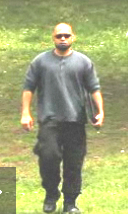
If any comfort can come out of the raid in Ottawa, which took down an alleged domestic terrorism cell, it's that the Canadian Security Intelligence Service (CSIS) may have finally found its stride.
It's closing in on elite status.
Finally, it can put behind the dysfunction of its Air India investigation of 25 years ago when CSIS, in its infancy, didn't share information (/informants - MS) with the RCMP, and the RCMP reciprocated with equal contempt.
Now it is gaining some stature.
Some international credibility.
With its success in the detection of the Toronto 18, and its role in the takedown in Ottawa of yet another alleged homegrown terrorist operation by integrated police forces led by the RCMP, it can be almost be spoken in the same breath as Britain's MI6. (MI-6 is international, MI-5 domestic, like CSIS)
This is no small feat.
CSIS and the RCMP are now on the same page, which bodes well for our security and the global war on terrorism. After all, there are snakes in every rock pile.
Back in May, CSIS director Dick Fadden told a Commons committee his spies were monitoring 200 such rock piles in Canada, one of them obviously being Operation Samosa, which now has three men linked to al-Qaida under arrest, including a 2008 Canadian Idol reject who savagely butchered an Avril Lavigne tune.
It's Complicated -- the song, as well as this scenario.
But do not immediately dismiss this Idol clown as some fumbling incompetent. If you do, do so at your peril.
As Fadden put it, "Accused terrorists are routinely portrayed as being too unsophisticated, ill-prepared or youthful to actually commit heinous acts.
"This theme permeated coverage of those charged in the Toronto plot," he added. "Some terrorists are, like those many spy novels, enormously resourceful and talented. Others are simply determined, but fairly average foot soldiers."
Fadden then cited Oklahoma City bomber Timothy McVeigh. While he was not a particularly gifted individual, said Fadden, his 1995 actions nonetheless killed 168 people, injured almost 700, and damaged more than 300 buildings within a 16-block radius.
In other words, just because someone can't sing, doesn't mean he cannot set off an IED detonator.
The song may have been Complicated.
But bombs aren't.
Showing posts with label DEMOS report radicalization the edge of violence. Show all posts
Showing posts with label DEMOS report radicalization the edge of violence. Show all posts
Friday, August 27, 2010
Wednesday, June 16, 2010
ISLAM ON CAMPUS - DO WE HAVE A PLAN?
*** Why wait 5 years until it hits here? Get ahead of the curve - stop trying to play catch-up with guys with bombs in their gitch or fuses in their turbans. ;) MS ***
FROM: http://www.guardian.co.uk/commentisfree/belief/2010/jan/09/university-islamic-extremism-students
http://www.guardian.co.uk/profile/jonathanbirdwell
Protect healthy extremism
In the panic over Islamic extremism at UK universities, we must not forget that some student radicalism is natural and valuable
With Yemen's deputy prime minister announcing that Umar Farouk Abdulmuttallab, the alleged Detroit bomber, "joined al-Qaida in Britain" before landing in Yemen, attention turns again to the role that UK universities play in producing terrorists among the doctors, lawyers and engineers in their graduating classes. On cue, vice-chancellors across the UK have announced that they will convene a working group to determine how to prevent the extremism that underlies acts of terrorism. But a clumsy overreaction by vice-chancellors will serve only to exacerbate the violent radicalisation they are seeking to prevent.
Counter-terrorism officials are right to be concerned about universities. There is a history stretching back into the early 1990s of groups such as Hizb ut-Tahrir and al-Muhajiroun operating both openly and under cover across UK universities. A number of violent extremists have graduated from UK universities, where participation in certain student organisations seemed to strengthen their opposition to western foreign policy and contributed to their support for violent attacks. However, an overwhelming larger group of individuals shared similar views and yet have not carried them to the point of violence.
Extremists target universities for recruitment because young people of university age are idealistic, passionate, curious and rebellious. They are more open to radical ideas, alternative ways of living and different ways to view the world. From hippie communes, to hardcore vegans, socialists and environmentalists to so-called Islamists, many students want to be radical and subversive. Ideas that perpetuate the "status quo" and support the establishment are inevitably uncool at university. But this does not make you violent.
In the Telegraph, Anthony Glees argues that, "British universities must look at their Islamic Societies and demand assurances that no radicalisation will be allowed. If they can't give those assurances, they should be disbanded." Glees fails to recognise a key point: extremism of some form or another on university campuses is inevitable, but not all extremism is violent.
It is difficult to know where to draw the line, particularly when it comes to Islam: should groups advocating the recreation of the Khalifah (caliphate) – a unified Islamic government – be disbanded or denied university support? University officials need to ensure that they focus only on those groups that advocate or glorify violence, not those that share goals that, while extreme, are consistent with the "blue sky", idealistic and radical thinking found within and across universities.
Efforts to tackle radicalisation on UK campuses, if they are to be successful and not counterproductive, must be able to recognise and distinguish between different types of radicalisation: radicalisation that is normal and healthy among those at university (be it Islamic, environmental or rightwing) and that which could lead to violence.
Research into terrorism tends to look exclusively at violent extremists and point to their similarities in order to piece together a workable profile to aid security services. Such an approach fails to account for the fact that a wide range of individuals may share these views and characteristics without ever coming close to contemplating violence. This is where "profiling" extremists falls down, and risks alienating large swaths of society. While similarities between violent and nonviolent extremists are widespread, our research has begun to reveal subtle but important differences between the two groups.
Professors and vice-chancellors are ill-equipped to distinguish healthy radicalisation from potentially violent radicalisation – the security services themselves do not know enough about these differences. Professors across the UK have already resisted calls for them to effectively spy on their students and it is important these temptations are not revisited.
But there is an important difference between attempting to spy and seeking to understand. Vice-chancellors can aim to better understand how extremist groups such as Hizb ut-Tahrir operate on campuses. They should also seek to stop radical preachers from being allowed to broadcast their views with the university's support. But they should not and cannot seek to dampen the passion and exploration that is such an important and valuable part of the UK university experience. In an age of political apathy we cannot afford to further depoliticise our young people.
FROM: http://www.guardian.co.uk/commentisfree/belief/2010/jan/09/university-islamic-extremism-students
http://www.guardian.co.uk/profile/jonathanbirdwell
Protect healthy extremism
In the panic over Islamic extremism at UK universities, we must not forget that some student radicalism is natural and valuable
With Yemen's deputy prime minister announcing that Umar Farouk Abdulmuttallab, the alleged Detroit bomber, "joined al-Qaida in Britain" before landing in Yemen, attention turns again to the role that UK universities play in producing terrorists among the doctors, lawyers and engineers in their graduating classes. On cue, vice-chancellors across the UK have announced that they will convene a working group to determine how to prevent the extremism that underlies acts of terrorism. But a clumsy overreaction by vice-chancellors will serve only to exacerbate the violent radicalisation they are seeking to prevent.
Counter-terrorism officials are right to be concerned about universities. There is a history stretching back into the early 1990s of groups such as Hizb ut-Tahrir and al-Muhajiroun operating both openly and under cover across UK universities. A number of violent extremists have graduated from UK universities, where participation in certain student organisations seemed to strengthen their opposition to western foreign policy and contributed to their support for violent attacks. However, an overwhelming larger group of individuals shared similar views and yet have not carried them to the point of violence.
Extremists target universities for recruitment because young people of university age are idealistic, passionate, curious and rebellious. They are more open to radical ideas, alternative ways of living and different ways to view the world. From hippie communes, to hardcore vegans, socialists and environmentalists to so-called Islamists, many students want to be radical and subversive. Ideas that perpetuate the "status quo" and support the establishment are inevitably uncool at university. But this does not make you violent.
In the Telegraph, Anthony Glees argues that, "British universities must look at their Islamic Societies and demand assurances that no radicalisation will be allowed. If they can't give those assurances, they should be disbanded." Glees fails to recognise a key point: extremism of some form or another on university campuses is inevitable, but not all extremism is violent.
It is difficult to know where to draw the line, particularly when it comes to Islam: should groups advocating the recreation of the Khalifah (caliphate) – a unified Islamic government – be disbanded or denied university support? University officials need to ensure that they focus only on those groups that advocate or glorify violence, not those that share goals that, while extreme, are consistent with the "blue sky", idealistic and radical thinking found within and across universities.
Efforts to tackle radicalisation on UK campuses, if they are to be successful and not counterproductive, must be able to recognise and distinguish between different types of radicalisation: radicalisation that is normal and healthy among those at university (be it Islamic, environmental or rightwing) and that which could lead to violence.
Research into terrorism tends to look exclusively at violent extremists and point to their similarities in order to piece together a workable profile to aid security services. Such an approach fails to account for the fact that a wide range of individuals may share these views and characteristics without ever coming close to contemplating violence. This is where "profiling" extremists falls down, and risks alienating large swaths of society. While similarities between violent and nonviolent extremists are widespread, our research has begun to reveal subtle but important differences between the two groups.
Professors and vice-chancellors are ill-equipped to distinguish healthy radicalisation from potentially violent radicalisation – the security services themselves do not know enough about these differences. Professors across the UK have already resisted calls for them to effectively spy on their students and it is important these temptations are not revisited.
But there is an important difference between attempting to spy and seeking to understand. Vice-chancellors can aim to better understand how extremist groups such as Hizb ut-Tahrir operate on campuses. They should also seek to stop radical preachers from being allowed to broadcast their views with the university's support. But they should not and cannot seek to dampen the passion and exploration that is such an important and valuable part of the UK university experience. In an age of political apathy we cannot afford to further depoliticise our young people.


Friday, May 14, 2010
DEMOS REPORT ON RADICALIZATION - THE EDGE OF VIOLENCE
*** An excellent report. A specific kudos to researcher, Michael King who is a Canadian. *** MS
FROM: http://www.demos.co.uk/publications/theedgeofviolence <<-- report can be downloaded at the link.
The path into terrorism in the name of Islam is often described as a process of radicalisation. But to be radical is not necessarily to be violent. Violent radicals are clearly enemies of liberal democracies, but non-violent radicals might sometimes be powerful allies.
This report is a summary of two years of research examining the difference between violent and non-violent radicals in Europe and Canada. It represents a step towards a more nuanced understanding of behaviour across radicalised individuals, the appeal of the al-Qaeda narrative, and the role of governments and communities in responding.
FROM: http://www.demos.co.uk/publications/theedgeofviolence <<-- report can be downloaded at the link.
The path into terrorism in the name of Islam is often described as a process of radicalisation. But to be radical is not necessarily to be violent. Violent radicals are clearly enemies of liberal democracies, but non-violent radicals might sometimes be powerful allies.
This report is a summary of two years of research examining the difference between violent and non-violent radicals in Europe and Canada. It represents a step towards a more nuanced understanding of behaviour across radicalised individuals, the appeal of the al-Qaeda narrative, and the role of governments and communities in responding.
Subscribe to:
Posts (Atom)