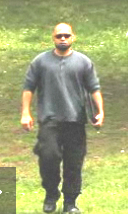
A Superior Court judge has meted out the lightest sentence to date among the adults convicted in the Toronto 18 terrorism plot.
Asad Ansari, 25, became a free man yesterday after receiving six years and five months — the equivalent of time served — for his participation in the group, which plotted devastating attacks in Toronto and Ottawa. The offence carries a maximum jail term of 10 years.
“While Mr. Ansari’s involvement in the offence was serious, it is not at the most serious end of the scale,” Justice Fletcher Dawson asserted in his 12-page ruling.
Ansari has been out on strict house-arrest bail for more than a year awaiting trial and sentencing. Taken on a two-for-one basis, his sentence is equivalent to the almost three years and three months he spent in pretrial custody. Judge Dawson, who also handed Ansari three years of probation, said it would be an “unjust hardship” to return him to prison at this juncture.
Ansari’s sentence is the lightest among the adults convicted in the Toronto 18 plot, though one youth received less time, having been released on time served more than a year ago.
After a lengthy joint trial with another co-accused, Ansari was convicted in June of participating in the Toronto 18, which planned to storm Parliament and detonate truck bombs in downtown Toronto. Authorities dismantled the homegrown cell in June 2006.
In his ruling, Judge Dawson pointed out Ansari was not charged in the bomb plot, and said his involvement in a terrorist training camp in the winter of 2005 was “more limited” than that of other group members.
During that camp, the court has heard, participants wore camouflage clothing and engaged in paramilitary drills.
“I am satisfied that once [Ansari] was there, the nature of the camp would have been apparent to him,” Judge Dawson said, rejecting testimony from Ansari, who said he was unaware of any terrorist implications.
“The jury obviously found that Mr. Ansari’s testimony was not credible,” Judge Dawson said. “I must say I reached the same conclusion.”
The Crown has painted Ansari as the group’s technical expert, one who helped edit video footage of the training camp and cleared malicious software from ringleader Fahim Ahmad’s computer. Judge Dawson said it was clear Ansari “pledged his computer skills for the benefit of the group.”
Ansari, who strolled out of court yesterday with his mother, declined to comment on the ruling. His lawyer, Breese Davies, lauded the judge’s “fit sentence” but said her client would be appealing his conviction within 30 days.
“He gave an innocent explanation [for his involvement in the group] and he maintains that position,” Ms. Davies said. Still, she added, “we are glad that this part is over. He can focus on moving on with his life.”
Upon hearing of the ruling, Public Safety Minster Vic Toews issued a statement highlighting the government’s recent decision to end the practice of granting convicts two-for-one credit for pretrial custody.
“Part of keeping our communities safe is keeping dangerous criminals behind bars, not releasing them into our streets early… Canadians believe this is unacceptable, and our government will continue to put the rights of victims ahead of the rights of criminals,” Mr. Toews said.
Ansari is one of the final Toronto 18 members to be sentenced. Ringleader Ahmad is to be sentenced this month, with Steven Chand and Shareef Abdelhaleem following in November. Seven of the group members were released without charges, and seven others have been convicted and sentenced.
*** Minister Toews and the CONservative party has no credibility in trying to use this as a proof of any sort about their worth in the national security file. The solution is not to jail everyone forever and ever while ignoring and neglecting the CAUSES that give rise to radicalization leading to terrorism. If you want to keep applying band-aids - you'll only end up looking like my 5 year old kid who does the same thinking that by applying all those bandaids, he is healed.
This CON government has done NOTHING to convince me of their sincerity in dealing with the scourge of homegrown radicalization we are facing. They are being opportunist (as usual) and here is their latest example. MS ***
Showing posts with label Canada homegrown terrorism. Show all posts
Showing posts with label Canada homegrown terrorism. Show all posts
Monday, October 4, 2010
Friday, October 1, 2010
CANADIANS OFF FOR JIHAD? MANHUNT ON...
http://www.theglobeandmail.com/news/national/global-manhunt-for-canadian-students/article1736541/singlepage/#articlecontent
They were three Muslim boys, from different parts of the world, with very different personalities.
Ferid Imam was an honours student from East Africa, an aspiring pharmacist and, according to his high-school soccer coach, “a dream player.” Muhannad al-Farekh hopped from Texas to the United Arab Emirates to Jordan to the Prairies. Miawand Yar, an ethnic Afghani born in Pakistan, was a schoolyard bully who was arrested for selling crack on his 20th birthday.
But in early 2007, instead of finishing their degrees at the University of Manitoba, the three friends boarded a plane bound for Pakistan via Europe. Their mysterious departure has sparked one of Canada’s most expensive and elaborate national security investigations since 9/11. Their flight has prompted CSIS agents to fan out around Winnipeg and the RCMP counterterrorism unit to pull in officers from across the country. The Federal Bureau of Investigation has dispatched agents to the Middle East as part of their hunt, and the young men have been the subject of secret briefings to U.S. presidents George W. Bush and Barack Obama.
Sources said they were next spotted in Peshawar – the gateway to the lawless tribal area bordering Afghanistan that is suspected of sheltering senior members of al-Qaeda. They were traced to the mountainous region of Waziristan, a magnet for insurgents and missile strikes from unmanned U.S. drones.
The Globe and Mail learned the identities of the missing students not from law enforcement officials but from members of Winnipeg’s Muslim community. Whispers about missing students came up when reporters started making inquiries about Hiva Alizadeh, the former Winnipegger who was charged in August with plotting to detonate bombs at unspecified sites in Canada. Those close to the missing students say they were not associates of Mr. Alizadeh, and national security sources say the two cases are not related.
None of them has been charged with a terrorism-related offence, but national security officials say the case may be an example of how unpredictable the radicalization process can be – it can take root in any part of the country, and latch on to a variety of personalities.
Ferid Imam came to Winnipeg when he was just seven years old. An East-African Muslim, he started school as an ESL student, but quickly integrated into a group of friends that included Chinese immigrants, Sikhs and what one of his family members described as white Canadians.
His wide toothy smile could be misleading; he didn’t tolerate foolish behaviour, and was self-disciplined. He never missed any of his five daily prayers, a relative says, but also never made a public display of his faith.
On the soccer pitch at Dakota Collegiate Institute, he was a rare combination of skill and maturity. A teammate, Michael Dempster, recalled the scolding he received from Ferid after he took a swing at an opposing player and received a four-game suspension.
“He pulled me aside and said ‘Mike, at the end of the day did this really matter? Was it that big a deal? It wasn’t cool – there are better ways to go about it,’ ” Mr. Dempster said.
When the team fell behind on the scoreboard, Ferid was always there to “pick up the pieces,” said Kevin Szajkowski, his coach at the time.
“He was outstanding in the way that he seemed like an old soul. He was older than his years,” the coach said.
About 12 kilometres away, in Winnipeg’s rough-and-tumble north end, Miawand Yar could be found in the schoolyard shaking down classmates for their lunch money.
Born in Pakistan to parents who fled their native Afghanistan after the Soviet invasion, the Yars came to Manitoba when Miawand was eight years old. He moved on from one junior school after he beat up two smaller students. In high school, he was unmotivated. “Most of the time he was just a couch potato playing his [video] games,” said one family member.
His studies in mechanical engineering at the University of Manitoba were disrupted on Aug. 13, 2003, when Miawand and several associates were accused of selling crack to an undercover police officer in a parking lot.
One of the arresting officers, Constable Sean Cassidy, later testified in a Winnipeg courtroom about how Miawand’s bag was stuffed so tightly with money and crack that it “almost exploded open” when he unzipped it.
The charges against him were later stayed by the Crown attorney’s office as the investigation spread out from the accused dealers on the street to the larger players in a suspected illegal drug syndicate.
His fortuitous legal turn coincided with some major life changes. He stopped going to the bars and ditched his old friends, including some characters who had been charged with, among other crimes, illegal possession of firearms and sexual assault.
He gravitated to Ferid, as well as Muhannad al-Farekh, a Texas-born business student who grew up in the UAE and was educated in Jordan. Miawand grew out his beard. His clothes changed from a hip-hop street style to more formal attire. On his head, he wore a white kufi.
“He was a completely changed man. In a good way, though. He was very humble,” said Rhodelle Magnayon, a computer engineering student. “He had his nose to the books, things like that. I thought, all the best to him. It could only look up from there.”
The trio volunteered, at least on paper, with the university’s Muslim Student Association – though other volunteers said Miawand and Muhannad did very little work. Ferid helped with the association’s annual conference, which featured a talk by a passionate and popular speaker, a British convert to Islam named Abdur Raheem Green.
If Ferid was once reserved about putting his faith on display, he shed that at university. On Feb. 23, 2006, in a posting on Mr. Green’s website, he lashed out at both Muslims and non-Muslims who were making light of the satirical cartoons of the Prophet Muhammad published in a Danish newspaper.
“I think to use the word ‘controversy’ in describing the situation that started in Denmark is misleading,” he wrote. “I believe there is nothing controversy about it, they attacked our Prophet [peace be upon him] , who is Islam by himself. Thus, I like to think of this as a ‘crisis’ rather than a controversy.”
In December, 2006 – a few months before their disappearance – the three friends took part in the Hajj, the annual pilgrimage to Saudi Arabia and Islam’s holiest site, Mecca. Miawand’s family was upset that, upon his return, he didn’t visit to tell them about his experience.
They had no idea he was planning another trip that would cut off contact for nearly four years and counting.
The letter that arrived in the mail was addressed to Miawand’s brother. It was short on specifics, but in it the 24-year-old made a strange request: Please pay my student loans.
To some, this might have been a positive sign and an indication that he wanted to return. But, as any religious scholar would know, an Islamic dictum states that, in order to get to heaven, one needs to be free of debt.
His family turned to the police and filed a missing-persons report, but it was clear from the outset that this wasn’t going to be solved by posting their pictures on community bulletin boards. Authorities had subjected all three families to extensive interviews. In Abu Dhabi, Muhannad’s father, Mahmoud al-Farekh, not only gave statements to the RCMP and the FBI, but to the security service of the United Arab Emirates. When his son reached out to him with a brief phone call two years ago, his father passed the information onto the police. The elder al-Farekh would not disclose to The Globe what they discussed.
Initial glimmers of hope that they might be on some impulsive youthful foray have been gradually snuffed out; family members and friends say they haven’t heard anything else from them.
“You ask yourself – why didn’t he give us a call or let us know where he is? That makes it unbelievable,” said one of Ferid Imam’s relatives, who spoke on the condition of anonymity. “We have no idea why he left. No one knows.”
Reached at his home in Abu Dhabi, Mahmoud al-Farekh said: “Did he go because he wanted to spread Islam or because he wanted to fight? I don’t know. I don’t know if I will ever know.”
Although such disappearances are not a pervasive or widespread trend in Islamic communities in the West, there are similar, isolated cases of young men vanishing in other North American cities, such as Minneapolis. Several Toronto Somali parents have faced questions from CSIS after their sons disappeared.
In Winnipeg, the fallout has not been confined to family members.
Six University of Manitoba students, complaining of stress, turned to a Muslim leader for counselling after they received repeated visits from CSIS agents. Shahina Siddiqui, the executive director of the Islamic Social Services Association, said she tried to calm them and inform them of their rights while also reminding them that the authorities need to investigate.
“I see both sides of it. I see the side of CSIS and the RCMP, and I see the side of the community,” Ms. Siddiqui said.
Members of the Muslim community said the missing students have left everyone in a place that is equally frustrating for both questioner and respondent; friends and family must endure inquiries that they simply can’t answer. One Muslim student who was questioned by CSIS said he and his friends were eager to help at first, but found the agency’s inquiries to be unceasing. “That’s the most we can give,” he said with a sigh of exasperation.
One of Ferid’s relatives said he’s at a loss to explain how or why the young man changed. “You don’t see radicalization in a person,” he said. “Everything they do is in their head.”
*** One of the best articles on this subject to emerge - I mean it. As we read here, the journalists found out through the community not law enforcement. I cannot for the life of me understand why on one hand, we are reminded of how great a threat this is indeed, but on the other hand refuse to engage the community in a positive way and truly keep us safe by supporting and empowering those who can actually get the job done not just talk about it. MS ***
They were three Muslim boys, from different parts of the world, with very different personalities.
Ferid Imam was an honours student from East Africa, an aspiring pharmacist and, according to his high-school soccer coach, “a dream player.” Muhannad al-Farekh hopped from Texas to the United Arab Emirates to Jordan to the Prairies. Miawand Yar, an ethnic Afghani born in Pakistan, was a schoolyard bully who was arrested for selling crack on his 20th birthday.
But in early 2007, instead of finishing their degrees at the University of Manitoba, the three friends boarded a plane bound for Pakistan via Europe. Their mysterious departure has sparked one of Canada’s most expensive and elaborate national security investigations since 9/11. Their flight has prompted CSIS agents to fan out around Winnipeg and the RCMP counterterrorism unit to pull in officers from across the country. The Federal Bureau of Investigation has dispatched agents to the Middle East as part of their hunt, and the young men have been the subject of secret briefings to U.S. presidents George W. Bush and Barack Obama.
Sources said they were next spotted in Peshawar – the gateway to the lawless tribal area bordering Afghanistan that is suspected of sheltering senior members of al-Qaeda. They were traced to the mountainous region of Waziristan, a magnet for insurgents and missile strikes from unmanned U.S. drones.
The Globe and Mail learned the identities of the missing students not from law enforcement officials but from members of Winnipeg’s Muslim community. Whispers about missing students came up when reporters started making inquiries about Hiva Alizadeh, the former Winnipegger who was charged in August with plotting to detonate bombs at unspecified sites in Canada. Those close to the missing students say they were not associates of Mr. Alizadeh, and national security sources say the two cases are not related.
None of them has been charged with a terrorism-related offence, but national security officials say the case may be an example of how unpredictable the radicalization process can be – it can take root in any part of the country, and latch on to a variety of personalities.
Ferid Imam came to Winnipeg when he was just seven years old. An East-African Muslim, he started school as an ESL student, but quickly integrated into a group of friends that included Chinese immigrants, Sikhs and what one of his family members described as white Canadians.
His wide toothy smile could be misleading; he didn’t tolerate foolish behaviour, and was self-disciplined. He never missed any of his five daily prayers, a relative says, but also never made a public display of his faith.
On the soccer pitch at Dakota Collegiate Institute, he was a rare combination of skill and maturity. A teammate, Michael Dempster, recalled the scolding he received from Ferid after he took a swing at an opposing player and received a four-game suspension.
“He pulled me aside and said ‘Mike, at the end of the day did this really matter? Was it that big a deal? It wasn’t cool – there are better ways to go about it,’ ” Mr. Dempster said.
When the team fell behind on the scoreboard, Ferid was always there to “pick up the pieces,” said Kevin Szajkowski, his coach at the time.
“He was outstanding in the way that he seemed like an old soul. He was older than his years,” the coach said.
About 12 kilometres away, in Winnipeg’s rough-and-tumble north end, Miawand Yar could be found in the schoolyard shaking down classmates for their lunch money.
Born in Pakistan to parents who fled their native Afghanistan after the Soviet invasion, the Yars came to Manitoba when Miawand was eight years old. He moved on from one junior school after he beat up two smaller students. In high school, he was unmotivated. “Most of the time he was just a couch potato playing his [video] games,” said one family member.
His studies in mechanical engineering at the University of Manitoba were disrupted on Aug. 13, 2003, when Miawand and several associates were accused of selling crack to an undercover police officer in a parking lot.
One of the arresting officers, Constable Sean Cassidy, later testified in a Winnipeg courtroom about how Miawand’s bag was stuffed so tightly with money and crack that it “almost exploded open” when he unzipped it.
The charges against him were later stayed by the Crown attorney’s office as the investigation spread out from the accused dealers on the street to the larger players in a suspected illegal drug syndicate.
His fortuitous legal turn coincided with some major life changes. He stopped going to the bars and ditched his old friends, including some characters who had been charged with, among other crimes, illegal possession of firearms and sexual assault.
He gravitated to Ferid, as well as Muhannad al-Farekh, a Texas-born business student who grew up in the UAE and was educated in Jordan. Miawand grew out his beard. His clothes changed from a hip-hop street style to more formal attire. On his head, he wore a white kufi.
“He was a completely changed man. In a good way, though. He was very humble,” said Rhodelle Magnayon, a computer engineering student. “He had his nose to the books, things like that. I thought, all the best to him. It could only look up from there.”
The trio volunteered, at least on paper, with the university’s Muslim Student Association – though other volunteers said Miawand and Muhannad did very little work. Ferid helped with the association’s annual conference, which featured a talk by a passionate and popular speaker, a British convert to Islam named Abdur Raheem Green.
If Ferid was once reserved about putting his faith on display, he shed that at university. On Feb. 23, 2006, in a posting on Mr. Green’s website, he lashed out at both Muslims and non-Muslims who were making light of the satirical cartoons of the Prophet Muhammad published in a Danish newspaper.
“I think to use the word ‘controversy’ in describing the situation that started in Denmark is misleading,” he wrote. “I believe there is nothing controversy about it, they attacked our Prophet [peace be upon him] , who is Islam by himself. Thus, I like to think of this as a ‘crisis’ rather than a controversy.”
In December, 2006 – a few months before their disappearance – the three friends took part in the Hajj, the annual pilgrimage to Saudi Arabia and Islam’s holiest site, Mecca. Miawand’s family was upset that, upon his return, he didn’t visit to tell them about his experience.
They had no idea he was planning another trip that would cut off contact for nearly four years and counting.
The letter that arrived in the mail was addressed to Miawand’s brother. It was short on specifics, but in it the 24-year-old made a strange request: Please pay my student loans.
To some, this might have been a positive sign and an indication that he wanted to return. But, as any religious scholar would know, an Islamic dictum states that, in order to get to heaven, one needs to be free of debt.
His family turned to the police and filed a missing-persons report, but it was clear from the outset that this wasn’t going to be solved by posting their pictures on community bulletin boards. Authorities had subjected all three families to extensive interviews. In Abu Dhabi, Muhannad’s father, Mahmoud al-Farekh, not only gave statements to the RCMP and the FBI, but to the security service of the United Arab Emirates. When his son reached out to him with a brief phone call two years ago, his father passed the information onto the police. The elder al-Farekh would not disclose to The Globe what they discussed.
Initial glimmers of hope that they might be on some impulsive youthful foray have been gradually snuffed out; family members and friends say they haven’t heard anything else from them.
“You ask yourself – why didn’t he give us a call or let us know where he is? That makes it unbelievable,” said one of Ferid Imam’s relatives, who spoke on the condition of anonymity. “We have no idea why he left. No one knows.”
Reached at his home in Abu Dhabi, Mahmoud al-Farekh said: “Did he go because he wanted to spread Islam or because he wanted to fight? I don’t know. I don’t know if I will ever know.”
Although such disappearances are not a pervasive or widespread trend in Islamic communities in the West, there are similar, isolated cases of young men vanishing in other North American cities, such as Minneapolis. Several Toronto Somali parents have faced questions from CSIS after their sons disappeared.
In Winnipeg, the fallout has not been confined to family members.
Six University of Manitoba students, complaining of stress, turned to a Muslim leader for counselling after they received repeated visits from CSIS agents. Shahina Siddiqui, the executive director of the Islamic Social Services Association, said she tried to calm them and inform them of their rights while also reminding them that the authorities need to investigate.
“I see both sides of it. I see the side of CSIS and the RCMP, and I see the side of the community,” Ms. Siddiqui said.
Members of the Muslim community said the missing students have left everyone in a place that is equally frustrating for both questioner and respondent; friends and family must endure inquiries that they simply can’t answer. One Muslim student who was questioned by CSIS said he and his friends were eager to help at first, but found the agency’s inquiries to be unceasing. “That’s the most we can give,” he said with a sigh of exasperation.
One of Ferid’s relatives said he’s at a loss to explain how or why the young man changed. “You don’t see radicalization in a person,” he said. “Everything they do is in their head.”
*** One of the best articles on this subject to emerge - I mean it. As we read here, the journalists found out through the community not law enforcement. I cannot for the life of me understand why on one hand, we are reminded of how great a threat this is indeed, but on the other hand refuse to engage the community in a positive way and truly keep us safe by supporting and empowering those who can actually get the job done not just talk about it. MS ***


Tuesday, September 7, 2010
CANADA & TERRORISM : WARNING SIGNALS
*** An excellent piece. MS ***
At an iftar get-together that Muslims working at Canadian International Development Agency arranged I and two other Muslims spoke on Islam and Canadian Muslims.
A CIDA official asked us to comment on an Ottawa Citizen article that he said he found very convincing. Two Muslims had written about “the rising tide of jihadi radicalism that is sweeping like a contagious disease among Muslim youth” and that “there could be as many as 100,000 Muslim Canadians who are hostile to Canada and Western civilization.”
We said the article was inaccurate, as a letter the next day in the Citizen stated, and that most Canadian Muslims were loyal and productive citizens and that, even if the law found those accused in the recent arrests to be guilty, they are only a few of the million or so Muslims in Canada. But the recent arrests of some Muslims in Ontario on terrorism-related charges show the deep divisions within the Muslim community, with some people worrying that Muslim youth are being brainwashed by extremists and goaded into disastrous acts of terrorism in Canada and a few stating that the arrests are just a continuation of harassment of Canadian Muslims.
Nevertheless, I have been thinking. What would happen to the image of Islam, and to the Muslims of Canada, if the Canadian security agencies faltered at some point and a real terrorist incident took place in Canada killing innocent people and causing widespread damage? It is safe to say that such an incident would cause a severe backlash that could threaten all Canadian Muslims and turn Canada into a much tougher and less gentle country.
I’m not saying that the accused in the recent arrests planned terrorism. Of course, they are presumed to be innocent till they are found guilty by due process. But it is equally true that not all those who were presumed innocent in past cases were found to be innocent by the judicial process. Some Muslims accused of plotting terrorism were found to be guilty by our judiciary system, including the majority of the Toronto 18, Momin Khawaja of Ottawa and Said Namouh of Quebec. Some had planned to harm the innocent in Europe, others targeted Canada. And of course terrorists kill innocent people every day in Iraq, Pakistan and Afghanistan.
IT is disturbing that some Muslims are suggesting that the Canadian security agencies, having bungled in the past in the Maher Arar and other cases, have framed the present accused and that they are targeting innocent Muslims. These Muslims live in a fantasy world of their own, substituting their wishful thinking and illusions for reality. Equally disturbing, some Muslims have become media darlings, less for their expertise and more for their Muslim-bashing.
Canadian security agencies have blundered in the past. No security agency in any country has been error-free. Human beings make mistakes. But Canadian security agencies have a job to do — protect all Canadians. It is not an easy or a clean job, but it has to be done for the protection of all Canadians, including and particularly Canadian Muslims who could be endangered physically and in additional ways if a major terrorist attack took place in Canada. It is the religious and civic duty of all Canadians to help security agencies protect Canada. There is no trustworthy evidence that they are targeting Muslims in particular. On the other hand, I find them sensitive to the traditions and feelings of Muslims.
Canadian imams are emphasizing that Islam promotes peace, justice, compassion and security for everyone. I heard excellent khutbas by Ottawa Muslim Association Imam Khaled Al-Azhary and by Ehab El-Komy, a layman. An excellent khutba by Imam Mohamed Jebara enlightened Muslims on the Islamic emphasis on justice, compassion, loyalty, peace, and human brotherhood. Other imams in Canada are conveying similar messages.
So why would a Muslim violate the teachings of the Holy Qur’an and the Prophet Muhammad (peace be upon him), doom himself to hell by planning to kill himself and innocent people, endanger his own family and all Muslims of Canada and harm a country that provides him food, shelter, security and dignity?
Canada offers all its citizens religious and other freedoms, human rights and enviable social benefits. It accepts not only immigrants but Muslim refugees fleeing persecution from fellow Muslims. Millions of people around the world, including Muslims, would give anything to be able to live in Canada — the world’s best country, according to some. It seems the major reason Canadian Muslims are disturbed by Canada’s involvement in the NATO war in Afghanistan.
Canada refused to join the US attack on Iraq. But it is participating in the NATO war in Afghanistan to fulfill its treaty obligations. Canada is in Afghanistan to help the Afghans fight extremism and build their country, not to exploit or harm them. Many Canadians oppose Canada’s military involvement in Afghanistan. They can voice their opposition democratically and are doing so. Canada is planning to end its combat role in Afghanistan next year but will continue to train and assist the Afghans.
It would be tragic if the harmony and tranquility of Canada were to be disturbed by innocent Muslims manipulated into extremist crimes by people who understand neither the humanitarianism, justice and compassion taught by Islam nor the blessings of living in a country which embraces all its citizens with equal warmth and provides them security, social services, human rights and dignity that are perhaps not matched by any other country. If terrorist acts took place in Canada, the backlash against Muslims would harm innocent Canadian Muslims, damage Canada’s relations with Muslim countries and close Canada’s doors to thousands of Muslims who flee persecution in their own countries from fellow Muslims and seek hope, dignity, safety and a good life in this beautiful country.
Mohammed Azhar Ali Khan is a retired newspaperman, public servant and refugee judge. He has received the Order of Canada, the Order of Ontario and the Queen’s Golden Jubilee Medal for his work as a journalist, leadership of Muslims and efforts to promote understanding between Canadians of different faiths.
http://www.eurasiareview.com/201009077845/canada-and-terrorism-warning-signals.html
At an iftar get-together that Muslims working at Canadian International Development Agency arranged I and two other Muslims spoke on Islam and Canadian Muslims.
A CIDA official asked us to comment on an Ottawa Citizen article that he said he found very convincing. Two Muslims had written about “the rising tide of jihadi radicalism that is sweeping like a contagious disease among Muslim youth” and that “there could be as many as 100,000 Muslim Canadians who are hostile to Canada and Western civilization.”
We said the article was inaccurate, as a letter the next day in the Citizen stated, and that most Canadian Muslims were loyal and productive citizens and that, even if the law found those accused in the recent arrests to be guilty, they are only a few of the million or so Muslims in Canada. But the recent arrests of some Muslims in Ontario on terrorism-related charges show the deep divisions within the Muslim community, with some people worrying that Muslim youth are being brainwashed by extremists and goaded into disastrous acts of terrorism in Canada and a few stating that the arrests are just a continuation of harassment of Canadian Muslims.
Nevertheless, I have been thinking. What would happen to the image of Islam, and to the Muslims of Canada, if the Canadian security agencies faltered at some point and a real terrorist incident took place in Canada killing innocent people and causing widespread damage? It is safe to say that such an incident would cause a severe backlash that could threaten all Canadian Muslims and turn Canada into a much tougher and less gentle country.
I’m not saying that the accused in the recent arrests planned terrorism. Of course, they are presumed to be innocent till they are found guilty by due process. But it is equally true that not all those who were presumed innocent in past cases were found to be innocent by the judicial process. Some Muslims accused of plotting terrorism were found to be guilty by our judiciary system, including the majority of the Toronto 18, Momin Khawaja of Ottawa and Said Namouh of Quebec. Some had planned to harm the innocent in Europe, others targeted Canada. And of course terrorists kill innocent people every day in Iraq, Pakistan and Afghanistan.
IT is disturbing that some Muslims are suggesting that the Canadian security agencies, having bungled in the past in the Maher Arar and other cases, have framed the present accused and that they are targeting innocent Muslims. These Muslims live in a fantasy world of their own, substituting their wishful thinking and illusions for reality. Equally disturbing, some Muslims have become media darlings, less for their expertise and more for their Muslim-bashing.
Canadian security agencies have blundered in the past. No security agency in any country has been error-free. Human beings make mistakes. But Canadian security agencies have a job to do — protect all Canadians. It is not an easy or a clean job, but it has to be done for the protection of all Canadians, including and particularly Canadian Muslims who could be endangered physically and in additional ways if a major terrorist attack took place in Canada. It is the religious and civic duty of all Canadians to help security agencies protect Canada. There is no trustworthy evidence that they are targeting Muslims in particular. On the other hand, I find them sensitive to the traditions and feelings of Muslims.
Canadian imams are emphasizing that Islam promotes peace, justice, compassion and security for everyone. I heard excellent khutbas by Ottawa Muslim Association Imam Khaled Al-Azhary and by Ehab El-Komy, a layman. An excellent khutba by Imam Mohamed Jebara enlightened Muslims on the Islamic emphasis on justice, compassion, loyalty, peace, and human brotherhood. Other imams in Canada are conveying similar messages.
So why would a Muslim violate the teachings of the Holy Qur’an and the Prophet Muhammad (peace be upon him), doom himself to hell by planning to kill himself and innocent people, endanger his own family and all Muslims of Canada and harm a country that provides him food, shelter, security and dignity?
Canada offers all its citizens religious and other freedoms, human rights and enviable social benefits. It accepts not only immigrants but Muslim refugees fleeing persecution from fellow Muslims. Millions of people around the world, including Muslims, would give anything to be able to live in Canada — the world’s best country, according to some. It seems the major reason Canadian Muslims are disturbed by Canada’s involvement in the NATO war in Afghanistan.
Canada refused to join the US attack on Iraq. But it is participating in the NATO war in Afghanistan to fulfill its treaty obligations. Canada is in Afghanistan to help the Afghans fight extremism and build their country, not to exploit or harm them. Many Canadians oppose Canada’s military involvement in Afghanistan. They can voice their opposition democratically and are doing so. Canada is planning to end its combat role in Afghanistan next year but will continue to train and assist the Afghans.
It would be tragic if the harmony and tranquility of Canada were to be disturbed by innocent Muslims manipulated into extremist crimes by people who understand neither the humanitarianism, justice and compassion taught by Islam nor the blessings of living in a country which embraces all its citizens with equal warmth and provides them security, social services, human rights and dignity that are perhaps not matched by any other country. If terrorist acts took place in Canada, the backlash against Muslims would harm innocent Canadian Muslims, damage Canada’s relations with Muslim countries and close Canada’s doors to thousands of Muslims who flee persecution in their own countries from fellow Muslims and seek hope, dignity, safety and a good life in this beautiful country.
Mohammed Azhar Ali Khan is a retired newspaperman, public servant and refugee judge. He has received the Order of Canada, the Order of Ontario and the Queen’s Golden Jubilee Medal for his work as a journalist, leadership of Muslims and efforts to promote understanding between Canadians of different faiths.
http://www.eurasiareview.com/201009077845/canada-and-terrorism-warning-signals.html
Saturday, July 17, 2010
MORE CANADIANS TURN TO VIOLENT JIHAD
*** An article stating the obvious. How about the PLAN - what PLAN is in place to deal with this situation? You cannot arrest the problem away, you MUST deal with underlying causes. MS ***
http://www.ctv.ca/CTVNews/TopStories/20100716/jihad-threats-mountie-100716/
The Mountie in charge of investigating terrorist threats says he's alarmed at the growing number of Canadians adopting violent jihad.
Assistant Commissioner Gilles Michaud said RCMP are aware of a number of Canadians who are currently training at Islamic terror camps.
"We have some in Pakistan, we see some in Somalia, we see them in Afghanistan," he said.
RCMP believe that two-dozen Canadians have trained at camps in Somalia, Afghanistan and Pakistan (the same country where the Times Square bomber is believed to have sought instruction in terrorist tactics). They suspect that several Canadians hold leadership roles in al Qaeda-linked groups.
The Mounties are investigating at least six young Somali-Canadian men from the Toronto area who are believed to have left the country to join al Shabaab, the Somalia-based group responsible for last week's suicide bombings in Uganda that killed 76 people.
But Michaud is also concerned about the threat of Islamic extremists unleashing terror on Canadian soil, particularly if those trained at terrorist camps overseas return to Canada.
There are those in Canada who are fundraising for terrorist groups "through charities, drug dealing and credit card fraud," he said.
What's more, threats from "neo-jihadist groups" are no longer limited to major Canadian cities, he said -- they now affect smaller communities across the country.
Many of the suspected terrorists being investigated by RCMP are second or third generation Canadians who have been integrated into Canadian society before becoming radicalised, Michaud said.
RCMP have even set up a national security tip line, at 1-800-420-5805, where concerned citizens can report suspicious behaviour 24 hours a day, seven days a week.
But some Islamic groups say the Mounties are exaggerating the threat.
"I don't get the sense it is a huge problem within the Muslim community," said Khalid Elgazzar with the Council of American-Islamic Relations Canada. "I would say these are isolated incidents."
With a report from CTV's Ottawa Bureau Chief Robert Fife
http://www.ctv.ca/CTVNews/TopStories/20100716/jihad-threats-mountie-100716/
The Mountie in charge of investigating terrorist threats says he's alarmed at the growing number of Canadians adopting violent jihad.
Assistant Commissioner Gilles Michaud said RCMP are aware of a number of Canadians who are currently training at Islamic terror camps.
"We have some in Pakistan, we see some in Somalia, we see them in Afghanistan," he said.
RCMP believe that two-dozen Canadians have trained at camps in Somalia, Afghanistan and Pakistan (the same country where the Times Square bomber is believed to have sought instruction in terrorist tactics). They suspect that several Canadians hold leadership roles in al Qaeda-linked groups.
The Mounties are investigating at least six young Somali-Canadian men from the Toronto area who are believed to have left the country to join al Shabaab, the Somalia-based group responsible for last week's suicide bombings in Uganda that killed 76 people.
But Michaud is also concerned about the threat of Islamic extremists unleashing terror on Canadian soil, particularly if those trained at terrorist camps overseas return to Canada.
There are those in Canada who are fundraising for terrorist groups "through charities, drug dealing and credit card fraud," he said.
What's more, threats from "neo-jihadist groups" are no longer limited to major Canadian cities, he said -- they now affect smaller communities across the country.
Many of the suspected terrorists being investigated by RCMP are second or third generation Canadians who have been integrated into Canadian society before becoming radicalised, Michaud said.
RCMP have even set up a national security tip line, at 1-800-420-5805, where concerned citizens can report suspicious behaviour 24 hours a day, seven days a week.
But some Islamic groups say the Mounties are exaggerating the threat.
"I don't get the sense it is a huge problem within the Muslim community," said Khalid Elgazzar with the Council of American-Islamic Relations Canada. "I would say these are isolated incidents."
With a report from CTV's Ottawa Bureau Chief Robert Fife
Monday, July 5, 2010
MINISTER TOEWS ON TORONTO 18 CASE
Jun 23, 2010 20:29 ET
Statement by the Honourable Vic Toews, Minister of Public Safety, in Response to the Convictions of the Final Accused in Project Osage
OTTAWA, ONTARIO--(Marketwire - June 23, 2010) - "Today marks the conclusion to an important chapter in our history - the convictions on terrorism charges of the last of the accused in Project Osage, better known to many Canadians as the Toronto 18 cases. If it wasn't for the timely intervention of law enforcement and security officials, it is entirely possible that the plotters could have been successful and taken many innocent lives.
This case demonstrates that Canada is not immune from terrorist threats. Although we have been successful in disrupting terrorist plots, and convicting terrorists, we are always looking for new ways to strengthen our mutual safety and security. We must continue to remain vigilant.
While the legal process may continue for some of those found guilty, it is appropriate at this time to acknowledge the hard work and successful collaboration of CSIS, the RCMP, the Toronto Police Service, Peel Regional Police and other law enforcement partners, the federal Public Prosecution Service of Canada and the Department of Justice in uncovering the plot, laying charges and bringing strong cases before the courts. It is an example of how effectively different parts of our national security and justice systems work together to protect Canada and all those who live here.
On behalf of the Government of Canada and Canadians, I want to thank all of those who worked to bring Project Osage to successful conclusion."
For more information, please contact
Public Safety Canada
Media Relations
613-991-0657
Statement by the Honourable Vic Toews, Minister of Public Safety, in Response to the Convictions of the Final Accused in Project Osage
OTTAWA, ONTARIO--(Marketwire - June 23, 2010) - "Today marks the conclusion to an important chapter in our history - the convictions on terrorism charges of the last of the accused in Project Osage, better known to many Canadians as the Toronto 18 cases. If it wasn't for the timely intervention of law enforcement and security officials, it is entirely possible that the plotters could have been successful and taken many innocent lives.
This case demonstrates that Canada is not immune from terrorist threats. Although we have been successful in disrupting terrorist plots, and convicting terrorists, we are always looking for new ways to strengthen our mutual safety and security. We must continue to remain vigilant.
While the legal process may continue for some of those found guilty, it is appropriate at this time to acknowledge the hard work and successful collaboration of CSIS, the RCMP, the Toronto Police Service, Peel Regional Police and other law enforcement partners, the federal Public Prosecution Service of Canada and the Department of Justice in uncovering the plot, laying charges and bringing strong cases before the courts. It is an example of how effectively different parts of our national security and justice systems work together to protect Canada and all those who live here.
On behalf of the Government of Canada and Canadians, I want to thank all of those who worked to bring Project Osage to successful conclusion."
For more information, please contact
Public Safety Canada
Media Relations
613-991-0657
Friday, July 2, 2010
HOW AL SHABAB RECRUITS JIHADI'S IN THE WEST
*** Once again, kudos to Stewart Bell for an eye-opening article. I just hope we have a plan in place to deal with this but I see little interest in developing a counter narrative. The Canadian public is being put at risk because of this foot-dragging.
Too bad for the racist, hateful language by those posting after the story - but its open season on Islam these days so its to be expected.
MS ***
FROM: http://www.nationalpost.com/news/From+teens+terrorists+Shabab+recruits+Western+martyrs/3224716/story.html
Stewart Bell, National Post · Thursday, Jul. 1, 2010
In a video posted on the Internet, 10 militants-in-training jog on a sandy trail on the Somali plains. Their faces are masked but the one in the red-checkered scarf and white runners is alleged to be a young Canadian.
His name is Abdul Karim.
“We have a global mission,” one of the Al-Shabab trainees says into the camera, speaking in English and holding a worn assault rifle. “Come join us and defend the religion of Allah.”
A police investigation now underway in Ontario by the Integrated National Security Enforcement Team (INSET) is trying to trace how Canadian youths are ending up in Somalia at the paramilitary training camps of Al-Shabab, the al-Qaeda-linked militant group.
A top-secret government report obtained by the National Post says Al-Shabab, which emerged from the heavily armed chaos of Somalia in 2006, is using a variety of methods to entice Canadian youths to its camps. “Islamist extremists are radicalizing and recruiting Somali-Canadian youths within Canada to travel to Somalia for jihad training,” says the Integrated Threat Assessment Centre report, titled “Al-Shabab’s Recruitment of Youths from Canada.”
The Canadian Security Intelligence Service said five Somali-Canadians who left Toronto between September and November 2009 “could receive weapons and related training” in Somalia and “potentially engage in Al-Shabab-related violent activities,” spokeswoman Isabelle Scott said.
A sixth such Somali-Canadian is presumed dead.
Police in the United States and Europe are conducting similar investigations. A Danish-Somali killed 24 people in a suicide bombing in Mogadishu last December. On June 5, two New Jersey men were arrested at JFK airport as they were allegedly on their way to Africa to join Al-Shabab.
“The situation remains chaotic and continues to provide and facilitate [recruiting] pipelines, training and attack planning by extremist groups targeting Western interests in Somalia and the region,” Ms. Scott said.
Videos like the one in which Abdul Karim, an 18-year-old Somali-Canadian from Toronto, allegedly makes a one-minute cameo are central to Al-Shabab’s recruiting campaign. (The videos cited here were obtained from the SITE Intelligence Group, which found them on extremist websites and produced transcripts.)
“To all you youth out in the States, out in the U.K., Sweden, France, and so on,” a singer raps in one of them.
“You are now at the biggest crossroads of your life.
“You must make a choice: Are you going to live like an honourable man and die like an honourable man?
“Or are you going to live like a humiliated coward and die like one?”
In Toronto, young Somalis watch Al-Shabab videos “all the time,” said Mohamed Abdullahi Mohamed, a Somali-Canadian who is trying to start a group called Generation Islam to combat radicalization in his community.
“Watching these Shabab propaganda videos is very widespread among our youth,” he said, adding he was disappointed by the government response to what he described as “young boys being brainwashed and sent into a path of destruction.”
The de-classified government report, circulated internally on March 29 and released under the Access to Information Act, says Al-Shabab recruiting efforts are targeting idealistic Western youths.
“Whereas Somali parents retreat into their own culture in the face of Western values, Somali teenagers struggling to assimilate often reject adult tradition and authority in the home,” reads the Intelligence Assessment.
“Such cultural dissonance, according to another study, is rampant in diaspora Somali communities in Toronto and elsewhere, and opens the door to dangerously powerful influence from peers.”
The Internet propaganda of Al-Shabab mixes militant Islamist ideology with Somali nationalism to appeal to a young on-line audience. “And that’s a very powerful cocktail,” said Ahmed Hussen, president of the Canadian Somali Congress.
One recent video shows footage of Mohamed Elmi Ibrahim, a 22-year-old University of Toronto student who, according to a pro-Al-Shabab website, was killed in combat in Somalia. It portrays him as a martyr.
“Jihad against the armies,” goes the slow dirge.
“No rest for the oppressors, a life of fear.
“Establishing Allah’s law on land and sea.
“My number one goal die a shahid [martyr].”
The singer is Omar Hammami, a U.S. citizen who moved to Toronto, married a Somali-Canadian and is now a top Al-Shabab commander. He appears frequently in recruiting videos, rapping lyrics about jihad.
“Gonna knock America down to her knees,” he sings.
“You want to promote your religion: democracy.
“Along with your cross, temples and your priests.
“Our response is martyrdom or victory.”
It may be too late for those who have already left Canada. Few foreign recruits have returned alive. Before Mr. Ibrahim’s death, another Canadian extremist and former Toronto resident known as Asparo was killed in a gunfight with Ethiopian troops in July 2008. Somali and Ethiopian officials report finding Canadian identity documents on the bodies of Islamist fighters killed in battle.
“We’re aware of several individuals that have gone abroad for training,” said RCMP Assistant Commissioner Gilles Michaud, head of National Security Criminal Investigations for the Mounties, “but there’s not a lot of them that we’re aware of that are back.”
But even when they do come back, police can’t always do anything about it. Witnesses and reliable evidence are hard to come by, since the camps are based in countries like Somalia that are largely un-policed.
“If they only go for training and they don’t use it, or we can’t demonstrate that they have an intent of using it, there’s no charge for that,” Asst. Comm. Michaud said. “The other thing that is of concern is the fact that they get this training, then they come back to Canada. And so you now have individuals that have gone to the point of getting training and, not knowing what the intent is at the end of the day, and they’re roaming our streets.”
Abdul Karim is back in Toronto now.
He lives with his father, Ahmed, on the fourth floor of an apartment tower near Pearson airport. (The National Post is not publishing his surname because he has not been charged and would have been a minor when the alleged training took place.)
His father said the events in question took place long ago and lasted only a few days but he declined to answer whether he disputed that his son was at the camp. He refused interview requests, claiming he was being harassed.
Neither the RCMP nor CSIS would comment on whether they were investigating Abdul Karim. “I can’t talk about specifics of the case, who we are interviewing or planning to interview. This is an ongoing matter,” RCMP spokesman Sergeant Marc LaPorte said.
“Any radicalization or recruitment by any terrorist group like Al-Shabab would be of interest to INSET. Although I can’t comment on the number of missing Somali-Canadians, the RCMP monitor the issue of Canadians going abroad to participate in terrorism-related activities, and when warranted, we commence the appropriate criminal investigations.”
The Al-Shabab video allegedly featuring Abdul Karim was released in 2008. At that time, some Somalis had taken up arms to fight troops from neighbouring Ethiopia who had invaded the country to support the fragile Somali government.
Mr. Mohamed, who was among those who fought the Ethiopians and has since returned to Toronto, said recruits who trained then should not be considered terrorists. But he said those who joined Al-Shabab after Ethiopia withdrew its forces early in 2009 were driven by ideology rather than patriotism.
The 40-minute Al-Shabab video mentions Ethiopia, but only once. It does, however, mention fighting the United States, exacting revenge over the Danish cartoons and speaks repeatedly of a global fight against non-Muslims. “We are coming you Christians, we are coming you Jews,” it says.
The recruits are shown running an obstacle course, shooting at a photo of the Somali president at that time, Abdullahi Yusuf Ahmed, firing rocket launchers and practising hand-to-hand combat.
The one believed to be Abdul Karim is dressed in camouflage clothing. The lanky teen marches, jogs on the spot and bunny hops with his hands behind his head.
At least two others have light skin, which is visible below their rolled up sleeves, indicating they are not Somalis.
Two can be heard speaking in English.
“Oh Muslim brothers,” one of them says, standing behind what looks like a rocket launcher, “migrate to the land of jihad to fight alongside your brothers.”
National Post
sbell@nationalpost.com
Too bad for the racist, hateful language by those posting after the story - but its open season on Islam these days so its to be expected.
MS ***
FROM: http://www.nationalpost.com/news/From+teens+terrorists+Shabab+recruits+Western+martyrs/3224716/story.html
Stewart Bell, National Post · Thursday, Jul. 1, 2010
In a video posted on the Internet, 10 militants-in-training jog on a sandy trail on the Somali plains. Their faces are masked but the one in the red-checkered scarf and white runners is alleged to be a young Canadian.
His name is Abdul Karim.
“We have a global mission,” one of the Al-Shabab trainees says into the camera, speaking in English and holding a worn assault rifle. “Come join us and defend the religion of Allah.”
A police investigation now underway in Ontario by the Integrated National Security Enforcement Team (INSET) is trying to trace how Canadian youths are ending up in Somalia at the paramilitary training camps of Al-Shabab, the al-Qaeda-linked militant group.
A top-secret government report obtained by the National Post says Al-Shabab, which emerged from the heavily armed chaos of Somalia in 2006, is using a variety of methods to entice Canadian youths to its camps. “Islamist extremists are radicalizing and recruiting Somali-Canadian youths within Canada to travel to Somalia for jihad training,” says the Integrated Threat Assessment Centre report, titled “Al-Shabab’s Recruitment of Youths from Canada.”
The Canadian Security Intelligence Service said five Somali-Canadians who left Toronto between September and November 2009 “could receive weapons and related training” in Somalia and “potentially engage in Al-Shabab-related violent activities,” spokeswoman Isabelle Scott said.
A sixth such Somali-Canadian is presumed dead.
Police in the United States and Europe are conducting similar investigations. A Danish-Somali killed 24 people in a suicide bombing in Mogadishu last December. On June 5, two New Jersey men were arrested at JFK airport as they were allegedly on their way to Africa to join Al-Shabab.
“The situation remains chaotic and continues to provide and facilitate [recruiting] pipelines, training and attack planning by extremist groups targeting Western interests in Somalia and the region,” Ms. Scott said.
Videos like the one in which Abdul Karim, an 18-year-old Somali-Canadian from Toronto, allegedly makes a one-minute cameo are central to Al-Shabab’s recruiting campaign. (The videos cited here were obtained from the SITE Intelligence Group, which found them on extremist websites and produced transcripts.)
“To all you youth out in the States, out in the U.K., Sweden, France, and so on,” a singer raps in one of them.
“You are now at the biggest crossroads of your life.
“You must make a choice: Are you going to live like an honourable man and die like an honourable man?
“Or are you going to live like a humiliated coward and die like one?”
In Toronto, young Somalis watch Al-Shabab videos “all the time,” said Mohamed Abdullahi Mohamed, a Somali-Canadian who is trying to start a group called Generation Islam to combat radicalization in his community.
“Watching these Shabab propaganda videos is very widespread among our youth,” he said, adding he was disappointed by the government response to what he described as “young boys being brainwashed and sent into a path of destruction.”
The de-classified government report, circulated internally on March 29 and released under the Access to Information Act, says Al-Shabab recruiting efforts are targeting idealistic Western youths.
“Whereas Somali parents retreat into their own culture in the face of Western values, Somali teenagers struggling to assimilate often reject adult tradition and authority in the home,” reads the Intelligence Assessment.
“Such cultural dissonance, according to another study, is rampant in diaspora Somali communities in Toronto and elsewhere, and opens the door to dangerously powerful influence from peers.”
The Internet propaganda of Al-Shabab mixes militant Islamist ideology with Somali nationalism to appeal to a young on-line audience. “And that’s a very powerful cocktail,” said Ahmed Hussen, president of the Canadian Somali Congress.
One recent video shows footage of Mohamed Elmi Ibrahim, a 22-year-old University of Toronto student who, according to a pro-Al-Shabab website, was killed in combat in Somalia. It portrays him as a martyr.
“Jihad against the armies,” goes the slow dirge.
“No rest for the oppressors, a life of fear.
“Establishing Allah’s law on land and sea.
“My number one goal die a shahid [martyr].”
The singer is Omar Hammami, a U.S. citizen who moved to Toronto, married a Somali-Canadian and is now a top Al-Shabab commander. He appears frequently in recruiting videos, rapping lyrics about jihad.
“Gonna knock America down to her knees,” he sings.
“You want to promote your religion: democracy.
“Along with your cross, temples and your priests.
“Our response is martyrdom or victory.”
It may be too late for those who have already left Canada. Few foreign recruits have returned alive. Before Mr. Ibrahim’s death, another Canadian extremist and former Toronto resident known as Asparo was killed in a gunfight with Ethiopian troops in July 2008. Somali and Ethiopian officials report finding Canadian identity documents on the bodies of Islamist fighters killed in battle.
“We’re aware of several individuals that have gone abroad for training,” said RCMP Assistant Commissioner Gilles Michaud, head of National Security Criminal Investigations for the Mounties, “but there’s not a lot of them that we’re aware of that are back.”
But even when they do come back, police can’t always do anything about it. Witnesses and reliable evidence are hard to come by, since the camps are based in countries like Somalia that are largely un-policed.
“If they only go for training and they don’t use it, or we can’t demonstrate that they have an intent of using it, there’s no charge for that,” Asst. Comm. Michaud said. “The other thing that is of concern is the fact that they get this training, then they come back to Canada. And so you now have individuals that have gone to the point of getting training and, not knowing what the intent is at the end of the day, and they’re roaming our streets.”
Abdul Karim is back in Toronto now.
He lives with his father, Ahmed, on the fourth floor of an apartment tower near Pearson airport. (The National Post is not publishing his surname because he has not been charged and would have been a minor when the alleged training took place.)
His father said the events in question took place long ago and lasted only a few days but he declined to answer whether he disputed that his son was at the camp. He refused interview requests, claiming he was being harassed.
Neither the RCMP nor CSIS would comment on whether they were investigating Abdul Karim. “I can’t talk about specifics of the case, who we are interviewing or planning to interview. This is an ongoing matter,” RCMP spokesman Sergeant Marc LaPorte said.
“Any radicalization or recruitment by any terrorist group like Al-Shabab would be of interest to INSET. Although I can’t comment on the number of missing Somali-Canadians, the RCMP monitor the issue of Canadians going abroad to participate in terrorism-related activities, and when warranted, we commence the appropriate criminal investigations.”
The Al-Shabab video allegedly featuring Abdul Karim was released in 2008. At that time, some Somalis had taken up arms to fight troops from neighbouring Ethiopia who had invaded the country to support the fragile Somali government.
Mr. Mohamed, who was among those who fought the Ethiopians and has since returned to Toronto, said recruits who trained then should not be considered terrorists. But he said those who joined Al-Shabab after Ethiopia withdrew its forces early in 2009 were driven by ideology rather than patriotism.
The 40-minute Al-Shabab video mentions Ethiopia, but only once. It does, however, mention fighting the United States, exacting revenge over the Danish cartoons and speaks repeatedly of a global fight against non-Muslims. “We are coming you Christians, we are coming you Jews,” it says.
The recruits are shown running an obstacle course, shooting at a photo of the Somali president at that time, Abdullahi Yusuf Ahmed, firing rocket launchers and practising hand-to-hand combat.
The one believed to be Abdul Karim is dressed in camouflage clothing. The lanky teen marches, jogs on the spot and bunny hops with his hands behind his head.
At least two others have light skin, which is visible below their rolled up sleeves, indicating they are not Somalis.
Two can be heard speaking in English.
“Oh Muslim brothers,” one of them says, standing behind what looks like a rocket launcher, “migrate to the land of jihad to fight alongside your brothers.”
National Post
sbell@nationalpost.com
Saturday, June 19, 2010
SIKH TERRORISM & TORONTO 18 - TRANSNATIONAL RELIGIOUS TERRORISM
FROM: http://www.ottawacitizen.com/life/unimaginable/3173002/story.html
The more we learn about the 1985 bombing of Air India Flight 182, the more the Canadian security establishment takes a beating. That’s expected. There was plenty of bungling, misjudgment and poor communication.
Surveying the intelligence 25 years later, it’s pretty clear that Sikh fanatics were going to attack a civilian passenger jet. Yet Canadian officials just didn’t get it. Among the signs of nonchalance: Security agents surreptitiously followed Sikh extremists into a British Columbia forest where the latter were practising the detonation of explosives. The security agents didn’t bother to bring cameras, and never properly identified one of the suspects.
Canada messed up, bigtime, and consequently more than 300 people died when Fight 182 exploded over the Atlantic. If we really want to make sense of what went wrong, however, it’s important to recognize that this security failure was a shared one. The problem wasn’t just bureaucratic incompetence.
When Sikh extremism first began to attract attention, few people, in government or out, in Canada or elsewhere, really understood the global danger it represented — not Sikh extremism per se, but the danger of radical-nationalist-religious movements.
Terrorism had been around for a long time, but it was almost always of the secular political variety. Political terrorism had its own rules of engagement. As Brian Jenkins, a pioneer of terrorist studies, once put it, terrorists didn’t want a lot of people dead but rather a lot of people watching.
Political terrorism was largely about propaganda. The early European anarchists had as their motto propagande par le fait, propaganda by deed, meaning that the primary purpose of violence was to publicize a cause. Anarchist assassins felt that they could best attract attention by targeting prominent industrialists or political leaders.
That was more or less the model throughout most of the 20th century. In the 1970s, the Quebec separatists who formed the FLQ calibrated their violence to maximize the propaganda value, killing a provincial cabinet minister and kidnapping a British diplomat.
Same with the Palestinian Arabs, known as Black September, who disrupted the 1972 summer Olympics. Black September was secular and political, unlike Hamas today which is religious and fanatical. Black September didn’t blow up a shopping mall, hotel or even a synagogue, but instead went after Israeli athletes in Munich — a heinous crime, to be sure, but the point is Black September was discriminating in its violence. The Irish Republican Army used to warn authorities in advance of attacks, consistent with a goal of creating propaganda rather than maximizing civilian casualties
There were certain conventions surrounding terrorism. Should Canadian authorities have realized those angry Sikhs in B.C. represented a new kind of terrorist, whose objective was in fact to maximize civilian casualties?
The shift from old-style political terrorists, whose aim was to attract attention, to the “new” religious terrorists, whose aim was to kill as many of the enemy as possible, caught governments off guard, not just Canada’s.
Even the U.S., in the 1960s and ’70s, had little insight. Historian Walter Laqueur has noted that during this period, CIA documents on terrorism were surprisingly unsophisticated. Terrorism wasn’t something that much concerned the agency, not just because the Cold War was more pressing but because “terrorists” were still viewed in many places as freedom fighters pursuing political liberation. No one yet conceived of terrorists as indiscriminating mass murderers.
Today, of course, mass-casualty terrorism is the norm and has changed the way security officials operate. But 25 years ago that wasn’t the case, and security officials operated differently. It’s unfortunate that Canada had to be one of places where the hard lesson was learned.
The transformation happened because terrorists began dehumanizing their enemies in a way that hadn’t been seen before. This is especially clear with Islamic terrorists who don’t seem particularly interested in persuading the enemy of anything, only destroying him. It also corresponds to the way radical Sikhs, religious fanatics in their own right, were thinking when they set out to massacre women and children on Fight 182.
Laqueur has written that “persecution mania” plays an important part in the new terrorism: the group feels “so isolated and so powerless vis-à-vis an omnipotent enemy that every weapon seem(s) permissible to have a chance in unequal combat.” The implications of this are clear to us today, thanks especially to 9/11, but they wouldn’t have been 25 years ago. It’s hard to understand a phenomenon until you actually encounter it.
Canada’s security apparatus is still not as strong as it could be, but look how far it has come. In 1985, agents couldn’t even properly do surveillance. Today, agents are not just identifying and monitoring suspected terrorist cells, but thoroughly infiltrating them, as with the Toronto 18 case.
The chief lesson of Air India is that we must be prepared to imagine the unimaginable.
Leonard Stern is the Citizen’s editorial pages editor. E-mail: lstern@thecitizen.canwest.com
The more we learn about the 1985 bombing of Air India Flight 182, the more the Canadian security establishment takes a beating. That’s expected. There was plenty of bungling, misjudgment and poor communication.
Surveying the intelligence 25 years later, it’s pretty clear that Sikh fanatics were going to attack a civilian passenger jet. Yet Canadian officials just didn’t get it. Among the signs of nonchalance: Security agents surreptitiously followed Sikh extremists into a British Columbia forest where the latter were practising the detonation of explosives. The security agents didn’t bother to bring cameras, and never properly identified one of the suspects.
Canada messed up, bigtime, and consequently more than 300 people died when Fight 182 exploded over the Atlantic. If we really want to make sense of what went wrong, however, it’s important to recognize that this security failure was a shared one. The problem wasn’t just bureaucratic incompetence.
When Sikh extremism first began to attract attention, few people, in government or out, in Canada or elsewhere, really understood the global danger it represented — not Sikh extremism per se, but the danger of radical-nationalist-religious movements.
Terrorism had been around for a long time, but it was almost always of the secular political variety. Political terrorism had its own rules of engagement. As Brian Jenkins, a pioneer of terrorist studies, once put it, terrorists didn’t want a lot of people dead but rather a lot of people watching.
Political terrorism was largely about propaganda. The early European anarchists had as their motto propagande par le fait, propaganda by deed, meaning that the primary purpose of violence was to publicize a cause. Anarchist assassins felt that they could best attract attention by targeting prominent industrialists or political leaders.
That was more or less the model throughout most of the 20th century. In the 1970s, the Quebec separatists who formed the FLQ calibrated their violence to maximize the propaganda value, killing a provincial cabinet minister and kidnapping a British diplomat.
Same with the Palestinian Arabs, known as Black September, who disrupted the 1972 summer Olympics. Black September was secular and political, unlike Hamas today which is religious and fanatical. Black September didn’t blow up a shopping mall, hotel or even a synagogue, but instead went after Israeli athletes in Munich — a heinous crime, to be sure, but the point is Black September was discriminating in its violence. The Irish Republican Army used to warn authorities in advance of attacks, consistent with a goal of creating propaganda rather than maximizing civilian casualties
There were certain conventions surrounding terrorism. Should Canadian authorities have realized those angry Sikhs in B.C. represented a new kind of terrorist, whose objective was in fact to maximize civilian casualties?
The shift from old-style political terrorists, whose aim was to attract attention, to the “new” religious terrorists, whose aim was to kill as many of the enemy as possible, caught governments off guard, not just Canada’s.
Even the U.S., in the 1960s and ’70s, had little insight. Historian Walter Laqueur has noted that during this period, CIA documents on terrorism were surprisingly unsophisticated. Terrorism wasn’t something that much concerned the agency, not just because the Cold War was more pressing but because “terrorists” were still viewed in many places as freedom fighters pursuing political liberation. No one yet conceived of terrorists as indiscriminating mass murderers.
Today, of course, mass-casualty terrorism is the norm and has changed the way security officials operate. But 25 years ago that wasn’t the case, and security officials operated differently. It’s unfortunate that Canada had to be one of places where the hard lesson was learned.
The transformation happened because terrorists began dehumanizing their enemies in a way that hadn’t been seen before. This is especially clear with Islamic terrorists who don’t seem particularly interested in persuading the enemy of anything, only destroying him. It also corresponds to the way radical Sikhs, religious fanatics in their own right, were thinking when they set out to massacre women and children on Fight 182.
Laqueur has written that “persecution mania” plays an important part in the new terrorism: the group feels “so isolated and so powerless vis-à-vis an omnipotent enemy that every weapon seem(s) permissible to have a chance in unequal combat.” The implications of this are clear to us today, thanks especially to 9/11, but they wouldn’t have been 25 years ago. It’s hard to understand a phenomenon until you actually encounter it.
Canada’s security apparatus is still not as strong as it could be, but look how far it has come. In 1985, agents couldn’t even properly do surveillance. Today, agents are not just identifying and monitoring suspected terrorist cells, but thoroughly infiltrating them, as with the Toronto 18 case.
The chief lesson of Air India is that we must be prepared to imagine the unimaginable.
Leonard Stern is the Citizen’s editorial pages editor. E-mail: lstern@thecitizen.canwest.com
Thursday, June 17, 2010
AIR INDIA - CASCADE OF ERRORS
FROM: http://ca.news.yahoo.com/s/capress/100617/national/air_india_inquiry_3
OTTAWA - The inquiry into the 1985 Air India bombing concludes authorities should have known that Flight 182 was a likely terrorist target.
A long-awaited report released today blames a "cascading series of errors" by government, RCMP and CSIS for the failure to prevent the disaster.
Former Supreme Court justice John Major says agencies were not prepared for the threat of terror attacks in 1985 — and holes in the country's security systems still need plugging.
His report calls for ramped-up powers for the national security adviser to oversee communication between agencies and settle disputes.
The bombing killed 329 people, mostly Canadians of Indian origin.
Major spent four years investigating the matter.
OTTAWA - The inquiry into the 1985 Air India bombing concludes authorities should have known that Flight 182 was a likely terrorist target.
A long-awaited report released today blames a "cascading series of errors" by government, RCMP and CSIS for the failure to prevent the disaster.
Former Supreme Court justice John Major says agencies were not prepared for the threat of terror attacks in 1985 — and holes in the country's security systems still need plugging.
His report calls for ramped-up powers for the national security adviser to oversee communication between agencies and settle disputes.
The bombing killed 329 people, mostly Canadians of Indian origin.
Major spent four years investigating the matter.
Friday, December 25, 2009
SAAD GAYA ASKS FOR LENIENCY
*** Saad Gaya received 12 years with 7 1/2 years credit for pre-trial custody leaving him with 4 1/2 years. MS ***
Former Mac student accused in terror trial apologizes, asks for leniency
December 23, 2009
Isabel Teotonio
Toronto Star
BRAMPTON, Ont. — An Oakville man who confessed to being part of a homegrown terror cell that was plotting to blow up truck bombs in Toronto apologized to a Brampton court on Wednesday for his “shameful crime.”
Addressing the court at the end of his sentencing hearing, Saad Gaya said he was “extremely grateful” the scheme “did not progress any further” and asked for leniency.
“Some people believe that I must have been driven by a dark ideology of hatred, nihilism and destruction,” said the member of the so-called Toronto 18, requesting people not brand him a “terrorist.”
He said he was “politically naive” and believed the group’s actions would result in Canada withdrawing troops from Afghanistan.
Gaya, 22, said he didn’t know the intended targets were the Toronto Stock Exchange and the downtown offices of Canada’s spy agency.
He said he initially thought a police station was the target, but was later told it was a military base around the Greater Toronto Area, adding he believed no one would be hurt.
Gaya is among 18 people charged in 2006. He was arrested while unloading a delivery truck filled with three tonnes of bags marked ammonium nitrate fertilizer.
The plot involved using three times more ammonium nitrate than was used in the 1995 Oklahoma City bombing that killed 168 people.
Gaya has pleaded guilty to belonging to a terrorist group and intending to cause an explosion that would likely cause serious bodily harm.
The Crown is seeking a sentence of up to 18 years. The prosecution has argued Gaya was a willing participant and should have known a plot involving three tonnes of explosives would have caused serious harm or death — and if not, he was willfully blind.
But the defence argued Gaya was duped and didn’t know the plan was to unleash a series of explosives deadlier than the London subway bombings of 2005.
If the judge rules there was intent to kill, the defence suggested a sentence in the range of 9 to 15 years. If there was no intent, an appropriate sentence would be five to eight years, says the defence.
According to a psychiatric report by Drs. Steven Cohen and Lisa Ramshaw, Gaya’s motivation for joining the group “did not flow from antisociality, impulsivity or psychopathy.
It stemmed from “his religious beliefs, his sympathy toward the suffering ”limbs“ of the Muslim nation and in his perceived sense of duty to stand up to the Canadian government toward change in foreign policy.”
While there is no evidence the former McMaster University science student poses a significant risk to himself or others in the short-term, the doctors noted that based on his past behaviour “risk over the long-term period cannot ruled out.”
*** Did not know whether it was a police station or military base but thinks no one would have been killed? And this is the same guy who got 90's in class then a scholarship to MacMaster in Engineering and yet, did not think anyone would die in a 1-ton bomb explosion. Riiiiiight. ***
Try this version from the Toronto Sun:
Terrorist pleads for leniency
'Irrational decision' to aid T.O. plot
By IAN ROBERTSON, TORONTO SUN
Last Updated: 24th December 2009, 3:43am
BRAMPTON -- A "Toronto 18" recruit in a terror plot labelled the Battle of Toronto -- a plan to bomb the CSIS building, the Toronto Stock Exchange and a military base -- apologized yesterday for betraying his fellow Canadians.
Appealing for leniency at a pre-sentencing hearing, Saad Gaya, 22, said: "What I was a part of was absolutely wrong.
"Not only have I let myself down, but I have also let down everyone whom I have ever been associated," the slender science student who was raised in Oakville and Toronto read in a clear, steady voice.
Apologizing "for my irrational decision," he told Mr. Justice Bruce Durno: "I should have realized I was playing with fire.
"I was young and politically naive."
Insisting he was not raised in a "hate-filled environment" or brainwashed, Gaya said: "This is not why my parents sacrificed and worked so hard for and this is not what my teachers and professors dedicated their time for."
Arrested in June 2006 after helping unload two tonnes of fertilizer bought for use as explosives, Gaya pleaded guilty in September to intending to cause an explosion to benefit a terrorist group.
PULL TROOPS
Prosecutors have quoted al-Qaida-inspired organizer Zakaria Amara telling recruits bombings would influence Canada to pull troops from Afghanistan.
During final submissions, prosecutor Croft Michaelson said Gaya was "perhaps a naive man perhaps upset by events overseas," who showed "a willingness to participate in urban terrorism.
"He was prepared to wage war on the country of his birth," the Crown attorney said.
Quoting from an interrogation transcript, Michaelson said Gaya told a detective Amara promised he would become "a hero, like in the eyes of God," that preparing bombs was "our duty."
Lawyer Paul Slansky said his client would have quit if he thought people would die.
SUICIDE BOMBERS
Amara, 24, who pleaded guilty in October to knowingly participating in a terrorist group, plus intending to cause an explosion to benefit a terrorist group, intended to turn his team into truck-driving suicide bombers.
Two psychiatrists warned that Gaya -- whose parents and about 40 men and women sat silently throughout the proceedings -- might participate in future extremist violence, Michaelson said.
"He was motivated by his religious beliefs and his sympathy over the suffering limbs of the Muslim nation," he said, quoting the psychiatrists.
"That's the definition of an extremist," Michaelson said, asking Durno for a 17-year sentence.
Saudi-born Saad Khalid, 23, of Erin Mills, who was also arrested after unloading the fertilizer, was previously sentenced to 14 years.
Slansky argued Gaya should get a lower term since his involvement was less.
Gaya will be sentenced Jan. 18 -- the same day as Amara.
Others, whose names cannot be published yet, await trial.
IAN.ROBERTSON@SUNMEDIA.CA
Former Mac student accused in terror trial apologizes, asks for leniency
December 23, 2009
Isabel Teotonio
Toronto Star
BRAMPTON, Ont. — An Oakville man who confessed to being part of a homegrown terror cell that was plotting to blow up truck bombs in Toronto apologized to a Brampton court on Wednesday for his “shameful crime.”
Addressing the court at the end of his sentencing hearing, Saad Gaya said he was “extremely grateful” the scheme “did not progress any further” and asked for leniency.
“Some people believe that I must have been driven by a dark ideology of hatred, nihilism and destruction,” said the member of the so-called Toronto 18, requesting people not brand him a “terrorist.”
He said he was “politically naive” and believed the group’s actions would result in Canada withdrawing troops from Afghanistan.
Gaya, 22, said he didn’t know the intended targets were the Toronto Stock Exchange and the downtown offices of Canada’s spy agency.
He said he initially thought a police station was the target, but was later told it was a military base around the Greater Toronto Area, adding he believed no one would be hurt.
Gaya is among 18 people charged in 2006. He was arrested while unloading a delivery truck filled with three tonnes of bags marked ammonium nitrate fertilizer.
The plot involved using three times more ammonium nitrate than was used in the 1995 Oklahoma City bombing that killed 168 people.
Gaya has pleaded guilty to belonging to a terrorist group and intending to cause an explosion that would likely cause serious bodily harm.
The Crown is seeking a sentence of up to 18 years. The prosecution has argued Gaya was a willing participant and should have known a plot involving three tonnes of explosives would have caused serious harm or death — and if not, he was willfully blind.
But the defence argued Gaya was duped and didn’t know the plan was to unleash a series of explosives deadlier than the London subway bombings of 2005.
If the judge rules there was intent to kill, the defence suggested a sentence in the range of 9 to 15 years. If there was no intent, an appropriate sentence would be five to eight years, says the defence.
According to a psychiatric report by Drs. Steven Cohen and Lisa Ramshaw, Gaya’s motivation for joining the group “did not flow from antisociality, impulsivity or psychopathy.
It stemmed from “his religious beliefs, his sympathy toward the suffering ”limbs“ of the Muslim nation and in his perceived sense of duty to stand up to the Canadian government toward change in foreign policy.”
While there is no evidence the former McMaster University science student poses a significant risk to himself or others in the short-term, the doctors noted that based on his past behaviour “risk over the long-term period cannot ruled out.”
*** Did not know whether it was a police station or military base but thinks no one would have been killed? And this is the same guy who got 90's in class then a scholarship to MacMaster in Engineering and yet, did not think anyone would die in a 1-ton bomb explosion. Riiiiiight. ***
Try this version from the Toronto Sun:
Terrorist pleads for leniency
'Irrational decision' to aid T.O. plot
By IAN ROBERTSON, TORONTO SUN
Last Updated: 24th December 2009, 3:43am
BRAMPTON -- A "Toronto 18" recruit in a terror plot labelled the Battle of Toronto -- a plan to bomb the CSIS building, the Toronto Stock Exchange and a military base -- apologized yesterday for betraying his fellow Canadians.
Appealing for leniency at a pre-sentencing hearing, Saad Gaya, 22, said: "What I was a part of was absolutely wrong.
"Not only have I let myself down, but I have also let down everyone whom I have ever been associated," the slender science student who was raised in Oakville and Toronto read in a clear, steady voice.
Apologizing "for my irrational decision," he told Mr. Justice Bruce Durno: "I should have realized I was playing with fire.
"I was young and politically naive."
Insisting he was not raised in a "hate-filled environment" or brainwashed, Gaya said: "This is not why my parents sacrificed and worked so hard for and this is not what my teachers and professors dedicated their time for."
Arrested in June 2006 after helping unload two tonnes of fertilizer bought for use as explosives, Gaya pleaded guilty in September to intending to cause an explosion to benefit a terrorist group.
PULL TROOPS
Prosecutors have quoted al-Qaida-inspired organizer Zakaria Amara telling recruits bombings would influence Canada to pull troops from Afghanistan.
During final submissions, prosecutor Croft Michaelson said Gaya was "perhaps a naive man perhaps upset by events overseas," who showed "a willingness to participate in urban terrorism.
"He was prepared to wage war on the country of his birth," the Crown attorney said.
Quoting from an interrogation transcript, Michaelson said Gaya told a detective Amara promised he would become "a hero, like in the eyes of God," that preparing bombs was "our duty."
Lawyer Paul Slansky said his client would have quit if he thought people would die.
SUICIDE BOMBERS
Amara, 24, who pleaded guilty in October to knowingly participating in a terrorist group, plus intending to cause an explosion to benefit a terrorist group, intended to turn his team into truck-driving suicide bombers.
Two psychiatrists warned that Gaya -- whose parents and about 40 men and women sat silently throughout the proceedings -- might participate in future extremist violence, Michaelson said.
"He was motivated by his religious beliefs and his sympathy over the suffering limbs of the Muslim nation," he said, quoting the psychiatrists.
"That's the definition of an extremist," Michaelson said, asking Durno for a 17-year sentence.
Saudi-born Saad Khalid, 23, of Erin Mills, who was also arrested after unloading the fertilizer, was previously sentenced to 14 years.
Slansky argued Gaya should get a lower term since his involvement was less.
Gaya will be sentenced Jan. 18 -- the same day as Amara.
Others, whose names cannot be published yet, await trial.
IAN.ROBERTSON@SUNMEDIA.CA
Wednesday, December 23, 2009
NO ENTRAPMENT IN TORONTO 18 CASE
*** Posted as an FYI since some people still don't get it. To be fair, this only applies to the youth proceedings but the message applies broadly to the remaining accused also. MS ***
http://www.thestar.com/article/607827 (Published On Wed Mar 25 2009)
No entrapment, judge rules in terrorism case
Police mole vindicated as court clears actions with accused youth
After years of "trash talk" and criticism for infiltrating an alleged homegrown terror cell, police mole Mubin Shaikh said he felt vindicated after a judge yesterday ruled that he acted appropriately and did not entrap one of the accused youths.
"My life has revolved around this point of entrapment and a lot of people have come out to say a lot of bad things about me," said Shaikh, referring to comments that have surfaced online in the Muslim community and within mosques.
"I knew right from the beginning that I was doing the right thing. ... I didn't put my neck out for the community to trash me," Shaikh said outside the courthouse, adding he "put up with a lot of trash talk."
The 33-year-old man said he was pleased the judge noted in his ruling that he believed Shaikh was motivated by his "moral and religious convictions."
When delivering his decision in a Brampton court, Superior Court Justice John Sproat did not read his 53-page ruling, but did state, "There has not been any entrapment and there has not been any abuse of process."
Shaikh's status at a terrorist training camp in December 2005 came under unusual scrutiny, given the unprecedented nature of this landmark case involving 14 men and four youths. The suspects, known as the Toronto 18, were charged in 2006 with belonging to a cell plotting to detonate truck bombs.
To date, four adults and three youths have had their charges stayed. The remaining youth, who is now 21, was found guilty of terrorism-related offences in September, but his lawyers brought forth a motion alleging he was lured into the group by Shaikh and should have the charge stayed.
In his ruling, Sproat said the winter camp had already been planned before Shaikh infiltrated the group and that the youth was invited by the alleged ringleaders.
"The camp would have been much the same had Shaikh not attended," wrote Sproat. "The information and indoctrination presented to (the accused) was not influenced or affected by any state action."
Sproat also noted Shaikh had limited contact with the teen after the camp, which was when his involvement intensified by shoplifting for the group and attending a second camp.
Defence counsel Mitchell Chernovsky and Faisal Mirza had argued that by taking on the role of a trainer, encouraging their client to perform better and training him in the use of a firearm, Shaikh was teaching the teen how to be a criminal.
They portrayed their client at the time as an impressionable 17-year-old convert to Islam desperate for acceptance and religious guidance.
But Sproat ruled the teen's age was "not much of an impediment to understanding the simple truth that a handgun was being fired, military-style exercises were being conducted and (the alleged ringleader) was exhorting the attendees to kick off a battle in which they would kill and perhaps be killed."
Crown prosecutors John Neander and Marco Mendicino argued that at the time of the camp, Shaikh was working as a confidential informer for the RCMP and only became an agent in February 2006.
They also portrayed Shaikh as someone who tried to moderate the tone of the camp and encouraged the teen to seek appropriate religious guidance.
Lawyers are due to return to court on April 7 to argue whether the teen should be sentenced as an adult or youth. If sentenced as an adult, he could face up to 10 years in prison.
Ten adults have yet to stand trial and Shaikh is expected to be the Crown's main witness.
*** The youth was sentenced to basically, time served and was released thereafter. SIX await trial now (four plead guilty). MS ***
http://www.thestar.com/article/607827 (Published On Wed Mar 25 2009)
No entrapment, judge rules in terrorism case
Police mole vindicated as court clears actions with accused youth
After years of "trash talk" and criticism for infiltrating an alleged homegrown terror cell, police mole Mubin Shaikh said he felt vindicated after a judge yesterday ruled that he acted appropriately and did not entrap one of the accused youths.
"My life has revolved around this point of entrapment and a lot of people have come out to say a lot of bad things about me," said Shaikh, referring to comments that have surfaced online in the Muslim community and within mosques.
"I knew right from the beginning that I was doing the right thing. ... I didn't put my neck out for the community to trash me," Shaikh said outside the courthouse, adding he "put up with a lot of trash talk."
The 33-year-old man said he was pleased the judge noted in his ruling that he believed Shaikh was motivated by his "moral and religious convictions."
When delivering his decision in a Brampton court, Superior Court Justice John Sproat did not read his 53-page ruling, but did state, "There has not been any entrapment and there has not been any abuse of process."
Shaikh's status at a terrorist training camp in December 2005 came under unusual scrutiny, given the unprecedented nature of this landmark case involving 14 men and four youths. The suspects, known as the Toronto 18, were charged in 2006 with belonging to a cell plotting to detonate truck bombs.
To date, four adults and three youths have had their charges stayed. The remaining youth, who is now 21, was found guilty of terrorism-related offences in September, but his lawyers brought forth a motion alleging he was lured into the group by Shaikh and should have the charge stayed.
In his ruling, Sproat said the winter camp had already been planned before Shaikh infiltrated the group and that the youth was invited by the alleged ringleaders.
"The camp would have been much the same had Shaikh not attended," wrote Sproat. "The information and indoctrination presented to (the accused) was not influenced or affected by any state action."
Sproat also noted Shaikh had limited contact with the teen after the camp, which was when his involvement intensified by shoplifting for the group and attending a second camp.
Defence counsel Mitchell Chernovsky and Faisal Mirza had argued that by taking on the role of a trainer, encouraging their client to perform better and training him in the use of a firearm, Shaikh was teaching the teen how to be a criminal.
They portrayed their client at the time as an impressionable 17-year-old convert to Islam desperate for acceptance and religious guidance.
But Sproat ruled the teen's age was "not much of an impediment to understanding the simple truth that a handgun was being fired, military-style exercises were being conducted and (the alleged ringleader) was exhorting the attendees to kick off a battle in which they would kill and perhaps be killed."
Crown prosecutors John Neander and Marco Mendicino argued that at the time of the camp, Shaikh was working as a confidential informer for the RCMP and only became an agent in February 2006.
They also portrayed Shaikh as someone who tried to moderate the tone of the camp and encouraged the teen to seek appropriate religious guidance.
Lawyers are due to return to court on April 7 to argue whether the teen should be sentenced as an adult or youth. If sentenced as an adult, he could face up to 10 years in prison.
Ten adults have yet to stand trial and Shaikh is expected to be the Crown's main witness.
*** The youth was sentenced to basically, time served and was released thereafter. SIX await trial now (four plead guilty). MS ***
Tuesday, December 22, 2009
MUBIN SHAIKH : TORONTO BOMB PLOT - A PIOUS MOLE
http://www.q-news.com/368-PiousMole.html
A Pious Mole
Page 24
Q-News, Issue 368
Sept-Oct 2006
In the aftermath of the high-profile anti-terror arrests in Toronto earlier this year there were murmurings that behind the intelligence used to finger the 17 suspects, lurked a devout informant – a bearded, kurta-wearing spook who was able to get between the alleged plotters and their dastardly plans. Mudasser Ali reports on how Mubin Shaikh became the silver lining in the Muslim Canada’s stormy cloud.
The Muslim community in Toronto has been unanimous (officially at least) in its condemnation of the foiled alleged plans of 17 Muslims suspects to launch a potentially devastating terrorist attack in Canada. In an interesting twist, there had been angry whispers in some circles that on the day of the arrests, the media had refused to acknowledge the help of a fellow Muslim who has been instrumental in the investigation that lead to the arrests. This missing piece of information, they said, would have created a clear schism between ordinary Muslims who had nothing to do with this and an isolated band of lunatics, thereby sparing ‘the rest of us’ any potential backlash. Such talk was also evidence that elements within the Muslim community were fully aware that certain people were being watched and that there was a ‘mole’ amongst them. The disgruntled didn’t have long to wait.
On 13 July 2006, Mubin Shaikh, in an interview with senior journalist Linden McIntyre of the prime-time current affairs show The Fifth Estate, broadcast his role in the arrests while working as an informant for the Canadian Security and Intelligence Service and, once the formal criminal investigation had commenced, as a paid-agent for Royal Canadian Mounted Police. To say that things had gotten interesting was an understatement: Shaikh’s intrigues sent shockwaves through the Muslim grapevine. If Shaikh’s aim was to bolster the Muslim image, mission accomplished.
A quick glance at the comments received by the CBC by non-Muslim Canadians on its website gave ample evidence that Shaikh had already become a hero of sorts and people were starting to make the long-awaited distinction between terrorism and Muslims. In one instance, someone had even praised Shaikh for showing the true meaning of patriotism to the rest of Canada.
Some time has passed and it now apparent that there is no actual consensus on what Muslims are saying about Mubin Shaikh. On one side, there are those who believe that Shaikh did his patriotic (some would argue Islamic) duty, citing the maxim that whether Muslim or not, a crime remains a crime regardless of who is committing it and that turning the criminal in is simply a no-brainer. On the other hand, people who disapprove of his actions cite the fact that Shaikh, more than an informant, was an agent of ‘entrapment’ who not only spurned the chance to wean the youth in question towards safety but furthermore, became the de-facto leader of the group essentially leading them into wrong-doing. Entrapment is often used in non-terrorist cases and it is by no means free of the ‘morally questionable’ label. “It’s going to depend on the disclosure and what role the operative played,” said Paul Copeland, a Toronto criminal lawyer representing one of the 17 accused, to the Hamilton Spectator. “It’s not appropriate for police to encourage a crime and then arrest those suspected of committing that crime.”
The courts will most definitely deal with this aspect of the case meticulously. It is an exercise in futility to discuss the specifics of this case over chai and biscuits for the simple fact that in the absence of publicly declared evidence, nobody really knows what happened. In regards to Shaikh’s decision of non-guidance in favour of getting the 17 arrested, most people arguing against his decision have, become self-anointed arbiters with an exclusive right to absolute moral judgment. This is even more dangerous when the criterion for this judgment happens to be media tidbits, urban myth and an outright disregard for the nuances of being employed by the federal government.
Of his critics, Saffiyah Ali, a blogger, activist and PhD student at the University of Toronto, has been the most prominent. Quoted eagerly by Daniel Pipes as the de facto Muslim response to Shaikh’s doings, her piece is a perfect case of empty rhetoric laced with misinformed, sheltered naivety. Not only does she manage to reassert the stereotypical alarmist Muslim response, but also does a splendid job of furthering the unfortunate hackneyed idea that Muslims see justice not universally but in a selfish and opportunistic way.
Ali proclaims, “All citizens have an obligation to report a terrorist plot to the police should they find out about it… But this type of informing is different from the kind whereby one actually seeks out suspicious members of the community, wins their confidence, infiltrates the group, appears to be in the game, and then betrays the trust of those individuals (and the wider community) in the process.” Too bad that the taboo variety of ‘informing’ Ali criticizes happens to be the very definition of espionage. One does not ‘find out’ about terror plots in the happy-go-lucky manner described above unless you are standing beside the charred remains of the Parliament buildings and happen to spot some bearded fellows. This is a case with many potential complications. Before rushing to judgment in the absence of empirical fact, one should at least have the courtesy to perform the Islamic duty of giving an apparently well-intentioned believer the benefit of doubt.
Looking at this from a pragmatic point of view, it becomes increasingly harder to mount a case that makes Shaikh out to be a malicious attention-monger who was in it for the money. Being eccentric does not make you immoral. Apart from being a respected community leader in the Keele-Eglinton area of Toronto and a conflict resolution specialist at the local Masjid El Noor, Shaikh is also Multiculturalism Chair for his local Liberal Party riding association. While not being sterling evidence of his innocence from the charges of mischievousness made against him, his profile stands in his defense. It makes little sense that Shaikh (while refusing court protection) would risk potential backlash – and the possibility of being an outcast – from the very community he aimed to help by revealing himself. There are easier ways to get famous.
Being unprincipled in times of tribulation – fitnah – can expose a community for lacking true mettle. The question that needs to be asked now is, why unnecessarily unload the burden of condemnation on the basis of a hunch? Leave the demonizing at the door and let the courts do their job. The defense is sure to diligently make use of the circumstances that point to entrapment. If Shaikh, and by extension, the government is found guilty of entrapment, the legal system will undoubtedly penalize the offender and clear the accused of any wrongdoing.
In the meantime, we should collectively chalk one up for the Muslims in Canada who were delivering a rare public relations triumph by a pious mole.
A Pious Mole
Page 24
Q-News, Issue 368
Sept-Oct 2006
In the aftermath of the high-profile anti-terror arrests in Toronto earlier this year there were murmurings that behind the intelligence used to finger the 17 suspects, lurked a devout informant – a bearded, kurta-wearing spook who was able to get between the alleged plotters and their dastardly plans. Mudasser Ali reports on how Mubin Shaikh became the silver lining in the Muslim Canada’s stormy cloud.
The Muslim community in Toronto has been unanimous (officially at least) in its condemnation of the foiled alleged plans of 17 Muslims suspects to launch a potentially devastating terrorist attack in Canada. In an interesting twist, there had been angry whispers in some circles that on the day of the arrests, the media had refused to acknowledge the help of a fellow Muslim who has been instrumental in the investigation that lead to the arrests. This missing piece of information, they said, would have created a clear schism between ordinary Muslims who had nothing to do with this and an isolated band of lunatics, thereby sparing ‘the rest of us’ any potential backlash. Such talk was also evidence that elements within the Muslim community were fully aware that certain people were being watched and that there was a ‘mole’ amongst them. The disgruntled didn’t have long to wait.
On 13 July 2006, Mubin Shaikh, in an interview with senior journalist Linden McIntyre of the prime-time current affairs show The Fifth Estate, broadcast his role in the arrests while working as an informant for the Canadian Security and Intelligence Service and, once the formal criminal investigation had commenced, as a paid-agent for Royal Canadian Mounted Police. To say that things had gotten interesting was an understatement: Shaikh’s intrigues sent shockwaves through the Muslim grapevine. If Shaikh’s aim was to bolster the Muslim image, mission accomplished.
A quick glance at the comments received by the CBC by non-Muslim Canadians on its website gave ample evidence that Shaikh had already become a hero of sorts and people were starting to make the long-awaited distinction between terrorism and Muslims. In one instance, someone had even praised Shaikh for showing the true meaning of patriotism to the rest of Canada.
Some time has passed and it now apparent that there is no actual consensus on what Muslims are saying about Mubin Shaikh. On one side, there are those who believe that Shaikh did his patriotic (some would argue Islamic) duty, citing the maxim that whether Muslim or not, a crime remains a crime regardless of who is committing it and that turning the criminal in is simply a no-brainer. On the other hand, people who disapprove of his actions cite the fact that Shaikh, more than an informant, was an agent of ‘entrapment’ who not only spurned the chance to wean the youth in question towards safety but furthermore, became the de-facto leader of the group essentially leading them into wrong-doing. Entrapment is often used in non-terrorist cases and it is by no means free of the ‘morally questionable’ label. “It’s going to depend on the disclosure and what role the operative played,” said Paul Copeland, a Toronto criminal lawyer representing one of the 17 accused, to the Hamilton Spectator. “It’s not appropriate for police to encourage a crime and then arrest those suspected of committing that crime.”
The courts will most definitely deal with this aspect of the case meticulously. It is an exercise in futility to discuss the specifics of this case over chai and biscuits for the simple fact that in the absence of publicly declared evidence, nobody really knows what happened. In regards to Shaikh’s decision of non-guidance in favour of getting the 17 arrested, most people arguing against his decision have, become self-anointed arbiters with an exclusive right to absolute moral judgment. This is even more dangerous when the criterion for this judgment happens to be media tidbits, urban myth and an outright disregard for the nuances of being employed by the federal government.
Of his critics, Saffiyah Ali, a blogger, activist and PhD student at the University of Toronto, has been the most prominent. Quoted eagerly by Daniel Pipes as the de facto Muslim response to Shaikh’s doings, her piece is a perfect case of empty rhetoric laced with misinformed, sheltered naivety. Not only does she manage to reassert the stereotypical alarmist Muslim response, but also does a splendid job of furthering the unfortunate hackneyed idea that Muslims see justice not universally but in a selfish and opportunistic way.
Ali proclaims, “All citizens have an obligation to report a terrorist plot to the police should they find out about it… But this type of informing is different from the kind whereby one actually seeks out suspicious members of the community, wins their confidence, infiltrates the group, appears to be in the game, and then betrays the trust of those individuals (and the wider community) in the process.” Too bad that the taboo variety of ‘informing’ Ali criticizes happens to be the very definition of espionage. One does not ‘find out’ about terror plots in the happy-go-lucky manner described above unless you are standing beside the charred remains of the Parliament buildings and happen to spot some bearded fellows. This is a case with many potential complications. Before rushing to judgment in the absence of empirical fact, one should at least have the courtesy to perform the Islamic duty of giving an apparently well-intentioned believer the benefit of doubt.
Looking at this from a pragmatic point of view, it becomes increasingly harder to mount a case that makes Shaikh out to be a malicious attention-monger who was in it for the money. Being eccentric does not make you immoral. Apart from being a respected community leader in the Keele-Eglinton area of Toronto and a conflict resolution specialist at the local Masjid El Noor, Shaikh is also Multiculturalism Chair for his local Liberal Party riding association. While not being sterling evidence of his innocence from the charges of mischievousness made against him, his profile stands in his defense. It makes little sense that Shaikh (while refusing court protection) would risk potential backlash – and the possibility of being an outcast – from the very community he aimed to help by revealing himself. There are easier ways to get famous.
Being unprincipled in times of tribulation – fitnah – can expose a community for lacking true mettle. The question that needs to be asked now is, why unnecessarily unload the burden of condemnation on the basis of a hunch? Leave the demonizing at the door and let the courts do their job. The defense is sure to diligently make use of the circumstances that point to entrapment. If Shaikh, and by extension, the government is found guilty of entrapment, the legal system will undoubtedly penalize the offender and clear the accused of any wrongdoing.
In the meantime, we should collectively chalk one up for the Muslims in Canada who were delivering a rare public relations triumph by a pious mole.
Subscribe to:
Posts (Atom)