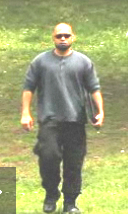
*** Still the biggest act of terrorism against Canadians in our history.
CSIS / RCMP issues still remain - such is the nature of organizations tasked to collect/analyze/disseminate intelligence products in competition with one another. Thankfully Canada has only a handful of such agencies and when you look at the U.S. with its massive bureaucracies, it should be sufficient to convince us to be very cautious about engaging in national security while in competition with one another.
Air India was a national tragedy for Canada and it remains so because lessons are truly not learned. A government report by virture of issuance cannot correct the inherent flaws to be found in large bureaucracies, especially those MOST resistant to change (police, military types). Change must come from within, which requires a recalibration of mindset and perspective. The question is: does the will to do so exist? MS ***
http://ca.news.yahoo.com/s/capress/100919/national/air_india_reyat
VANCOUVER - Convicted bomb maker Inderjit Singh Reyat didn't flinch when he heard the word "guilty" in court Saturday, nor when a judge said he'd be held in custody pending a sentencing hearing for a perjury conviction.
Reyat, 58, has spent almost a quarter century in and out of prison, and in November he will likely learn he'll be serving more time behind bars after two prior convictions related to the 1985 bombings.
His third conviction could be the last chapter in the Air India saga, a tragedy of unmatched proportions in Canadian history, but one with a most unsatisfactory ending because others believed to be involved in the disasters that killed 331 people have not been held responsible.
Reyat, a bespectacled Sikh who wears a turban and has a long greying beard, told court in 2003 at the trial of two other men facing mass murder charges that he became a baptized Sikh at age 16 after his family moved from India to England three years earlier.
He said he was the only member of his family to be baptized and that his mother prepared separate meals for him so he could adhere to his religion, which bans the eating of meat.
Reyat testified that when a leader of a Sikh separatist group asked him to collect bomb-making materials in Vancouver in 1984, he agreed to do so "to help people in India."
"I complied with Parmar's request because I was very upset with the Indian government's treatment of the Sikh people and I wanted to assist their cause in any way that I could," he said in a February 2003 affidavit for his second conviction.
That netted him a controversial five-year sentence for the bombing deaths of 329 people aboard Air India Flight 182 on June 23, 1985.
Reyat had already served a decade-long sentence for another bombing that day at Tokyo's Narita Airport, where two baggage handlers died when a suitcase bomb meant for Bangkok-bound Air India Flight 301 exploded prematurely.
Reyat's lawyer, Ian Donaldson, said his client was merely a "soldier" who followed orders from a "general" when he agreed to collect bomb parts.
The Crown maintains the two bomb-laden suitcases originated at Vancouver's airport as part of a plot against government-owned Air India by British Columbia-based Sikh extremists who felt the Indian government was oppressing Sikhs, a minority in their former homeland.
In June 1984, a year before the Air India bombings, the Indian army stormed the Golden Temple in Amritsar, home to the religion's holiest shrine, in an effort to oust Sikh separatists fighting for an independent homeland called Khalistan they wanted to carve out of the province of Punjab.
Thousands of Sikhs died in "Operation Bluestar" and the religious fervour and anger that resulted spread to Canada.
In Vancouver,Sikhs including Reyat rallied by the thousands outside the Indian Consulate and called for the death of then-prime Indian prime minister Indira Gandhi, who was assassinated by her Sikh bodyguards in October 1984.
In 1986, a year after the Air India bombings, Reyat moved back to England with his wife, Satnam Kaur Reyat, with whom he had four children.
He was extradited from England to face the Narita charges after police found evidence at the blast site and connected it to bomb-making material Reyat bought in Duncan, B.C.
The Crown subpoenaed Reyat to testify in 2003 at the trial of Ajaib Singh Bagri and Ripudaman Singh Malik, who were charged with mass murder in the Air India bombings.
Malik and Bagri were acquitted, and Reyat was charged with perjury in 2006.
The Crown accused Reyat of lying 19 times to minimize his involvement in the bombings and to protect others who targeted Air India.
Major Sidhu, whose sister died aboard Flight 182, said "everybody knows that (Reyat) was lying" at the Air India trial.
Sidhu said Reyat repeatedly made false statements at the trial because he feared retribution and despite others' involvement in the plot, he is the only one who has been punished.
"I think he was under pressure from other people and he was scared," said Sidhu, who was a regular spectator at the trial in 2003 and 2004.
Sidhu said it's a well-known fact in the Indo-Canadian community that Reyat's devotion to his Sikh cause is so extreme that his wife and four kids have suffered as a consequence.
"His daughter got married in Toronto, and he was in jail," Sidhu said.
B.C. Supreme Court Judge Ian Josephson, who presided over the Air India trial in 2003 and 2004, cited Sikh extremism in his written ruling, which paid tribute to the deaths of 331 people, mostly Canadians, who lost their lives in the disasters.
"These hundreds of men, women and children were entirely innocent victims of a diabolical act of terrorism unparalleled until recently in aviation history and finding its roots in fanaticism at its basest and most inhumane level," he said, comparing the Air India bombings to the 9-11 attacks in the U.S.
Perviz Madon's husband Sam Madon was on the doomed plane when it crashed into the Atlantic Ocean off the coast of Ireland.
She attended Reyat's perjury trial and heard a recording of the same lies he told at Malik and Bagri's trial seven years earlier.
"I'm really happy that the jury saw (the lies), and it's a good message that we're sending that you can't get away with lying under oath," she said.
"I hope that this is the end of it."
Showing posts with label bombing air india flight 182. Show all posts
Showing posts with label bombing air india flight 182. Show all posts
Sunday, September 19, 2010
Saturday, June 19, 2010
SIKH TERRORISM & TORONTO 18 - TRANSNATIONAL RELIGIOUS TERRORISM
FROM: http://www.ottawacitizen.com/life/unimaginable/3173002/story.html
The more we learn about the 1985 bombing of Air India Flight 182, the more the Canadian security establishment takes a beating. That’s expected. There was plenty of bungling, misjudgment and poor communication.
Surveying the intelligence 25 years later, it’s pretty clear that Sikh fanatics were going to attack a civilian passenger jet. Yet Canadian officials just didn’t get it. Among the signs of nonchalance: Security agents surreptitiously followed Sikh extremists into a British Columbia forest where the latter were practising the detonation of explosives. The security agents didn’t bother to bring cameras, and never properly identified one of the suspects.
Canada messed up, bigtime, and consequently more than 300 people died when Fight 182 exploded over the Atlantic. If we really want to make sense of what went wrong, however, it’s important to recognize that this security failure was a shared one. The problem wasn’t just bureaucratic incompetence.
When Sikh extremism first began to attract attention, few people, in government or out, in Canada or elsewhere, really understood the global danger it represented — not Sikh extremism per se, but the danger of radical-nationalist-religious movements.
Terrorism had been around for a long time, but it was almost always of the secular political variety. Political terrorism had its own rules of engagement. As Brian Jenkins, a pioneer of terrorist studies, once put it, terrorists didn’t want a lot of people dead but rather a lot of people watching.
Political terrorism was largely about propaganda. The early European anarchists had as their motto propagande par le fait, propaganda by deed, meaning that the primary purpose of violence was to publicize a cause. Anarchist assassins felt that they could best attract attention by targeting prominent industrialists or political leaders.
That was more or less the model throughout most of the 20th century. In the 1970s, the Quebec separatists who formed the FLQ calibrated their violence to maximize the propaganda value, killing a provincial cabinet minister and kidnapping a British diplomat.
Same with the Palestinian Arabs, known as Black September, who disrupted the 1972 summer Olympics. Black September was secular and political, unlike Hamas today which is religious and fanatical. Black September didn’t blow up a shopping mall, hotel or even a synagogue, but instead went after Israeli athletes in Munich — a heinous crime, to be sure, but the point is Black September was discriminating in its violence. The Irish Republican Army used to warn authorities in advance of attacks, consistent with a goal of creating propaganda rather than maximizing civilian casualties
There were certain conventions surrounding terrorism. Should Canadian authorities have realized those angry Sikhs in B.C. represented a new kind of terrorist, whose objective was in fact to maximize civilian casualties?
The shift from old-style political terrorists, whose aim was to attract attention, to the “new” religious terrorists, whose aim was to kill as many of the enemy as possible, caught governments off guard, not just Canada’s.
Even the U.S., in the 1960s and ’70s, had little insight. Historian Walter Laqueur has noted that during this period, CIA documents on terrorism were surprisingly unsophisticated. Terrorism wasn’t something that much concerned the agency, not just because the Cold War was more pressing but because “terrorists” were still viewed in many places as freedom fighters pursuing political liberation. No one yet conceived of terrorists as indiscriminating mass murderers.
Today, of course, mass-casualty terrorism is the norm and has changed the way security officials operate. But 25 years ago that wasn’t the case, and security officials operated differently. It’s unfortunate that Canada had to be one of places where the hard lesson was learned.
The transformation happened because terrorists began dehumanizing their enemies in a way that hadn’t been seen before. This is especially clear with Islamic terrorists who don’t seem particularly interested in persuading the enemy of anything, only destroying him. It also corresponds to the way radical Sikhs, religious fanatics in their own right, were thinking when they set out to massacre women and children on Fight 182.
Laqueur has written that “persecution mania” plays an important part in the new terrorism: the group feels “so isolated and so powerless vis-à-vis an omnipotent enemy that every weapon seem(s) permissible to have a chance in unequal combat.” The implications of this are clear to us today, thanks especially to 9/11, but they wouldn’t have been 25 years ago. It’s hard to understand a phenomenon until you actually encounter it.
Canada’s security apparatus is still not as strong as it could be, but look how far it has come. In 1985, agents couldn’t even properly do surveillance. Today, agents are not just identifying and monitoring suspected terrorist cells, but thoroughly infiltrating them, as with the Toronto 18 case.
The chief lesson of Air India is that we must be prepared to imagine the unimaginable.
Leonard Stern is the Citizen’s editorial pages editor. E-mail: lstern@thecitizen.canwest.com
The more we learn about the 1985 bombing of Air India Flight 182, the more the Canadian security establishment takes a beating. That’s expected. There was plenty of bungling, misjudgment and poor communication.
Surveying the intelligence 25 years later, it’s pretty clear that Sikh fanatics were going to attack a civilian passenger jet. Yet Canadian officials just didn’t get it. Among the signs of nonchalance: Security agents surreptitiously followed Sikh extremists into a British Columbia forest where the latter were practising the detonation of explosives. The security agents didn’t bother to bring cameras, and never properly identified one of the suspects.
Canada messed up, bigtime, and consequently more than 300 people died when Fight 182 exploded over the Atlantic. If we really want to make sense of what went wrong, however, it’s important to recognize that this security failure was a shared one. The problem wasn’t just bureaucratic incompetence.
When Sikh extremism first began to attract attention, few people, in government or out, in Canada or elsewhere, really understood the global danger it represented — not Sikh extremism per se, but the danger of radical-nationalist-religious movements.
Terrorism had been around for a long time, but it was almost always of the secular political variety. Political terrorism had its own rules of engagement. As Brian Jenkins, a pioneer of terrorist studies, once put it, terrorists didn’t want a lot of people dead but rather a lot of people watching.
Political terrorism was largely about propaganda. The early European anarchists had as their motto propagande par le fait, propaganda by deed, meaning that the primary purpose of violence was to publicize a cause. Anarchist assassins felt that they could best attract attention by targeting prominent industrialists or political leaders.
That was more or less the model throughout most of the 20th century. In the 1970s, the Quebec separatists who formed the FLQ calibrated their violence to maximize the propaganda value, killing a provincial cabinet minister and kidnapping a British diplomat.
Same with the Palestinian Arabs, known as Black September, who disrupted the 1972 summer Olympics. Black September was secular and political, unlike Hamas today which is religious and fanatical. Black September didn’t blow up a shopping mall, hotel or even a synagogue, but instead went after Israeli athletes in Munich — a heinous crime, to be sure, but the point is Black September was discriminating in its violence. The Irish Republican Army used to warn authorities in advance of attacks, consistent with a goal of creating propaganda rather than maximizing civilian casualties
There were certain conventions surrounding terrorism. Should Canadian authorities have realized those angry Sikhs in B.C. represented a new kind of terrorist, whose objective was in fact to maximize civilian casualties?
The shift from old-style political terrorists, whose aim was to attract attention, to the “new” religious terrorists, whose aim was to kill as many of the enemy as possible, caught governments off guard, not just Canada’s.
Even the U.S., in the 1960s and ’70s, had little insight. Historian Walter Laqueur has noted that during this period, CIA documents on terrorism were surprisingly unsophisticated. Terrorism wasn’t something that much concerned the agency, not just because the Cold War was more pressing but because “terrorists” were still viewed in many places as freedom fighters pursuing political liberation. No one yet conceived of terrorists as indiscriminating mass murderers.
Today, of course, mass-casualty terrorism is the norm and has changed the way security officials operate. But 25 years ago that wasn’t the case, and security officials operated differently. It’s unfortunate that Canada had to be one of places where the hard lesson was learned.
The transformation happened because terrorists began dehumanizing their enemies in a way that hadn’t been seen before. This is especially clear with Islamic terrorists who don’t seem particularly interested in persuading the enemy of anything, only destroying him. It also corresponds to the way radical Sikhs, religious fanatics in their own right, were thinking when they set out to massacre women and children on Fight 182.
Laqueur has written that “persecution mania” plays an important part in the new terrorism: the group feels “so isolated and so powerless vis-à-vis an omnipotent enemy that every weapon seem(s) permissible to have a chance in unequal combat.” The implications of this are clear to us today, thanks especially to 9/11, but they wouldn’t have been 25 years ago. It’s hard to understand a phenomenon until you actually encounter it.
Canada’s security apparatus is still not as strong as it could be, but look how far it has come. In 1985, agents couldn’t even properly do surveillance. Today, agents are not just identifying and monitoring suspected terrorist cells, but thoroughly infiltrating them, as with the Toronto 18 case.
The chief lesson of Air India is that we must be prepared to imagine the unimaginable.
Leonard Stern is the Citizen’s editorial pages editor. E-mail: lstern@thecitizen.canwest.com


Friday, June 18, 2010
AIR INDIA INQUIRY - CSIS RCMP CULTURE CHANGE NEEDED ?
*** These agencies need the right kind of support from lawmakers and the public. Is it so bad to want them to succeed in making sure some idiot doesn't blow his underwear off and kill everyone around him? I would hope not. MS ***
FROM: http://www.nationalpost.com/news/canada/Culture+change+needed+CSIS+RCMP+Major/3169124/story.html
The RCMP and CSIS are Canada's defence line against terrorism.
But they can be terrible teammates.
According to the Air India inquiry report, the RCMP philosophy is "the less information we receive from CSIS, the better," while CSIS is reluctant to hand over its intelligence to police for fear it will be disclosed in court.
The 9/11 Commission found a similar problem when it examined the U.S. government failures leading up to the Sept. 11, 2001 terrorist attacks. It used a football analogy to explain: The players were in position but they weren't working together and there was no quarterback calling the plays.
Air India commissioner John Major wants Canada's national security advisor to play quarterback; he has proposed a much bigger role for the advisor in deciding how government agencies respond to terrorist threats.
Supposeasuspectedmember of a terrorist group flies to Canada after training at an overseas camp. Should the RCMP arrest him at the airport? Should CSIS instead follow him to see what he does and whom he meets? If he's not Canadian, should the Canada Border Services Agency deport him?
Those calls would be made by the national security advisor (NSA), who works out of the Privy Council Office. "In these and other situations," Judge Major writes, "the NSA will act in the public interest, transcending institutional self-interest."
The advisor would have the power to pass CSIS intelligence on to police, part of a series of proposed reforms that appear to be nudging Canada in the direction of the United States and Britain, where criminal prosecutions of terrorists are much more common.
The Air India report proposes making greater use of CSIS intelligence by police, restructuring the RCMP to better deal with terrorism prosecutions and improving the relationship between the two agencies.
During the Air India investigation, CSIS and the RCMP "were unable to co-operate effectively, or sometimes at all," the report says. And that awkward relationship continues to some extent to this day.
That is partly a reflection of conflicting mandates. The RCMP fights terrorism by collecting evidence that can be used to prosecute suspects in open court. CSIS fights terrorism by collecting intelligence that guides government action and that is not intended to be publicly disclosed.
The system apparently worked during the Toronto 18 investigation. CSIS found out about the young extremists and notified the RCMP, which conducted its own parallel investigation and made the arrests. (MS: Using the same agent, I should add.)
But to use the 9/11 commission's football analogy, the two agencies sometimes find themselves covering the same man. And that overlap only got worse after Canada criminalized terrorism in 2001, throwing police into areas -- such as the investigation of terrorist financing and planning terrorist acts -- that had once been the domain of CSIS.
The report calls for a "culture change" in both agencies. Judge Major wants the RCMP to stop avoiding CSIS intelligence that could protect Canadians. And he wants CSIS to accept that its secrets may have to be disclosed as evidence against terrorists.
The commission goes so far as to propose the national security advisor have the authority to compel CSIS to hand its intelligence to police.
Judge Major wants fundamental change at CSIS. He wants the agency to treat the information it collects as evidence that might be used in a prosecution. To that extent, he wants CSIS to begin acting as a law enforcement agency.
He also recommends CSIS end its practice of destroying its records, suggesting it hang on to them for at least 25 years. At the same time, the report recognizes the need to keep sensitive intelligence from the public.
In a passage reminiscent of the 9/11 report, Judge Major writes: "What must be avoided is a diffusion of responsibilities, where each agency and each official acts properly but where they fail collectively to achieve the ultimate goal: protecting the security of Canadians to the greatest extent possible.
"Promises by agencies to co-operate with each other are only part of the answer. Better rules, supported by legislation, are required."
sbell@nationalpost.com
FROM: http://www.nationalpost.com/news/canada/Culture+change+needed+CSIS+RCMP+Major/3169124/story.html
The RCMP and CSIS are Canada's defence line against terrorism.
But they can be terrible teammates.
According to the Air India inquiry report, the RCMP philosophy is "the less information we receive from CSIS, the better," while CSIS is reluctant to hand over its intelligence to police for fear it will be disclosed in court.
The 9/11 Commission found a similar problem when it examined the U.S. government failures leading up to the Sept. 11, 2001 terrorist attacks. It used a football analogy to explain: The players were in position but they weren't working together and there was no quarterback calling the plays.
Air India commissioner John Major wants Canada's national security advisor to play quarterback; he has proposed a much bigger role for the advisor in deciding how government agencies respond to terrorist threats.
Supposeasuspectedmember of a terrorist group flies to Canada after training at an overseas camp. Should the RCMP arrest him at the airport? Should CSIS instead follow him to see what he does and whom he meets? If he's not Canadian, should the Canada Border Services Agency deport him?
Those calls would be made by the national security advisor (NSA), who works out of the Privy Council Office. "In these and other situations," Judge Major writes, "the NSA will act in the public interest, transcending institutional self-interest."
The advisor would have the power to pass CSIS intelligence on to police, part of a series of proposed reforms that appear to be nudging Canada in the direction of the United States and Britain, where criminal prosecutions of terrorists are much more common.
The Air India report proposes making greater use of CSIS intelligence by police, restructuring the RCMP to better deal with terrorism prosecutions and improving the relationship between the two agencies.
During the Air India investigation, CSIS and the RCMP "were unable to co-operate effectively, or sometimes at all," the report says. And that awkward relationship continues to some extent to this day.
That is partly a reflection of conflicting mandates. The RCMP fights terrorism by collecting evidence that can be used to prosecute suspects in open court. CSIS fights terrorism by collecting intelligence that guides government action and that is not intended to be publicly disclosed.
The system apparently worked during the Toronto 18 investigation. CSIS found out about the young extremists and notified the RCMP, which conducted its own parallel investigation and made the arrests. (MS: Using the same agent, I should add.)
But to use the 9/11 commission's football analogy, the two agencies sometimes find themselves covering the same man. And that overlap only got worse after Canada criminalized terrorism in 2001, throwing police into areas -- such as the investigation of terrorist financing and planning terrorist acts -- that had once been the domain of CSIS.
The report calls for a "culture change" in both agencies. Judge Major wants the RCMP to stop avoiding CSIS intelligence that could protect Canadians. And he wants CSIS to accept that its secrets may have to be disclosed as evidence against terrorists.
The commission goes so far as to propose the national security advisor have the authority to compel CSIS to hand its intelligence to police.
Judge Major wants fundamental change at CSIS. He wants the agency to treat the information it collects as evidence that might be used in a prosecution. To that extent, he wants CSIS to begin acting as a law enforcement agency.
He also recommends CSIS end its practice of destroying its records, suggesting it hang on to them for at least 25 years. At the same time, the report recognizes the need to keep sensitive intelligence from the public.
In a passage reminiscent of the 9/11 report, Judge Major writes: "What must be avoided is a diffusion of responsibilities, where each agency and each official acts properly but where they fail collectively to achieve the ultimate goal: protecting the security of Canadians to the greatest extent possible.
"Promises by agencies to co-operate with each other are only part of the answer. Better rules, supported by legislation, are required."
sbell@nationalpost.com
Thursday, June 17, 2010
AIR INDIA - CASCADE OF ERRORS
FROM: http://ca.news.yahoo.com/s/capress/100617/national/air_india_inquiry_3
OTTAWA - The inquiry into the 1985 Air India bombing concludes authorities should have known that Flight 182 was a likely terrorist target.
A long-awaited report released today blames a "cascading series of errors" by government, RCMP and CSIS for the failure to prevent the disaster.
Former Supreme Court justice John Major says agencies were not prepared for the threat of terror attacks in 1985 — and holes in the country's security systems still need plugging.
His report calls for ramped-up powers for the national security adviser to oversee communication between agencies and settle disputes.
The bombing killed 329 people, mostly Canadians of Indian origin.
Major spent four years investigating the matter.
OTTAWA - The inquiry into the 1985 Air India bombing concludes authorities should have known that Flight 182 was a likely terrorist target.
A long-awaited report released today blames a "cascading series of errors" by government, RCMP and CSIS for the failure to prevent the disaster.
Former Supreme Court justice John Major says agencies were not prepared for the threat of terror attacks in 1985 — and holes in the country's security systems still need plugging.
His report calls for ramped-up powers for the national security adviser to oversee communication between agencies and settle disputes.
The bombing killed 329 people, mostly Canadians of Indian origin.
Major spent four years investigating the matter.
AIR INDIA & THE TORONTO 18
*** Worthy of note: we've already had a major terrorist attack (by Sikh extremists you should note also) and just look at the out-of-sight out-of-mind attitude on Air India. We need to wake up and stop the willful blindness. MS ***
FROM: http://www.thestar.com/opinion/editorialopinion/article/823977
Jacques J.M. Shore, Norman Boxall and Chris Schafer
The Commission of Inquiry into the Investigation of the Bombing of Air India Flight 182, now quickly approaching its four-year anniversary, will release its final report and recommendations on June 17.
Nearly a quarter of a century since the catastrophe, which entailed the greatest loss of Canadian lives at the hands of terrorists, the Air India inquiry is more relevant in today’s world than most of us might expect.
Canadians face increasing threats from homegrown terrorism — similar to what caused the bombing of Air India Flight 182. In June 2006, police carried out a sweeping anti-terrorism raid in southern Ontario that ultimately led to the arrests of 18 people. The “Toronto 18” case encompassed two plots, including an alleged attempt to bomb the Toronto Stock Exchange and other prominent buildings, in addition to attempting to create an Al Qaeda-type cell in Toronto.
More recently, on Dec. 25, 2009, a Nigerian citizen attempted to detonate plastic explosives hidden in his underwear while aboard a Northwest Airlines flight en route from Amsterdam to Detroit. This incident caused widespread changes to pre-screening security measures on both domestic and international flights.
These two terrorism-related cases demonstrate that the Air India Flight 182 tragedy speaks directly to the complexities of our modern world.
Through the documents it reviewed and the witness testimony it heard, the Air India inquiry has taken the time to understand what happened, why it happened, and how to avoid such a tragedy from ever happening again.
As the Air India Victims Families Association (AIVFA) awaits the release of the final report, it hopes to see a number of recommendations it believes to be crucial to ensuring that future terrorist acts in the skies are averted.
Canadian air travellers remain vulnerable to aviation-related terrorist attacks because, among other things, there are known gaps in Canada’s aviation security system that need to be addressed without delay. These include the need for an effective air-cargo screening regime and a national aviation security advisory system for high-risk flights.
Currently, air cargo is the biggest gap in aviation security in Canada. Canada needs policies in place for the security of air cargo in the way it does for carry-on and checked baggage, especially in light of the fact that almost three-quarters of the cargo carried on airlines operating in Canada is carried in the cargo hold of passenger airplanes. Unless this happens, the next terrorism-motivated aviation disaster may very well be a result of unscreened air cargo.
In addition, Canadians preparing to travel often have next to no information about the threat level against a particular airline at a particular point in time. If a national aviation security advisory system for high-risk flights had been in place in June of 1985, especially considering the heightened threat environment in which Air India was operating, AIVFA family members may have decided not to travel on that fateful Flight 182.
The broad mandate of the Air India inquiry also covered issues such as terrorism financing and the evidentiary and disclosure standards for the collection of intelligence in counterterrorism investigations, both of which have direct relevance to preventing terrorism and prosecuting terrorists in today’s age.
Terrorists like the underwear bomber often require significant financial resources to carry out their acts of terrorism, which is why it is so important for Canada to enhance its capability to combat the financing of terrorists.
One such way would be for the federal government to work cooperatively with the provinces and territories to reform the Canadian regulatory framework for charitable and non-profit sectors, in order to adopt the model of the Charity Commission of England and Wales.
The U.K. charity commission possesses broader powers to thwart terrorism financing than the Canada Revenue Agency, including the power to conduct covert investigations, remove trustees and seize assets of charities suspected of terrorism financing.
The effective prosecution of terrorism cases, like that of the Toronto 18, requires a greater regard for the necessity of having to move from the collection of intelligence to its use as evidence in criminal trials.
In terrorism investigations, the Canadian Security Intelligence Service (CSIS) and other intelligence agencies must constantly evaluate the likelihood of a subsequent prosecution and the effect that a prosecution could have on secret intelligence.
New rules and procedures must be developed to collect and retain information to evidentiary standards in order to ensure that it can be introduced at trial by the Crown in terrorism prosecutions without divulging sensitive intelligence that could be used by our state’s enemies. (MS: That's right because CSIS does not deal with evidence but rather, intelligence.)
With the pending release of the Air India inquiry’s final report, it’s sadly back to the future. The recent terrorist-motivated plots of the Toronto 18 and the underwear bomber demonstrate the continued importance of this inquiry in safeguarding the lives of Canadians against terrorism.
The time to learn from our past mistakes and take responsive steps through concrete government action is fast approaching.
The Air India Victims Families Association will be watching closely how the federal government reacts to the final report and its recommendations. Through the implementation of reforms to laws, regulations and policy, it ultimately will be up to the government to ensure that the lives cut short on Air India Flight 182 were not lost in vain.
We will know soon — finally.
Jacques J.M. Shore and Norman Boxall are co-lead counsel and Chris Schafer is counsel for the Air India Victims Families Association before the Commission of Inquiry into the Investigation of the Bombing of Air India Flight 182.
FROM: http://www.thestar.com/opinion/editorialopinion/article/823977
Jacques J.M. Shore, Norman Boxall and Chris Schafer
The Commission of Inquiry into the Investigation of the Bombing of Air India Flight 182, now quickly approaching its four-year anniversary, will release its final report and recommendations on June 17.
Nearly a quarter of a century since the catastrophe, which entailed the greatest loss of Canadian lives at the hands of terrorists, the Air India inquiry is more relevant in today’s world than most of us might expect.
Canadians face increasing threats from homegrown terrorism — similar to what caused the bombing of Air India Flight 182. In June 2006, police carried out a sweeping anti-terrorism raid in southern Ontario that ultimately led to the arrests of 18 people. The “Toronto 18” case encompassed two plots, including an alleged attempt to bomb the Toronto Stock Exchange and other prominent buildings, in addition to attempting to create an Al Qaeda-type cell in Toronto.
More recently, on Dec. 25, 2009, a Nigerian citizen attempted to detonate plastic explosives hidden in his underwear while aboard a Northwest Airlines flight en route from Amsterdam to Detroit. This incident caused widespread changes to pre-screening security measures on both domestic and international flights.
These two terrorism-related cases demonstrate that the Air India Flight 182 tragedy speaks directly to the complexities of our modern world.
Through the documents it reviewed and the witness testimony it heard, the Air India inquiry has taken the time to understand what happened, why it happened, and how to avoid such a tragedy from ever happening again.
As the Air India Victims Families Association (AIVFA) awaits the release of the final report, it hopes to see a number of recommendations it believes to be crucial to ensuring that future terrorist acts in the skies are averted.
Canadian air travellers remain vulnerable to aviation-related terrorist attacks because, among other things, there are known gaps in Canada’s aviation security system that need to be addressed without delay. These include the need for an effective air-cargo screening regime and a national aviation security advisory system for high-risk flights.
Currently, air cargo is the biggest gap in aviation security in Canada. Canada needs policies in place for the security of air cargo in the way it does for carry-on and checked baggage, especially in light of the fact that almost three-quarters of the cargo carried on airlines operating in Canada is carried in the cargo hold of passenger airplanes. Unless this happens, the next terrorism-motivated aviation disaster may very well be a result of unscreened air cargo.
In addition, Canadians preparing to travel often have next to no information about the threat level against a particular airline at a particular point in time. If a national aviation security advisory system for high-risk flights had been in place in June of 1985, especially considering the heightened threat environment in which Air India was operating, AIVFA family members may have decided not to travel on that fateful Flight 182.
The broad mandate of the Air India inquiry also covered issues such as terrorism financing and the evidentiary and disclosure standards for the collection of intelligence in counterterrorism investigations, both of which have direct relevance to preventing terrorism and prosecuting terrorists in today’s age.
Terrorists like the underwear bomber often require significant financial resources to carry out their acts of terrorism, which is why it is so important for Canada to enhance its capability to combat the financing of terrorists.
One such way would be for the federal government to work cooperatively with the provinces and territories to reform the Canadian regulatory framework for charitable and non-profit sectors, in order to adopt the model of the Charity Commission of England and Wales.
The U.K. charity commission possesses broader powers to thwart terrorism financing than the Canada Revenue Agency, including the power to conduct covert investigations, remove trustees and seize assets of charities suspected of terrorism financing.
The effective prosecution of terrorism cases, like that of the Toronto 18, requires a greater regard for the necessity of having to move from the collection of intelligence to its use as evidence in criminal trials.
In terrorism investigations, the Canadian Security Intelligence Service (CSIS) and other intelligence agencies must constantly evaluate the likelihood of a subsequent prosecution and the effect that a prosecution could have on secret intelligence.
New rules and procedures must be developed to collect and retain information to evidentiary standards in order to ensure that it can be introduced at trial by the Crown in terrorism prosecutions without divulging sensitive intelligence that could be used by our state’s enemies. (MS: That's right because CSIS does not deal with evidence but rather, intelligence.)
With the pending release of the Air India inquiry’s final report, it’s sadly back to the future. The recent terrorist-motivated plots of the Toronto 18 and the underwear bomber demonstrate the continued importance of this inquiry in safeguarding the lives of Canadians against terrorism.
The time to learn from our past mistakes and take responsive steps through concrete government action is fast approaching.
The Air India Victims Families Association will be watching closely how the federal government reacts to the final report and its recommendations. Through the implementation of reforms to laws, regulations and policy, it ultimately will be up to the government to ensure that the lives cut short on Air India Flight 182 were not lost in vain.
We will know soon — finally.
Jacques J.M. Shore and Norman Boxall are co-lead counsel and Chris Schafer is counsel for the Air India Victims Families Association before the Commission of Inquiry into the Investigation of the Bombing of Air India Flight 182.
Subscribe to:
Comments (Atom)