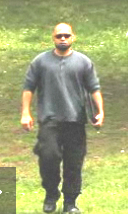
*** Another jerkoff with delusions of grandeur. I don't expect him to last long in prison. MS ***
http://ca.news.yahoo.com/s/capress/101005/world/us_times_square_car_bomb
NEW YORK, N.Y. - The Pakistani immigrant who tried to detonate a car bomb on a busy Saturday night in Times Square accepted a life sentence with a smirk Tuesday and warned that Americans can expect more bloodshed at the hands of Muslims.
"Brace yourselves, because the war with Muslims has just begun," 31-year-old Faisal Shahzad told a federal judge. "Consider me the first droplet of the blood that will follow."
His punishment for building the propane-and-gasoline bomb and driving it into the heart of the city in an SUV last May was a foregone conclusion, since the charges to which he pleaded guilty carried a mandatory life sentence, which under federal rules will keep him behind bars until he dies.
But the former budget analyst from Connecticut used the courtroom appearance to rail against the U.S., saying the country will continue to pay for occupying Muslim countries.
"We are only Muslims ... but if you call us terrorists, we are proud terrorists and we will keep on terrorizing you," he told U.S. District Judge Miriam Cedarbaum.
Shahzad — brought into the courtroom in handcuffs, and wearing a long beard and white skullcap — had instructed his attorney not to speak, and Cedarbaum told prosecutors she didn't need to hear from them.
That left the two free to spar over his reasoning for giving up his comfortable life in America to train in Pakistan and carry out an attack authorities say could have killed an untold number of pedestrians.
"You appear to be someone who was capable of education and I do hope you will spend some of the time in prison thinking carefully about whether the Qur’an wants you to kill lots of people," Cedarbaum said.
Shahzad responded that the "Qur’an gives us the right to defend. And that's all I'm doing."
The judge cut him off at one point to ask if he had sworn allegiance to the U.S. when he became a citizen last year.
"I did swear, but I did not mean it," Shahzad said.
In his address to the court, he said Osama bin Laden "will be known as no less than Saladin of the 21st-century crusade" — a reference to the Muslim hero of the Crusades. He also said: "If I'm given 1,000 lives, I will sacrifice them all for the life of Allah."
Shahzad smirked when the judge imposed the sentence. Asked if he had any final words, he said, "I'm happy with the deal that God has given me."
Afterward, the head of the FBI's New York office, Janice K. Fedarcyk, cited evidence that Shahzad hoped to strike more than once.
"Shahzad built a mobile weapon of mass destruction and hoped and intended that it would kill large numbers of innocent people and planned to do it again two weeks later," Fedarcyk said in a statement. "The sentence imposed today means Shahzad will never pose that threat again."
Calling himself a Muslim soldier, Shahzad pleaded guilty in June to 10 terrorism and weapons counts. He said the Pakistan Taliban provided him with more than $15,000 and five days of explosives training late last year and early this year, months after he became a U.S. citizen.
For greatest impact, he chose a crowded a section of Times Square by studying an online streaming video of the so-called Crossroads of the World, prosecutors said.
On May 1, he lit the fuse of his crude bomb packed in a 1993 Nissan Pathfinder, then walked away, pausing to listen for the explosion that never came, court papers said. A street vendor spotted smoke coming from the SUV and alerted police, who quickly cleared the area. (btw - the vendor was Muslim himself...Alio Niasse)
The bomb attempt set off an intense investigation that culminated two days later with investigators plucking Shahzad off a Dubai-bound plane at a New York airport.
Prosecutors introduced a dramatic videotape of an FBI-staged explosion in a Pennsylvania field that they said demonstrated how deadly Shahzad's bomb could have been.
The FBI's car bomb — a 1993 Pathfinder fitted with 250 pounds of ammonium nitrate fertilizer and diesel fuel, three 25-pound (11-kilogram) propane tanks and two five-gallon gasoline canisters — blew up with a force that ripped the sport utility vehicle in half.
The explosion caused a giant fireball that overturned and shredded four other cars parked nearby, obliterated about a dozen dummies and shot fiery debris hundreds of feet in all directions.
Showing posts with label time square pakistan taliban. Show all posts
Showing posts with label time square pakistan taliban. Show all posts
Tuesday, October 5, 2010
Friday, May 28, 2010
FAMILIES OF TIME SQUARE BOMBER DEFEND SUSPECTS
*** Of course they do. In fact, one of the most common reactions from people is, 'but he seemed so nice!'. Another note for Jihadi wannabe's: your family suffers because of YOUR actions - why put them through all this? Trust me - the Muslim bond is not as strong as you think: no one will help you for your legal bills, medical bills they will not even follow through with FOOD for your kid(s) that you left behind. Look before you leap. MS ***
FROM: http://ca.news.yahoo.com/s/capress/100528/world/as_pakistan_times_square
When Pakistani intelligence agents probing the botched Times Square car bombing dragged Humbal Akhtar from his house, his wife grabbed his arm in desperation. "What has he done wrong?" Rahila Akhtar screamed before they took him away.
She didn't get an answer, and still hasn't nearly two weeks later. She has heard nothing of his fate, or whether he's even accused of a crime.
"He is a simple, honest and loving person," she said between tears Friday in a telephone interview with The Associated Press. "I don't know where to go to find him and I have no idea where is he being held. But now I am driving alone on roads and looking for my husband."
Under American pressure, Pakistan has rounded up at least 11 people since the attempted attack May 1 in New York City. An intelligence official has alleged two of them played a role in plot, but gave few details. No one has been charged.
The detentions are angering the men's families, as well as human rights activists in Pakistan who have long campaigned against such actions by the country's powerful and largely unaccountable intelligence agencies.
The families of five of the detained men have told The Associated Press they knew the main suspect detained in the United States, Pakistani-American Faisal Shahzad, or others held in connection with him, but insist they are innocent.
Most come from the same stock as Shahzad — wealthy, urban, educated and with careers such as computers, telecommunications and graphic design. Several are observant Muslims and had expressed anti-American sentiments, but that combination is common in Pakistan.
One of three men arrested in the U.S. and accused of supplying money to Shahzad was ordered to be deported to his native Pakistan by a U.S. immigration judge Thursday. Aftab Khan has said he never heard of Shahzad before his May 13 arrest, but federal authorities allege he had Shahzad's name in his cellphone and written on an envelope.
Detentions by Pakistani intelligence agencies are typically never confirmed by government officials or security forces. People can be held for months or years without charge, in clear violation of Pakistani law.
Human rights groups allege that torture while in detention is common. Several people arrested by the intelligence agencies in Pakistan after the Sept. 11, 2001, attacks were given to the United States and their families were not informed.
"Whoever captured my son is a terrorist," said Rana Ashraf Khan, whose son, Salman Ashraf, was detained while driving to work. "I am extremely worried about his safety."
The catering company Khan runs with with his son was accused of possible terrorist links by the U.S. Embassy when news of his detention broke.
U.S. officials have accused Shahzad of working with the Pakistani Taliban to organize the car bomb, a rudimentary device that failed to explode. Shahzad was arrested two days after the bombing attempt as he tried to fly out of the United States on a jetliner bound for the Middle East.
Seven people are known to have been detained in Islamabad and Rawalpindi. Officials have said four others were picked up in the southern city of Karachi, several of whom had links to a mosque there run by Jaish-e-Mohammad, a militant group with connections to al-Qaida. It is not clear whether any have since been released.
An intelligence official has identified one of those detained — Shoaib Mughal — as a go-between for Shahzad and the Pakistani Taliban in their hide-outs close the Afghan border. He was running a large computer dealership in Islamabad before his detention.
The other suspect alleged to have had some kind of involvement in the plot, identified only by his first name, Shahid, is alleged to have helped arrange money for Shahzad, but it is unclear what for.
Rahila Akhtar said around 20 intelligence agents and police officers came for her husband in the heat of mid-afternoon on May 17, jumping over the gate and banging on the door of their house. They asked for Humbal and started dragging him away.
"On seeing that, I was shocked and I started weeping, and I tightly held my husband's arm and said, 'I am not going to allow you to take him away,'" she said. She said officers told her not to make a scene.
They asked about her and Humbal, 35, and where his mobile phone was.
She went inside to get the phone, but when she returned Humbal was gone. She said hours later she received a telephone call from someone who did not give his name, assuring her that her husband would be safe.
Rahila Akhtar said her husband graduated from a private university in Islamabad and worked briefly for the government before starting a graphic design business. She said he worked from home to help her raise their three children, all under 5.
Pakistan's Human Rights Commission said it was investigating the detentions.
"No one should be arrested without prima facie evidence. They should be produced in court and their family should be informed," said I.A. Rehman, a leader of the commission. "Whatever agencies may be involved, the law must be followed."
FROM: http://ca.news.yahoo.com/s/capress/100528/world/as_pakistan_times_square
When Pakistani intelligence agents probing the botched Times Square car bombing dragged Humbal Akhtar from his house, his wife grabbed his arm in desperation. "What has he done wrong?" Rahila Akhtar screamed before they took him away.
She didn't get an answer, and still hasn't nearly two weeks later. She has heard nothing of his fate, or whether he's even accused of a crime.
"He is a simple, honest and loving person," she said between tears Friday in a telephone interview with The Associated Press. "I don't know where to go to find him and I have no idea where is he being held. But now I am driving alone on roads and looking for my husband."
Under American pressure, Pakistan has rounded up at least 11 people since the attempted attack May 1 in New York City. An intelligence official has alleged two of them played a role in plot, but gave few details. No one has been charged.
The detentions are angering the men's families, as well as human rights activists in Pakistan who have long campaigned against such actions by the country's powerful and largely unaccountable intelligence agencies.
The families of five of the detained men have told The Associated Press they knew the main suspect detained in the United States, Pakistani-American Faisal Shahzad, or others held in connection with him, but insist they are innocent.
Most come from the same stock as Shahzad — wealthy, urban, educated and with careers such as computers, telecommunications and graphic design. Several are observant Muslims and had expressed anti-American sentiments, but that combination is common in Pakistan.
One of three men arrested in the U.S. and accused of supplying money to Shahzad was ordered to be deported to his native Pakistan by a U.S. immigration judge Thursday. Aftab Khan has said he never heard of Shahzad before his May 13 arrest, but federal authorities allege he had Shahzad's name in his cellphone and written on an envelope.
Detentions by Pakistani intelligence agencies are typically never confirmed by government officials or security forces. People can be held for months or years without charge, in clear violation of Pakistani law.
Human rights groups allege that torture while in detention is common. Several people arrested by the intelligence agencies in Pakistan after the Sept. 11, 2001, attacks were given to the United States and their families were not informed.
"Whoever captured my son is a terrorist," said Rana Ashraf Khan, whose son, Salman Ashraf, was detained while driving to work. "I am extremely worried about his safety."
The catering company Khan runs with with his son was accused of possible terrorist links by the U.S. Embassy when news of his detention broke.
U.S. officials have accused Shahzad of working with the Pakistani Taliban to organize the car bomb, a rudimentary device that failed to explode. Shahzad was arrested two days after the bombing attempt as he tried to fly out of the United States on a jetliner bound for the Middle East.
Seven people are known to have been detained in Islamabad and Rawalpindi. Officials have said four others were picked up in the southern city of Karachi, several of whom had links to a mosque there run by Jaish-e-Mohammad, a militant group with connections to al-Qaida. It is not clear whether any have since been released.
An intelligence official has identified one of those detained — Shoaib Mughal — as a go-between for Shahzad and the Pakistani Taliban in their hide-outs close the Afghan border. He was running a large computer dealership in Islamabad before his detention.
The other suspect alleged to have had some kind of involvement in the plot, identified only by his first name, Shahid, is alleged to have helped arrange money for Shahzad, but it is unclear what for.
Rahila Akhtar said around 20 intelligence agents and police officers came for her husband in the heat of mid-afternoon on May 17, jumping over the gate and banging on the door of their house. They asked for Humbal and started dragging him away.
"On seeing that, I was shocked and I started weeping, and I tightly held my husband's arm and said, 'I am not going to allow you to take him away,'" she said. She said officers told her not to make a scene.
They asked about her and Humbal, 35, and where his mobile phone was.
She went inside to get the phone, but when she returned Humbal was gone. She said hours later she received a telephone call from someone who did not give his name, assuring her that her husband would be safe.
Rahila Akhtar said her husband graduated from a private university in Islamabad and worked briefly for the government before starting a graphic design business. She said he worked from home to help her raise their three children, all under 5.
Pakistan's Human Rights Commission said it was investigating the detentions.
"No one should be arrested without prima facie evidence. They should be produced in court and their family should be informed," said I.A. Rehman, a leader of the commission. "Whatever agencies may be involved, the law must be followed."


Subscribe to:
Posts (Atom)